FERC Winter Assessment: Hoover, Glen Canyon Near a Third of Output
FERC staff say CAISO's day-ahead market and SPP's western expansion should offset hydro losses on the Colorado River, while New England faces low oil stocks and Henry Hub winter gas sits 42% lower.
3 min read
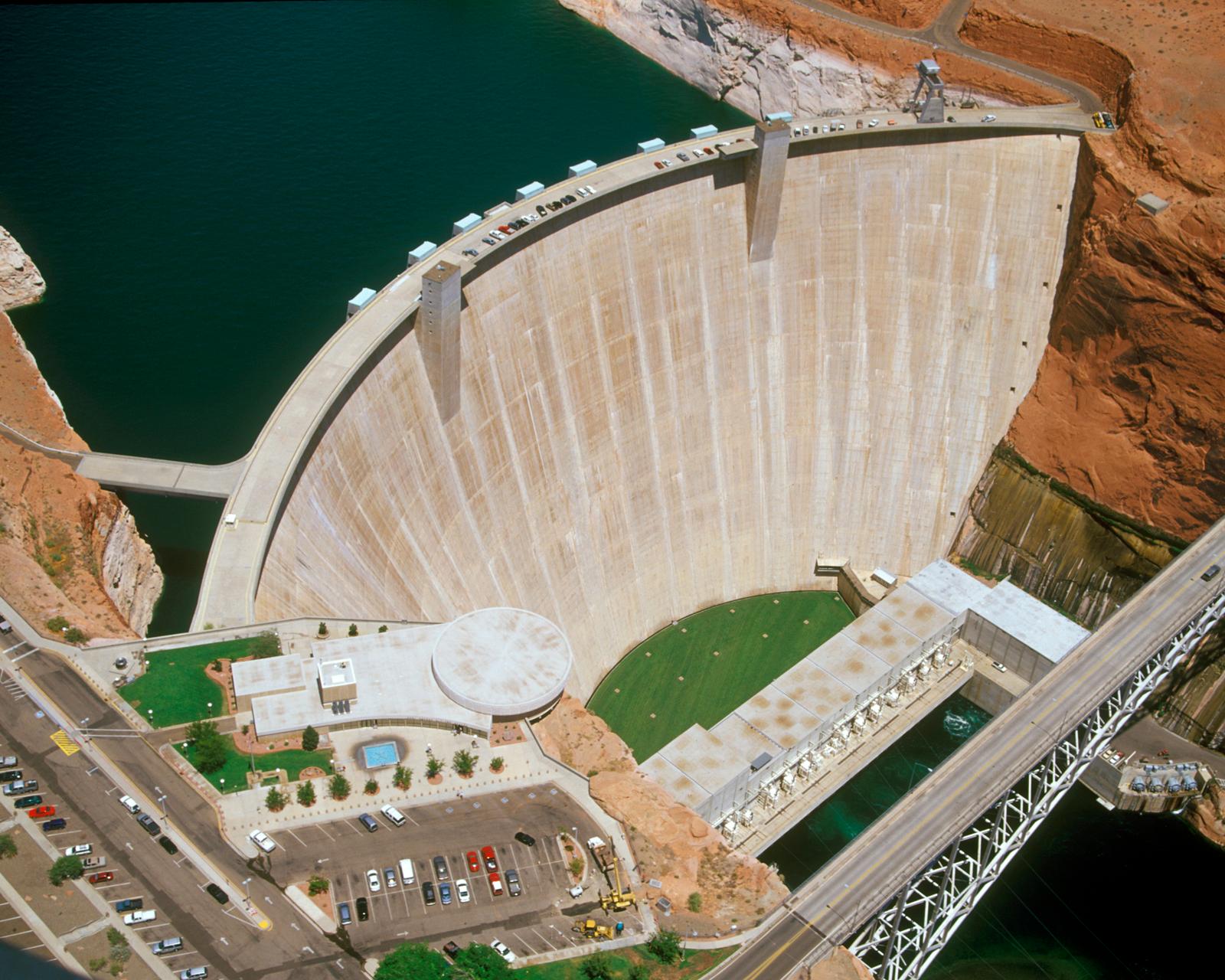
Glen Canyon Dam in Arizona, which FERC staff say is constrained by low reservoir levels to about a third of its maximum output going into winter. File photo from Reclamation.
Image: U.S. Bureau of Reclamation
Source · U.S. federal government work, public domain.
The Federal Energy Regulatory Commission's winter assessment, presented by staff on Nov. 19, finds that the Glen Canyon and Hoover dams enter winter constrained by low reservoir levels to about a third of their maximum output, and that market reforms in the West should help offset the loss.
FERC staff said the Colorado River basin and Rio Grande basin remain at historically low levels, with 45% of the continental United States and 95% of the Intermountain West in drought. The staff report says the California Independent System Operator's Extended Day-Ahead Market, which launched May 1, and the Southwest Power Pool's expansion into the Western Interconnection, which began April 1, should bring production cost savings and better reliability in cold weather. Imbalance reserve requirements have fallen as much as 66% in some months since the day-ahead market went live, which frees dispatchable capacity, according to the report.
FERC staff put 95% of the Intermountain West in drought, against 45% of the continental US.
Graphic: Voltgrid News
Utility Dive, which covered the report on Nov. 20, quoted staff as saying the day-ahead market and the SPP expansion should deliver production cost savings in much of the West, particularly during cold weather events.
New England Leans on Oil With Stocks Near Record Lows
In the Northeast, FERC staff point to oil. On Jan. 25, 2026, oil-fired generation reached 7,864 MW in a single hour and supplied roughly 40% of ISO New England's net generation, and its hourly share has topped 30% in at least one hour in three of the last four winters. Distillate stocks in New England stood at 2.5 million barrels for the week ending Oct. 2, 46% below the prior five-year average, while the U.S. total of 105.1 million barrels was 12% below average and the lowest for that week since 1982.
ISO New England cut its capacity performance pay rate from $9,337 to $3,500 per MWh on Sept. 1, which staff say should lower prices in emergency conditions. In New York, expecting no winter capacity over the 1,250 MW Champlain Hudson Power Express line, the grid operator raised the New York City winter capacity reference price from $7.09 to $10.18 per kW-month.
Gas Prices Fall While Power Burn Rises
Henry Hub winter futures traded at $3.19 per million British thermal units on Nov. 10, which is 42% below last winter's settled $5.52, according to the report. Boston-area Algonquin Citygate is still the highest hub at $14.81, down from $21.45. Waha in the Permian Basin is the only hub above last winter, at $2.10. Gas burned for power is forecast to rise 0.8 Bcf/d to 35.7 Bcf/d, 25% of total demand, and the report counts 8.1 Bcf/d of new pipeline capacity, including a lateral expected to deliver 900 MMcf/d to Oracle's Stargate data center campus in Abilene, Texas.
Demand and Supply Margins
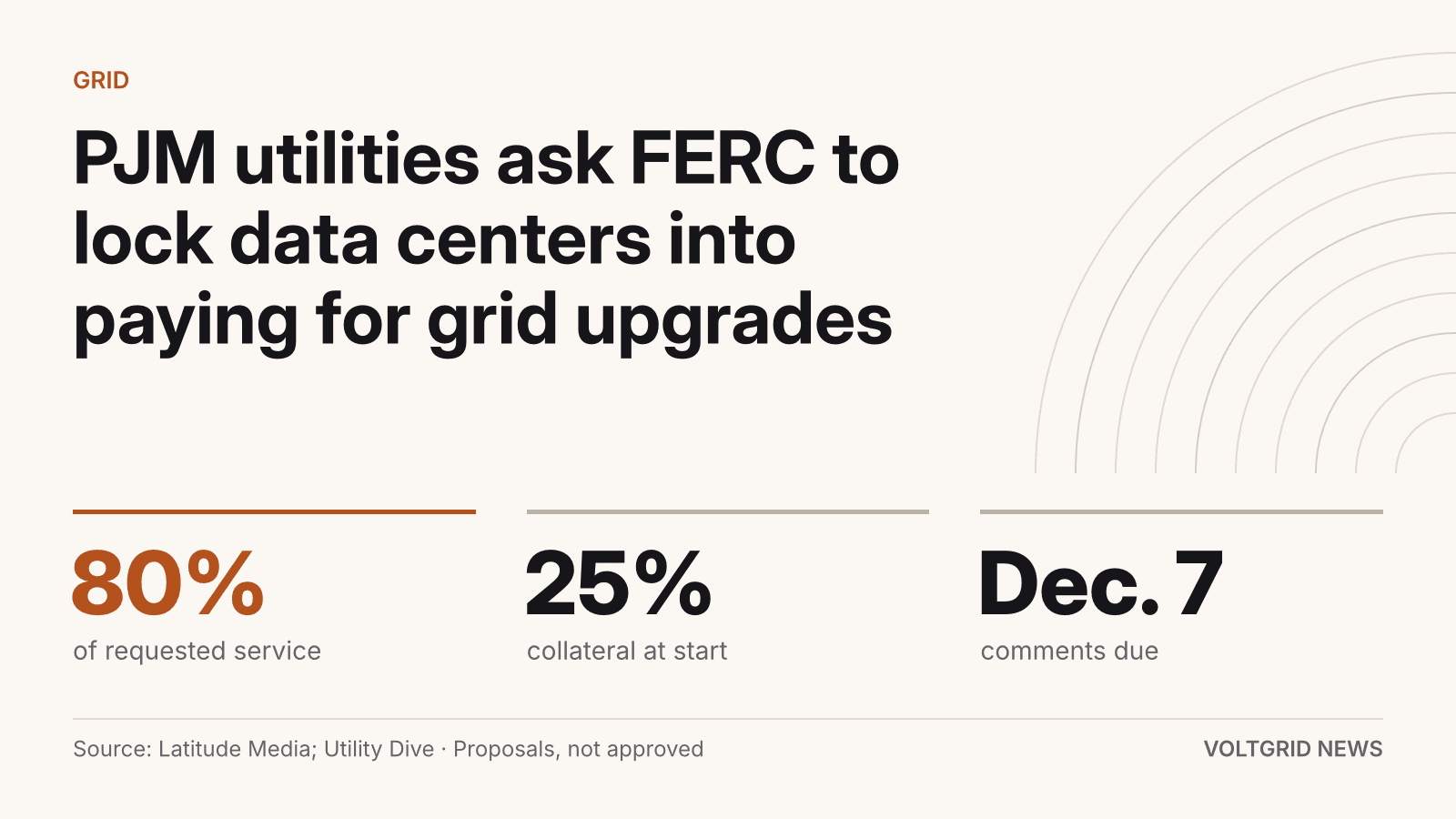
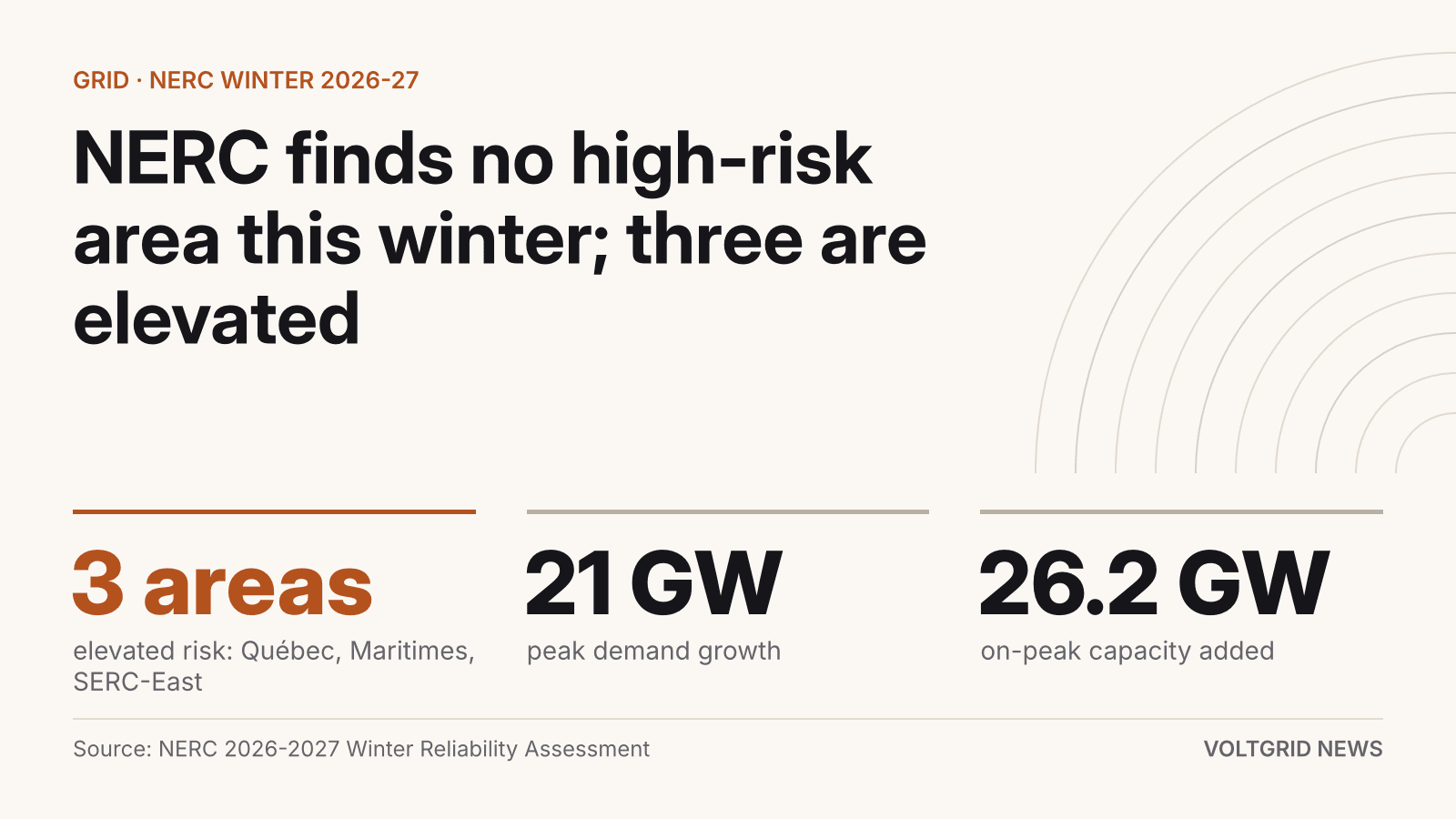
Staff cite NERC's forecast that net internal demand rises 2.6%, or 17.7 GW, to 694.5 GW, while resources and net transfers rise 2.7%, or 25.5 GW, to 985.7 GW. Commercial electricity use is projected to run more than 6% above its five-year average, which the report attributes in part to large-load growth. For the NERC view itself, see Voltgrid's report on NERC's winter reliability assessment. The report also counts more than 5,169 MW of coal and gas units kept running under Department of Energy emergency orders. How utilities want to pay for the grid that serves such load is a separate fight at the commission, as Voltgrid reported on the 10 to 20 year upgrade contracts utilities have asked FERC to approve.
What is not confirmed yet
The report is a staff product and does not necessarily reflect the views of the Commission or any commissioner. It forecasts no supply shortfalls under normal conditions, but extreme cold is the risk case. NERC's probabilistic work puts SERC-East at elevated risk, and New England could see stored fuel run down in a prolonged event. Staff say Glen Canyon could still reach minimum power pool in 2027 under the lowest inflow forecast, and that a very strong El Nino raises the odds of polar vortex disruptions in the central and eastern states.
Sources
- Published
- Sources
- 2 cited