PJM Proposes Fast Energization to Halve Data Center Studies to 1 Year
PJM asked FERC on Nov. 16 to approve a combined 12-month study for generation and data center load, down from two years, plus ride-through rules for loads of 50 MW or more.
3 min read
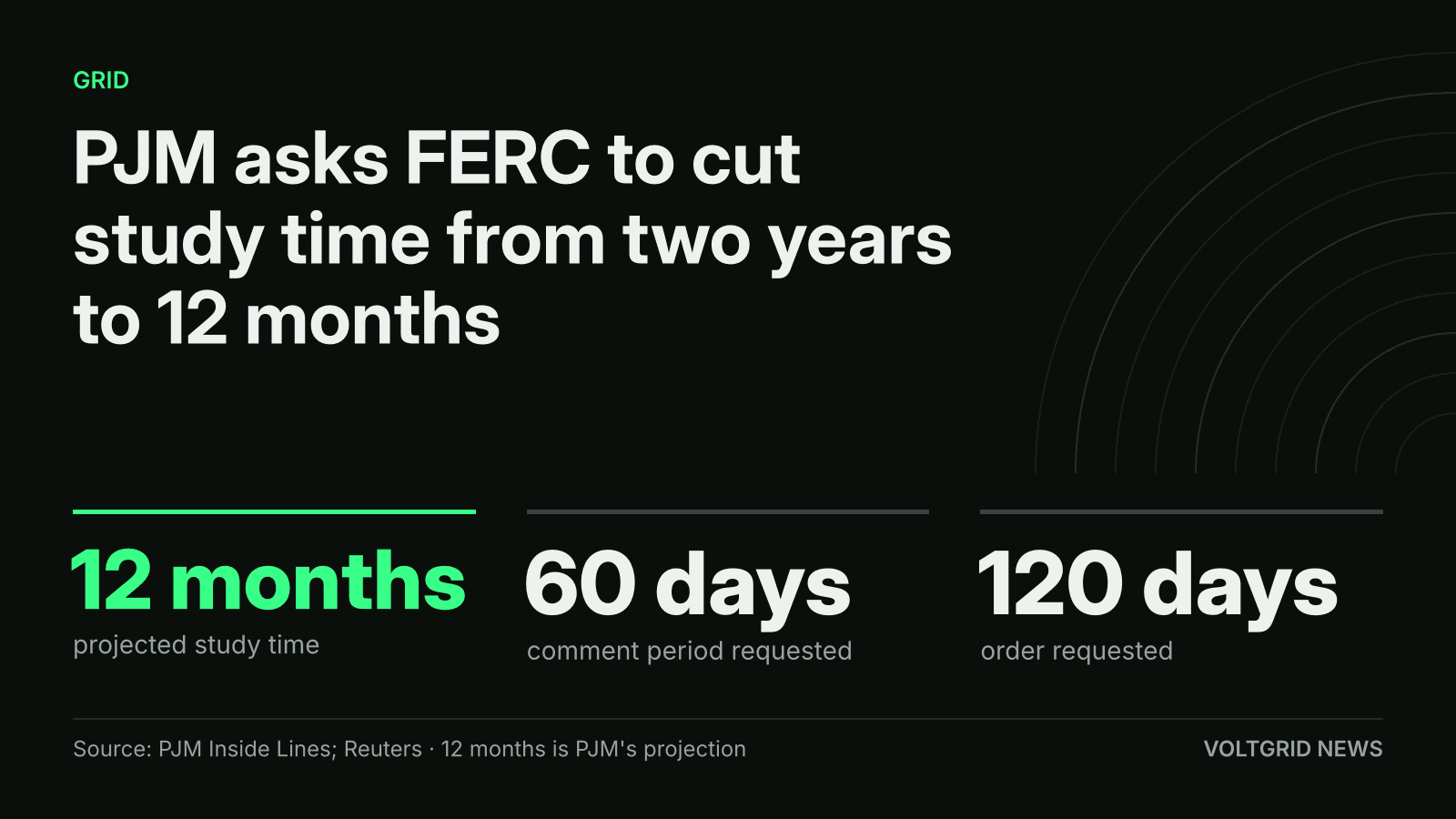
PJM's projected 12-month study time, with the 60-day comment period and 120-day order it requested from FERC.
Graphic: Voltgrid News
PJM Interconnection said on Nov. 16 it is asking the Federal Energy Regulatory Commission (FERC) to approve a "Fast Energization" process that would cut the time to study new generation and large loads such as data centers from two years to one.
Fast Energization would study generation, transmission service and large loads together instead of in separate queues, PJM said in a release. Reuters, which reported the proposal the same day, said the combined study would run 12 months instead of two years. PJM asked FERC for a 60-day comment period and an order within 120 days of the filing.
PJM also said the proposal would move readiness and financial requirements earlier, to weed out speculative generation projects and large loads, and would show states and utilities what data-center-driven transmission upgrades cost so they can bill those loads directly. That cost visibility is the part Reuters flagged as a risk for developers: the proposal may require data center companies to pay a larger share of grid costs.
What the Filing Would Change for Data Centers
For a data center developer the headline is the clock. A study that takes 12 months rather than two years moves the earliest firm answer on connection cost and timing a year closer, but only for projects that clear the stricter screening. PJM said readiness requirements would apply earlier, so a developer must commit money before it knows the full upgrade bill.
PJM said the design keeps the first-ready, first-served principle of its reformed process. It also creates new transmission services for large loads, including an interim service while network upgrades are built, which follows FERC's finding that some large loads are willing and able to limit their use of the grid.
Reuters reported that the Data Center Coalition told PJM's board in October that a combined study process might complicate interconnection and lead to longer delays. PJM's own pitch rests on the opposite claim: that neither generation nor transmission is arriving fast enough, and that study time is the one factor PJM planning can influence, according to PJM spokesman Jeff Shields.
The grid it covers is under strain. Reuters said PJM serves 13 states and 67 million people and faces a supply shortfall of about 6.8 gigawatts (GW). PJM's fast lane for generation, which Voltgrid covered when PJM accepted a fourth Expedited Interconnection Track project on Nov. 11, is a separate process that speeds a limited number of power plants. Fast Energization is aimed at the whole study pipeline.
Ride-Through Rules for Loads of 50 MW or More
In a separate filing on Nov. 16, PJM proposed voltage and frequency ride-through requirements for large computational loads, effective Jan. 16, 2027. Ride-through means a data center stays connected during a grid disturbance instead of switching to backup generators.
PJM said nearly 3.9 GW of data centers moved to onsite generators on July 22 after a routine transmission disturbance, the largest such transfer in its history, as PJM told FERC at its October reliability conference. PJM said the proposed standards would have mitigated the effects had they been in place that day.
The filing defines a large computational load as one of 50 MW or more. PJM said it already serves around 10 GW of such load and forecasts additions of up to 30 GW by 2030. New loads would have to show compliance as a condition of interconnection and operation, and existing loads would have one year from the effective date, or from commercial operation if later.
PJM serves around 10 GW of large computational load and forecasts up to 30 GW by 2030.
Graphic: Voltgrid News
What is not confirmed yet
FERC has not acted on either filing, and PJM's release said a link to the Fast Energization filing would be provided once available. The docket number for it was not yet posted on the PJM pages we read, so it is not given here. The 12-month figure is a projected timeline from PJM, not a measured result, and Reuters notes the proposal still faces pushback from data center advocates. The October FERC order on PJM's earlier large-load plan approved its registry but rejected the curtailment package, so a FERC ruling on the new filing is not assured.
Sources
- 01PJM Plan Would Cut Interconnection Process Time in HalfPJM Inside Linesinsidelines.pjm.com
- 02PJM Proposes New Rules to Protect Grid Reliability as Data Center Demand GrowsPJM Inside Linesinsidelines.pjm.com
- 03Biggest US power grid proposes plan to regulators to cut wait times for data center powerReuters (via New Straits Times)nst.com.my
- Published
- Sources
- 3 cited