Senate Permitting Bill: Data Centers Would Pay an Estimated $55B
Data centers would pay $55 billion in transmission charges over 10 years under the Senate permitting bill, a Grid Strategies estimate dated Nov. 2 finds, ahead of the Nov. 16 cloture vote.
3 min read
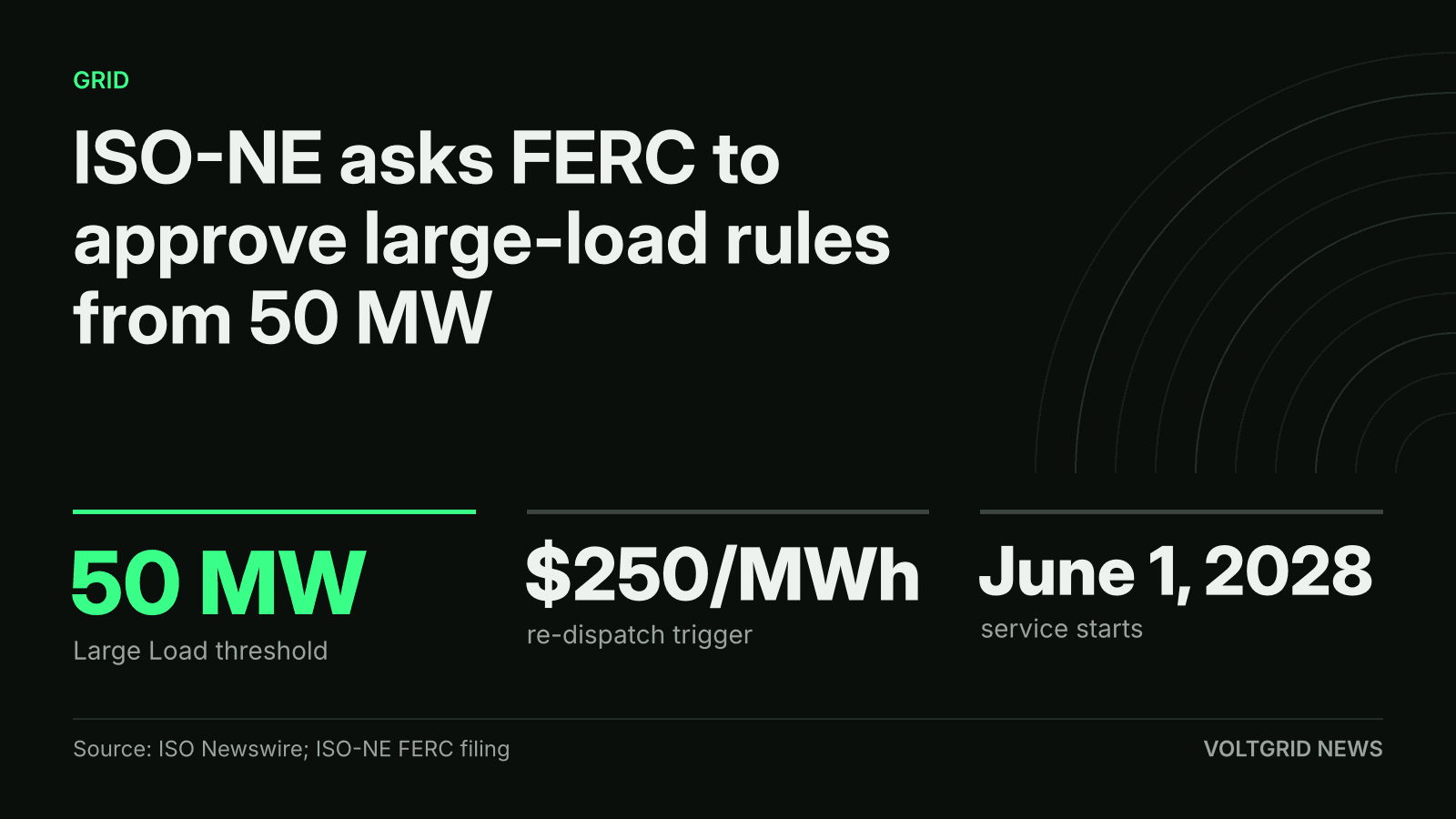
Follows Senate Permitting Bill Advances 73-25 With 20 MW Data Center Rule
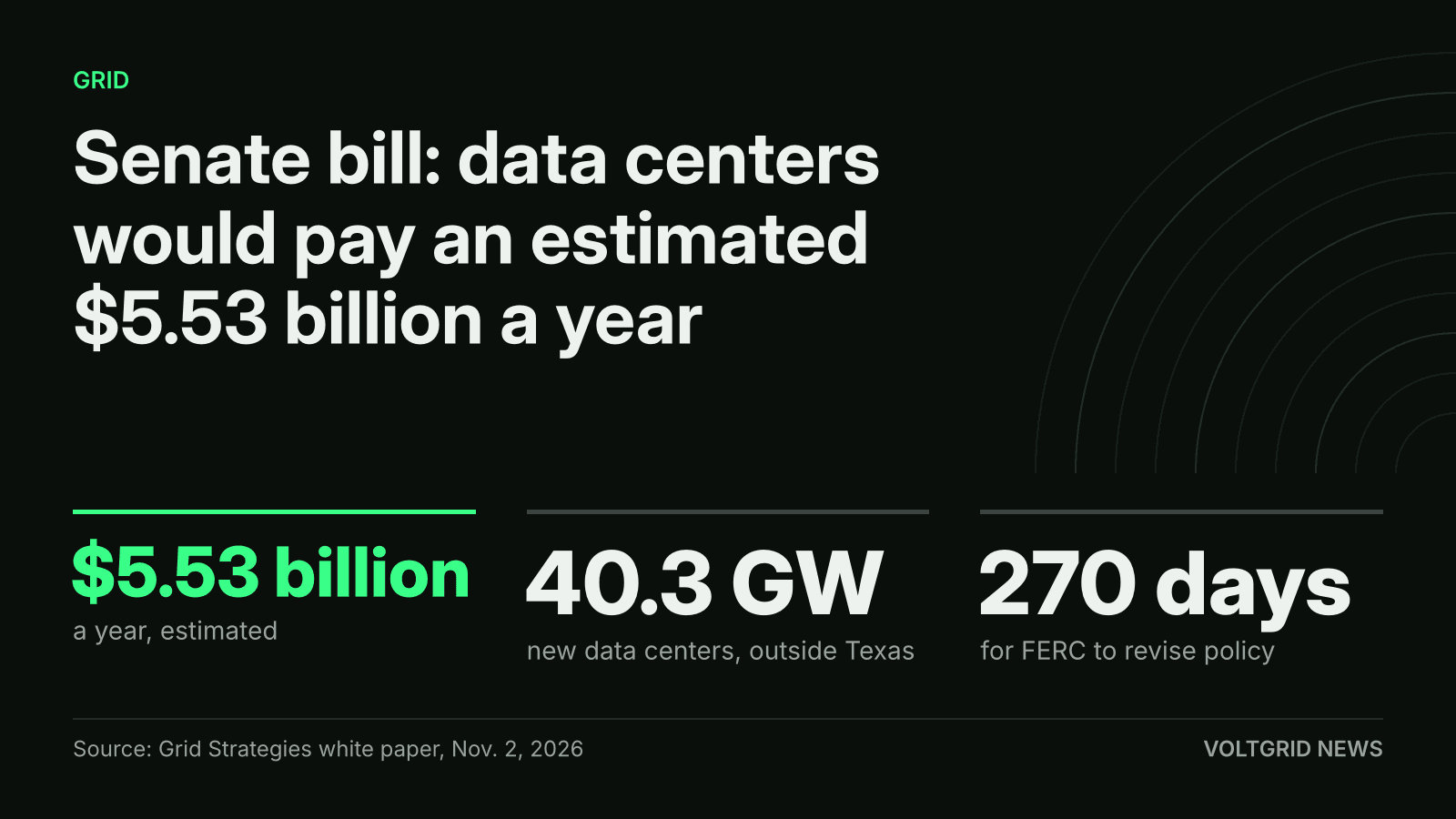
Grid Strategies estimates $5.53 billion a year in transmission charges on 40.3 GW of new data centers outside Texas.
Graphic: Voltgrid News
The Senate permitting bill would collect about $55 billion in transmission charges from data centers over 10 years, according to an estimate from Grid Strategies, a power-sector consulting firm: $35 billion in embedded costs and $20 billion in incremental costs. The figure is from a white paper dated Nov. 2, 2026, and The New York Times first reported it.
Embedded costs are $35 billion of Grid Strategies' $55 billion estimate; incremental costs are $20 billion.
Graphic: Voltgrid News
The Senate has not voted on the bill itself. Its floor schedule for Monday, Nov. 16, lists a 5:30 p.m. ET cloture vote on the Capito substitute amendment (No. 6883) to H.R. 2347, the vehicle for the permitting bill. Voltgrid's earlier story covered the 73-25 vote of Nov. 9 that brought the bill to the floor, and it carried no dollar figure for what data centers would pay.
How the Bill Would Make Data Centers Pay for the Grid
Section 2107 of the Bipartisan American Affordability and Jobs Act (BAAJA, S. 5653) would require FERC, within 270 days of enactment, to revise its 1994 Transmission Pricing Policy Statement and drop the bar on charging both embedded and incremental costs, Grid Strategies says. Embedded cost is the share of the existing grid; incremental cost is what a new customer triggers. For service to data centers, utilities would charge both.
The firm assumes 40.3 GW of new data centers outside Texas and totals $5.53 billion a year: $3.54 billion embedded and $2.00 billion incremental. It estimates data centers now pay about $2 billion a year for transmission, so the change adds about $3.5 billion a year, or $35 billion over 10 years. That second $35 billion is the increase over current policy. It is a separate measure from the $35 billion embedded share, and the two should not be added.
Where the Charges Would Fall
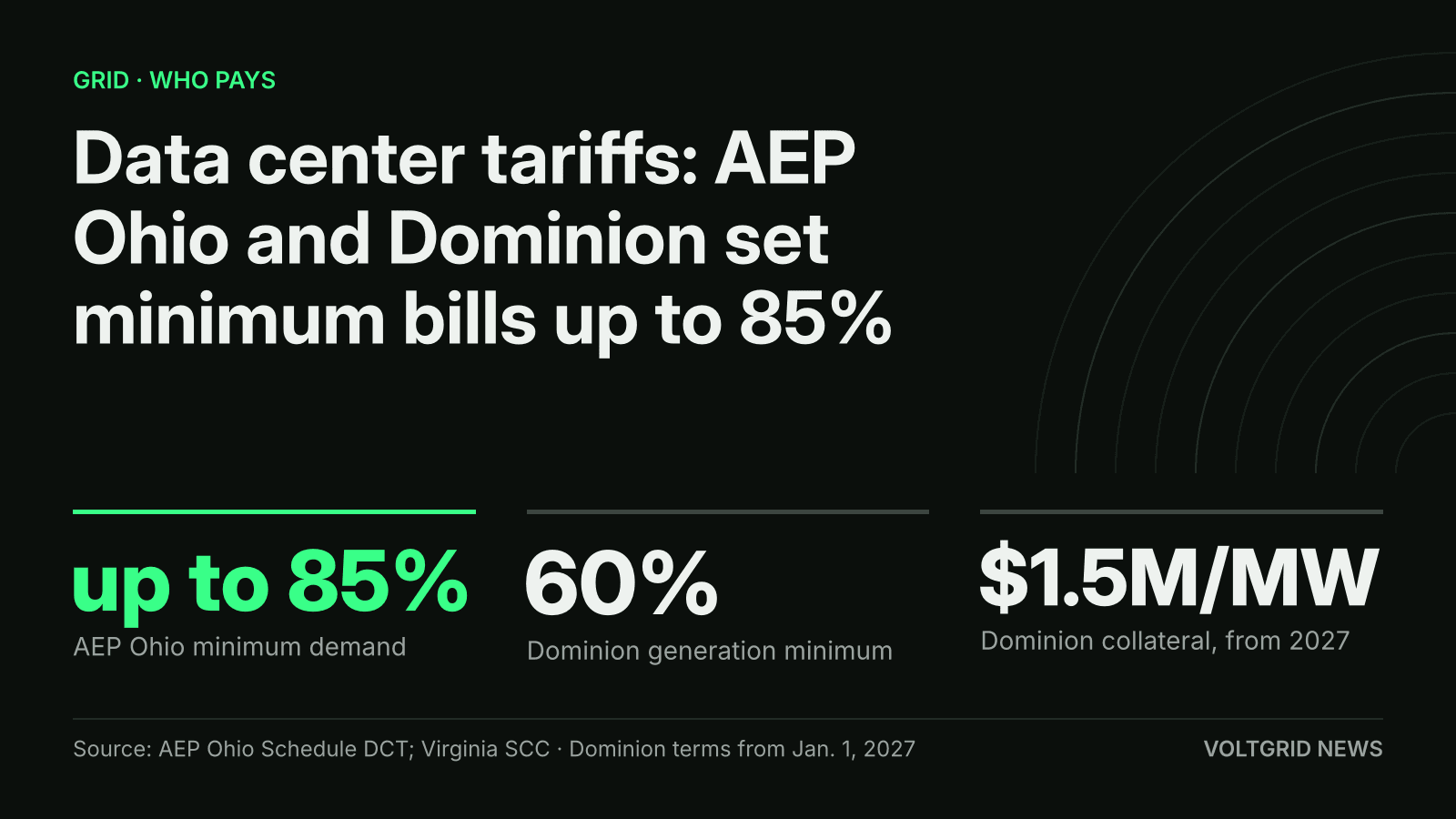
According to TechTarget, PJM and MISO account for about 82% of the annual charges: $2.31 billion in PJM on 13.4 GW of new data centers, and $2.25 billion in MISO on 16.7 GW. PJM's charges are higher on a smaller pipeline because its transmission rates are higher, Grid Strategies president Rob Gramlich told TechTarget. The incremental estimate rests largely on 163 approved MISO projects worth about $11.4 billion that connect 43.5 GW of large loads.
The bill requires that incremental payments from data centers lower transmission charges for the utility's other customers. Grid Strategies says the money could pay for almost 10,000 miles of new 765-kV lines over 10 years, depending on when and where data centers connect.
The estimate assumes new data centers take firm transmission service. TechTarget reports that the pricing could make firm service dearer than arrangements that accept curtailment during grid stress, and could shift how developers weigh on-site generation. Gramlich told TechTarget he expects on-site generation to supplement grid service, not replace it. Because most of the modeled charges fall in PJM and MISO, those regions carry most of the exposure.
What Is Not Confirmed Yet
The $55 billion is a Grid Strategies projection, not a government estimate, and the paper says the data center volume and per-project cost are uncertain. It leaves out Texas's ERCOT region, where FERC does not traditionally regulate transmission service. A separate upper bound of another $136 billion in generation costs assumes every state adopts the bill's optional Ratepayer Protection Floor.
No result of the Nov. 16 cloture vote, or of any later vote on passage, was available when this was filed. House Energy and Commerce Chair Brett Guthrie wants changes to the bill's grid reliability rules, The Center Square reported on Nov. 11, so the House would still have to act. FERC's rule would follow, so the final charges depend on terms not yet written.
Sources
- 01Data center operators might pay $55 billion under Senate billTechTargettechtarget.com
- 02Grid Funding from Data Centers in the Bipartisan American Affordability and Jobs ActGrid Strategiesgridstrategiesllc.com
- 03Data center grid bill faces lame-duck Senate floor fightThe Center Squarethecentersquare.com
- 04Monday, November 16, 2026 - U.S. Senate Daily PressU.S. Senate Daily Pressdailypress.senate.govas read on Nov 16, 2026
- Published
- Sources
- 4 cited