ISO-NE Files 50 MW Large-Load Tariff at FERC, $250/MWh Re-Dispatch
ISO New England filed large-load rules at FERC on Nov. 13: firm, interim and non-firm service, re-dispatch at $250/MWh, applications from June 1, 2027 and service from June 1, 2028.
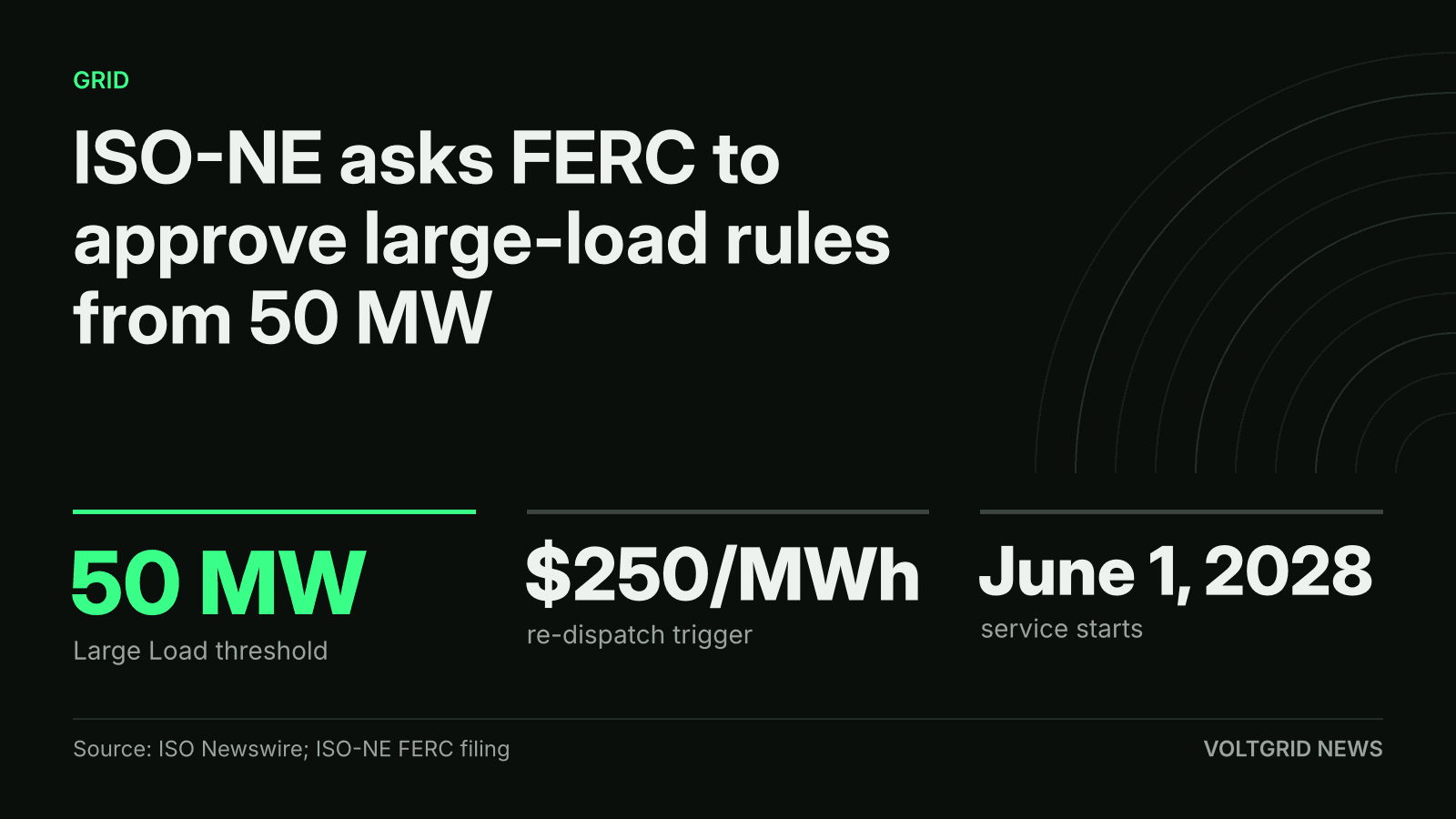
ISO-NE's filing sets the Large Load line at 50 MW and ties interim and non-firm service to a $250/MWh re-dispatch trigger.
Illustration (AI-generated)
ISO New England (ISO-NE), joined by the New England Power Pool and the transmission owners, asked FERC on Nov. 13 to accept rules for loads of 50 MW or more, opening applications June 1, 2027.
The filing targets data centers and other very large customers. ISO Newswire, the grid operator's own publication, said the processes are meant to protect reliability and keep costs off other consumers. The transmittal letter defines a Large Load as a customer at a single site with gross peak demand of 50 MW or more, with a 60 kV interconnection-voltage threshold, and asks FERC to make the tariff effective Nov. 14, 2026. It also asks for a 24-day comment period, to Dec. 7. The letter leaves its Section 205 docket number (ER27-) blank; the order that prompted it sits in docket EL26-72-000.
For a developer in New England, the filing sets out which connection routes exist and what each costs in curtailment risk. Firm service needs new capacity to match the load plus network upgrades. The faster routes, interim and non-firm service, accept re-dispatch whenever local energy prices reach $250/MWh. ISO-NE says the region crosses that price in about 1% of hours today, roughly 88 of 8,760 hours by Voltgrid's arithmetic. The filing says such loads have yet to materialize in New England, so that share is a baseline, not a forecast with data centers on the system.
Three services and one queue
Firm Contract Demand Service gives a load the same priority as other firm load, but only after the upgrades are built and the customer has designated new capacity. Interim Contract Demand Service is a temporary, non-firm service for customers working toward firm status; ISO-NE's summary says it runs up to seven years or until the upgrades are in service, whichever is longer. Non-Firm Contract Demand Service is permanent and needs no new capacity designation, but suits flexible loads that will cut use under set conditions. Re-dispatch means the customer lowers consumption or raises eligible generation. Non-firm and interim service are left out of the calculation of the Installed Capacity Requirement, the amount the capacity market must buy.
Each application costs a non-refundable $50,000 fee and a $150,000 study deposit, and studies are done in order of queue position, with a 90-day target for the system impact study. Service itself starts June 1, 2028, after ISO-NE builds the software to register large loads as dispatchable demand. The tariff also sets a zero-MW netting threshold, so a large load cannot offset its demand with behind-the-meter generation.
How it compares with PJM, ERCOT and the utility tariffs
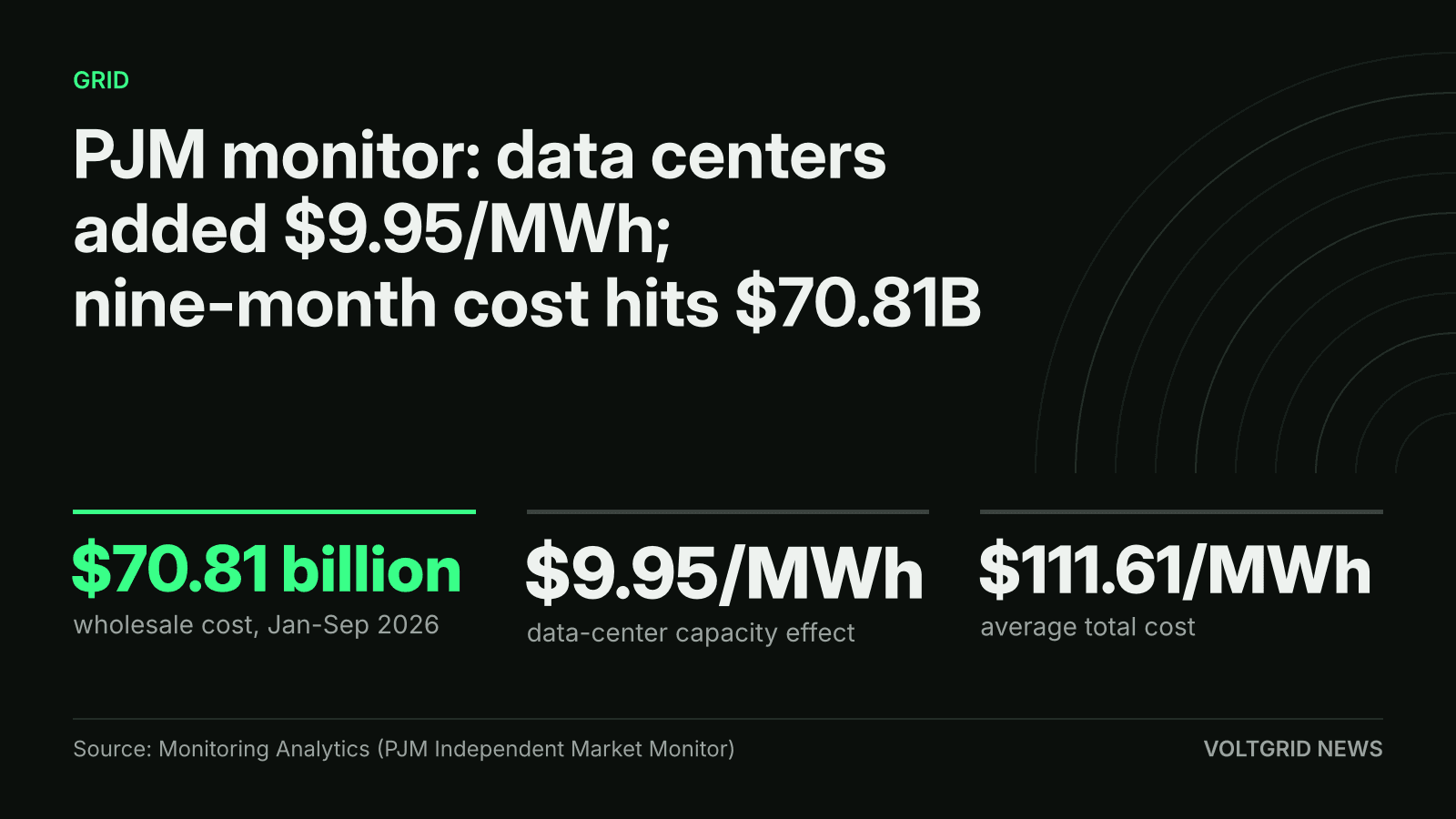
The 50 MW line matches PJM. According to NEPOOL counsel's summary, FERC on Oct. 9 accepted PJM's Large Load definition (50 MW cumulative peak at one site) and a registry, but rejected its package of new-capacity and capacity-market exclusion rules. ISO-NE's filing gives only notice that large loads must bring their own new capacity and will be excluded from the capacity requirement, and defers detail to a separate filing next year. The stakes are shown in PJM's market monitor estimate that data centers added $9.95/MWh to nine-month wholesale cost.
ERCOT draws its line at 75 MW, and it is checking whether developers shrank projects below that line, with nearly 10 GW clustered between 60 MW and 74.9 MW. ISO-NE chose 50 MW after survey data and leaves out loads of 20 to 50 MW by design. Whether projects bunch just under 50 MW is a question for the first years of the queue.
ISO-NE's proposed 50 MW Large Load line matches PJM's and sits below ERCOT's 75 MW, according to the filing and NEPOOL counsel.
Illustration (AI-generated)
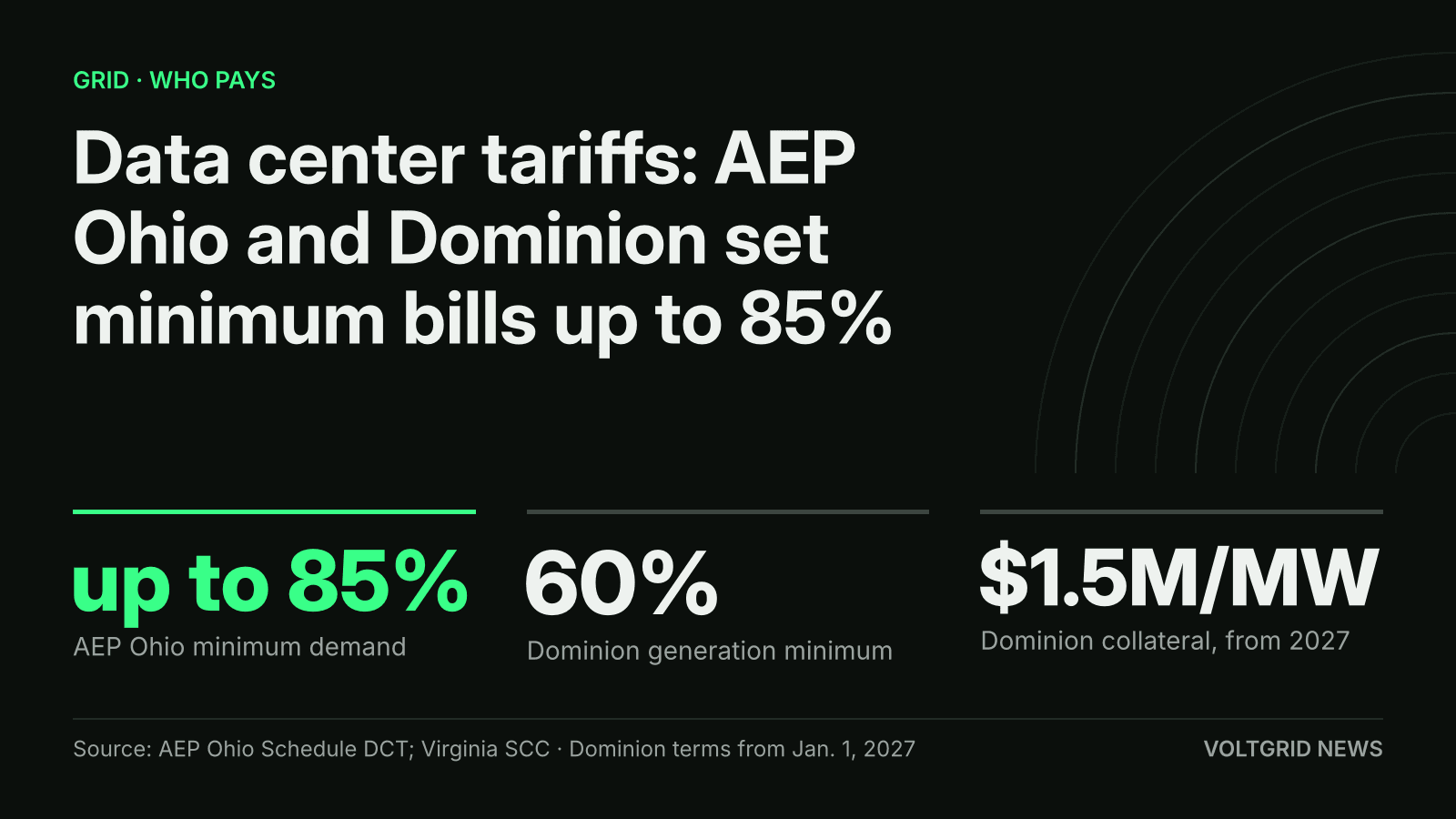
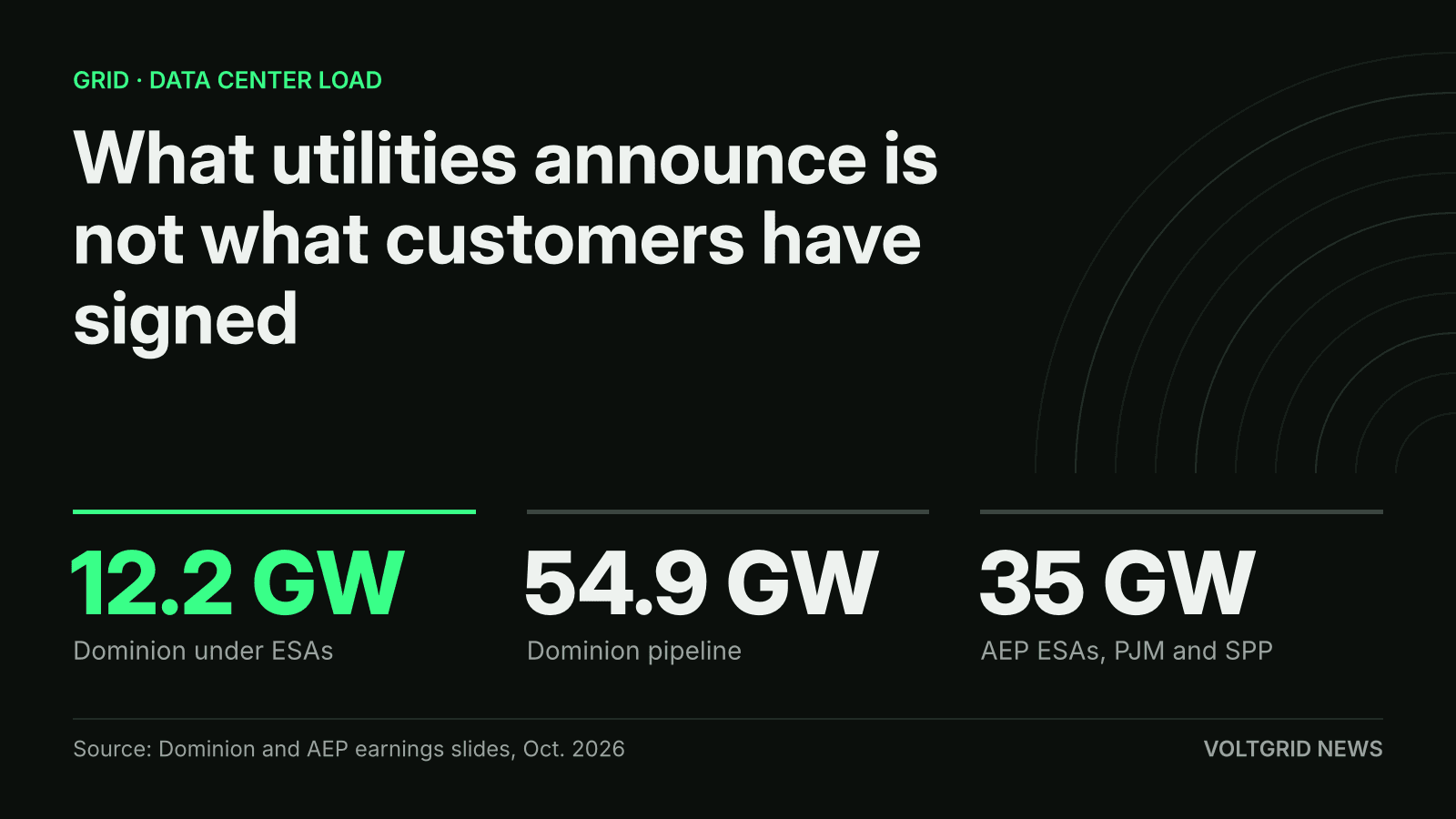
Utility tariffs work differently. AEP Ohio and Dominion set retail minimum bills of up to 85% of reserved capacity. ISO-NE's design sits at the wholesale transmission level and leans on deposits, posted upgrade costs and a cost recovery agreement. CAISO's board plan is also headed to FERC, due Nov. 16.
What is not confirmed yet
FERC has not acted. The Nov. 14 effective date, the waiver of 60 days' notice and the Dec. 7 comment deadline are requests, not rulings. NEPOOL supported the tariff but does not join the filing on the proposed Large Load Cost Recovery Agreement. The new-capacity rules remain open for stakeholder talks in 2027, and the $250/MWh price rests on ISO-NE's own testimony. No FERC docket number has been assigned in the documents Voltgrid read.
Sources
- 01FERC order instituting Section 206 proceeding on ISO-NE large loads, Docket EL26-72-000FERCiso-ne.com
- 02ISO-NE files proposal with FERC to address large loadsISO Newswire (ISO New England)isonewswire.com
- 03ISO New England large-load tariff filing: transmittal letter and tariff revisions, Nov. 13, 2026ISO New England (FERC filing)iso-ne.com
- Editor
- Ege Erten
- Published
- Sources
- 3 cited
- Standards
- AI-assisted