Data Center Power Rules: Norway Pauses, Malaysia Sets 30%, UK Offers Priority
Five national governments have aimed rules at data center power or capacity, but of their headline measures only Norway's pause and Russia's decree are in force. The US Senate bill, not yet passed, has no 20 MW cutoff in the text now on the floor.
Hardware & Analysis DeskEdited by Ege Erten
7 min readAI-assisted
Follows our story: Senate Permitting Bill Advances 73-25 With 20 MW Data Center Rule
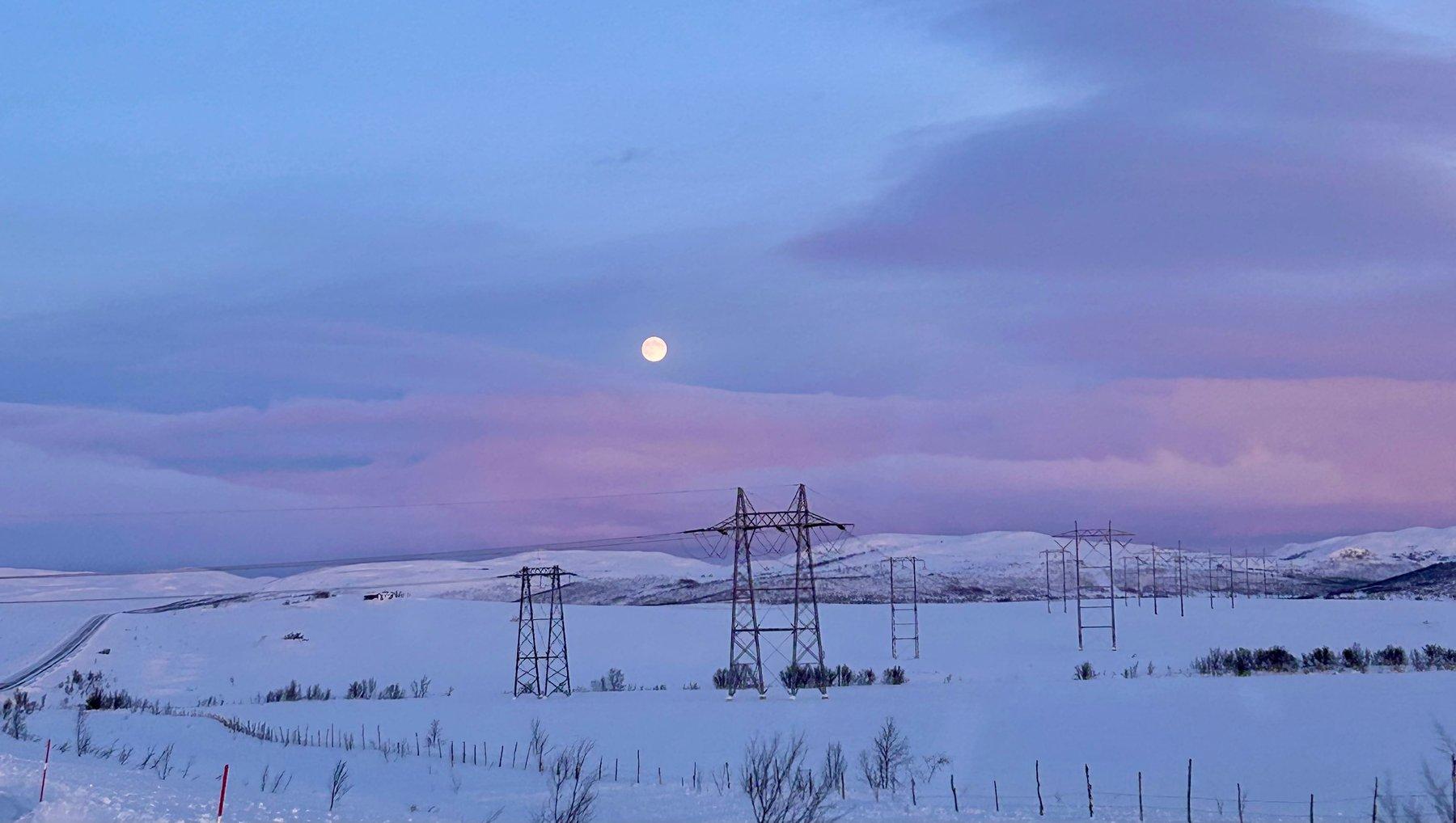
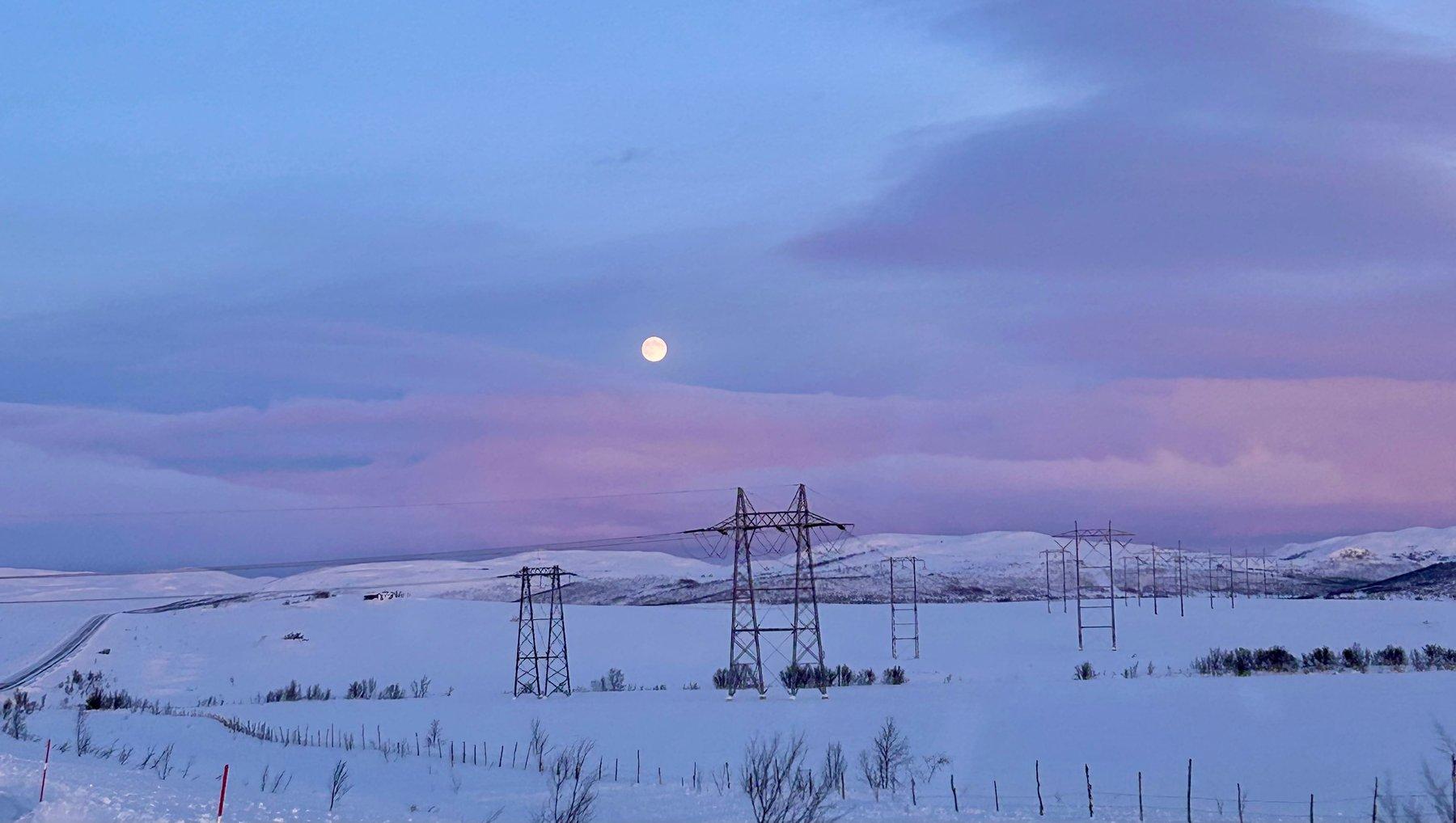
Statnett power lines in northern Norway, the illustration on the operator's release; Statnett halted new data center connection reservations on Nov. 9, 2026.
Image: Sven Rune Arnesen / Statnett
Source · Press image from the Statnett newsroom, used for news reporting.
Five national governments have written rules aimed at data centers' power or capacity: Norway paused new grid reservations, Russia and Malaysia set percentage rules, the UK offers priority to sites that pass its tests, and a US Senate bill would price the load. South Korea, India and Germany approved storage and firm-capacity measures in the same weeks; none of their documents mentions data centers, so they appear only as the supply side.
Legal status differs most. In force: Norway's grid pause, Russia's decree and a city moratorium in Boise, Idaho. Norway's licensing is an announced intention. Malaysia's 30% requirement is a government decision announced Oct. 27, with no start date; its grid-connection conditions, reported Nov. 4, already apply. The UK's covenant is a Treasury policy paper, not legislation. The US bill has not passed.
Two of the five are in force. The Senate text is pending, not law, and sets no MW threshold; the UK fee is Ofgem's proposal.
Voltgrid News
Illustration (AI-generated)
Four Ways Governments Ration Data Center Power
A grid reservation is a place held in line, not electricity. The operator sets aside future capacity for a project, often years before anything is switched on. Norway's operator Statnett counts 800 MW of data centers connected, 4,200 MW holding reservations, 9,100 MW in the capacity queue and requests for a further 18,000 MW. Malaysia's energy ministry told parliament that contracted data center capacity was 2,346 MW in August 2026, while active facilities drew 1,374 MW, Malay Mail reported.
Four instruments follow. A pause stops new claims: Norway's grid operator nationally and, through a land-use moratorium of up to six months, the city of Boise, Idaho. A quota or reserve fixes a share: Malaysia has approved a 30% renewable-energy requirement for data centers, and Russia makes private owners hold back 10% of their data center space and capacity for state use, which is the facility's own capacity, not grid power. Priority access ranks the claims: the UK's covenant. A local-benefit condition ties support to domestic gains: the UK's Local Benefit Plan and an expectation that data centers prioritize UK suppliers. The only binding local-content number here, India's 40% for battery projects, is a storage rule. The US bill adds a fifth type, a cost rule on rates, not an interconnection ban.
Norway, Malaysia, Russia and the UK: Pause, Quota, Reserve, Priority
Norway is the clearest pause. On Nov. 9, 2026, Statnett halted new connection reservations for data centers and new applications for facility approval under section 14 of the system-operation regulation. It expects the halt to be lifted no later than Aug. 1, 2027, and says it applies until its functional requirements for data centers are approved by the regulator RME. The government said it intends to license data centers, existing ones included; no legal text exists. AFP reported the scheme would take effect after Aug. 1, 2027, while the law firm CMS and the publication Capacity wrote that main principles are due by fall 2027. The accounts differ on whether licensing can start that soon (Voltgrid's report).
Malaysia's instrument is a quota with conditions. Deputy Prime Minister Fadillah Yusof told parliament on Oct. 27 that the government has approved a requirement for data centers to use at least 30% renewable energy, with the Energy Commission developing guidelines, The Edge and state broadcaster RTM reported. The Edge said it is based on total capacity or energy consumption without saying which; RTM reported 30% of each operator's total energy use. No start date or scope for existing sites is published. A written parliamentary reply, reported by Malay Mail on Nov. 4, says operators seeking grid connection in Peninsular Malaysia must submit 10-year staggered energy projection plans and sign binding electricity supply agreements with Tenaga Nasional Berhad. It gave no penalty amount; on June 24 Fadillah said companies not using declared capacity can be penalized, RTM reported (Voltgrid's report).
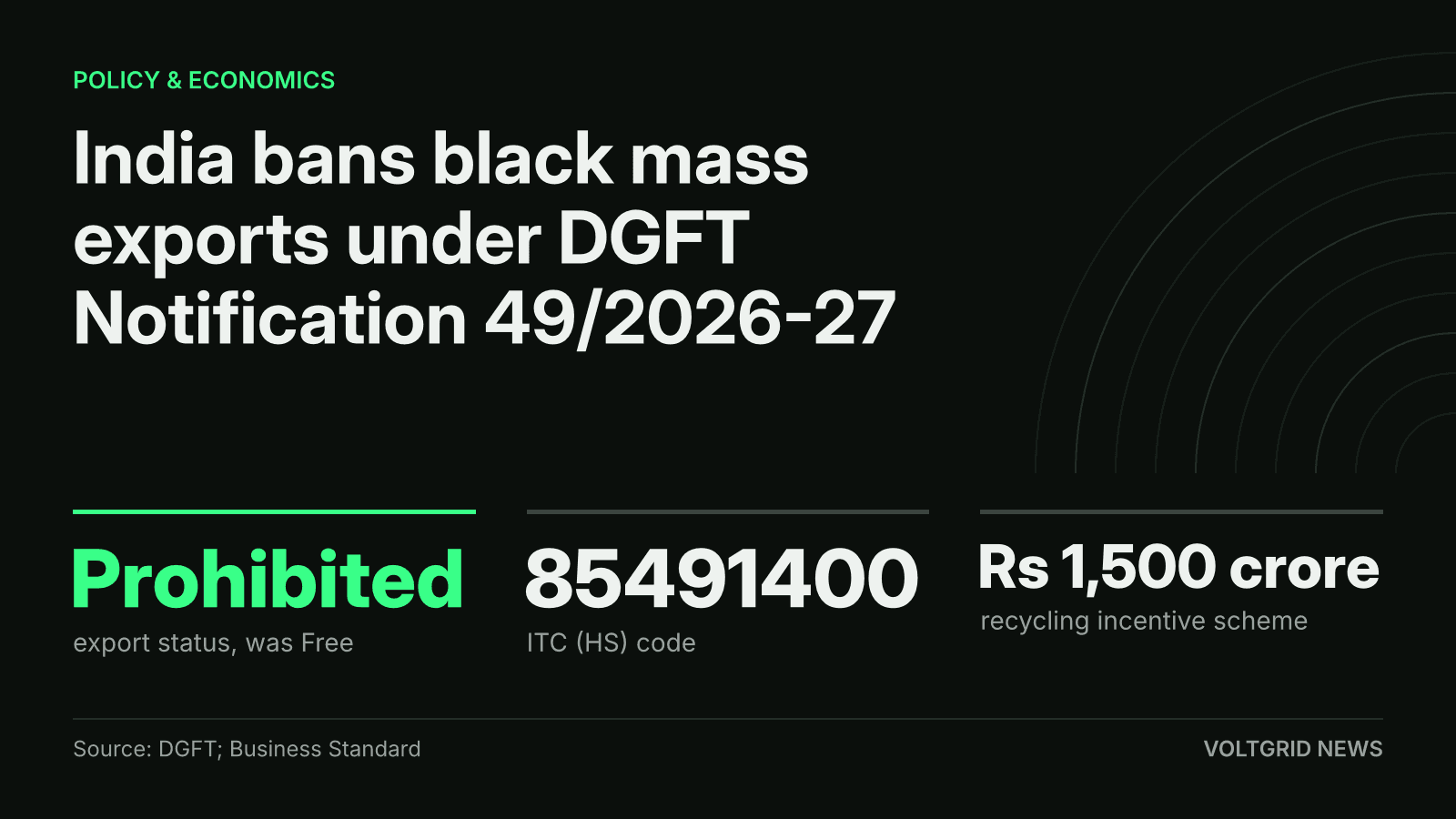
Russia's tool is a reserve, and it is in force. Presidential Decree No. 802, published on the Kremlin site on Nov. 2, requires owners of non-state data centers to reserve 10% of their space and capacity, not grid power, for Russian information resources, by Nov. 12. Operators keep using it until a government subcommission calls it, after which it must be provided within 24 hours at a maximum price the subcommission sets, Interfax reported, adding that the government still has to form the subcommission (Voltgrid's report).
The UK offers priority in exchange for conditions. The Treasury's Oct. 28 Data Centre Covenant says the government estimates the UK needs 6 GW of AI data center capacity by 2030. Strategic data centers that meet its tests could get reserved and reallocated grid connections under Planning and Infrastructure Act powers, transfers of pre-2030 connection contracts and, for exceptionally strategic projects, an on-site generation framework still to be developed. The tests include paying the energy costs a site creates, a Local Benefit Plan and a Power Usage Effectiveness (PUE) of 1.3 or better for new facilities. The covenant sets no fee of its own but backs Ofgem's proposed commitment fee: Ofgem consulted until Sept. 16 on security of £237,500 to £712,500 per MW for projects of 40 MW or more, returned at energization and payable if a project leaves or shrinks, according to the law firm Forsters. Ofgem intends to decide later in 2026. At 100 MW that is £23.75 million to £71.25 million (Voltgrid's arithmetic). See also Voltgrid's coverage.
US Senate Cost Rule, and Three Supply Measures That Are Not Data Center Rules
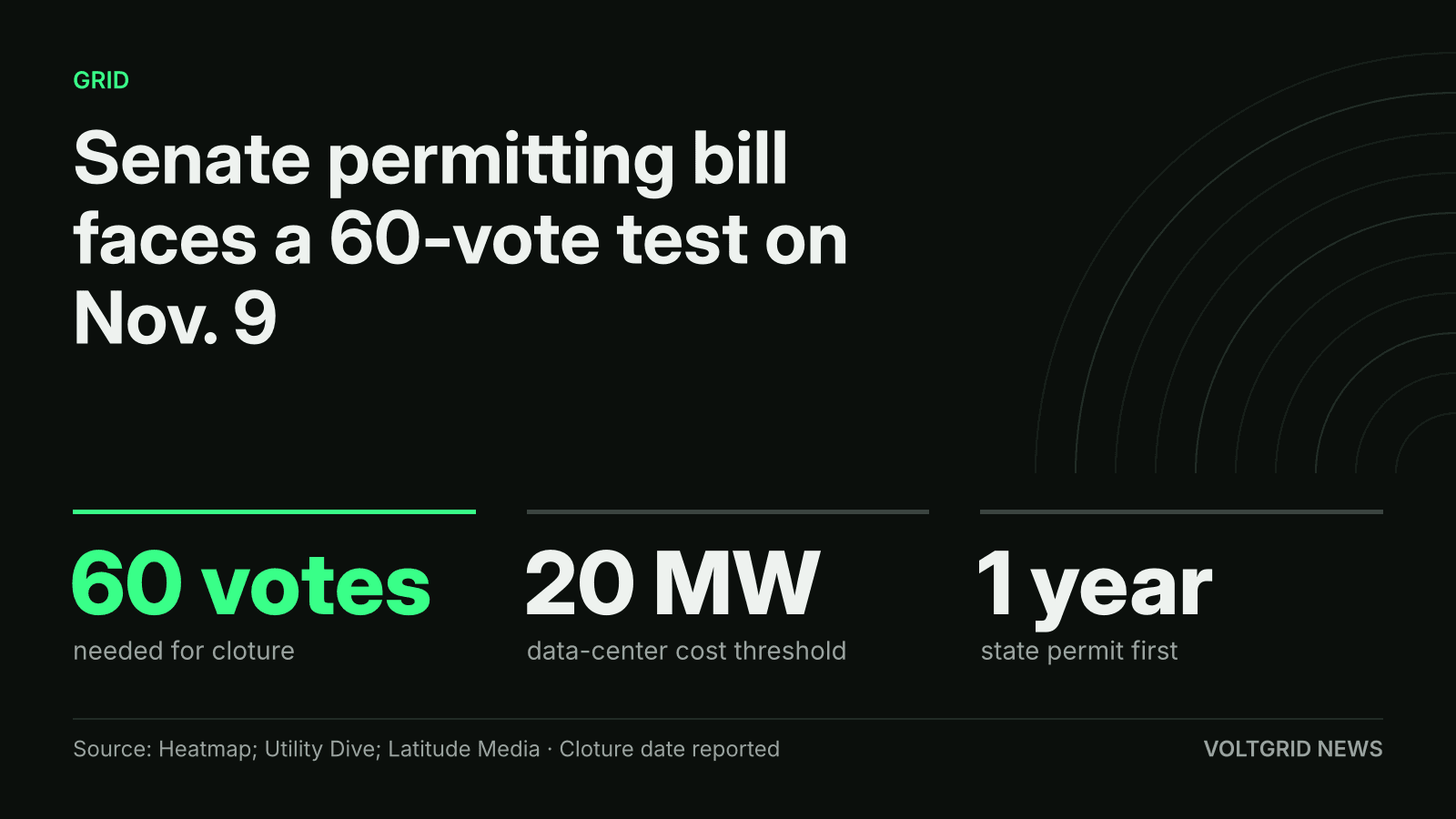
The US Bipartisan American Affordability and Jobs Act would have the Federal Energy Regulatory Commission (FERC) rewrite its 1994 pricing policy so data centers pay both the embedded cost of the existing grid and the incremental cost of expansion; states could also allocate service through open seasons. As introduced on Sept. 30, its ratepayer protection applied only to loads of 20 MW or more, according to the bill and the law firm Foley Hoag.
That 20 MW line is not in the version senators are debating. The substitute, Senate Amendment 6883 to House shell bill H.R. 2347, was released Nov. 7 and has been pending since Nov. 10. It covers any data center that interconnects on or after enactment, whatever its size, and gives FERC 90 days after enactment to revise the policy and propose a rule, with a final rule a year later; the Sept. 30 text gave 270 days for the policy alone. White & Case, the Bipartisan Policy Center and Volts noted the change. Nothing has passed the Senate and the substitute is not adopted: cloture on the motion to proceed carried 73-25 on Nov. 9 and the motion to proceed 62-21 on Nov. 10, per Senate roll calls. Voltgrid's Nov. 8 and Nov. 10 reports described a 20 MW rule that the substitute had already removed. The figure survives in Boise's moratorium of up to six months, approved Nov. 10, covering data centers of 100,000 square feet or a projected 20 MW at full buildout.
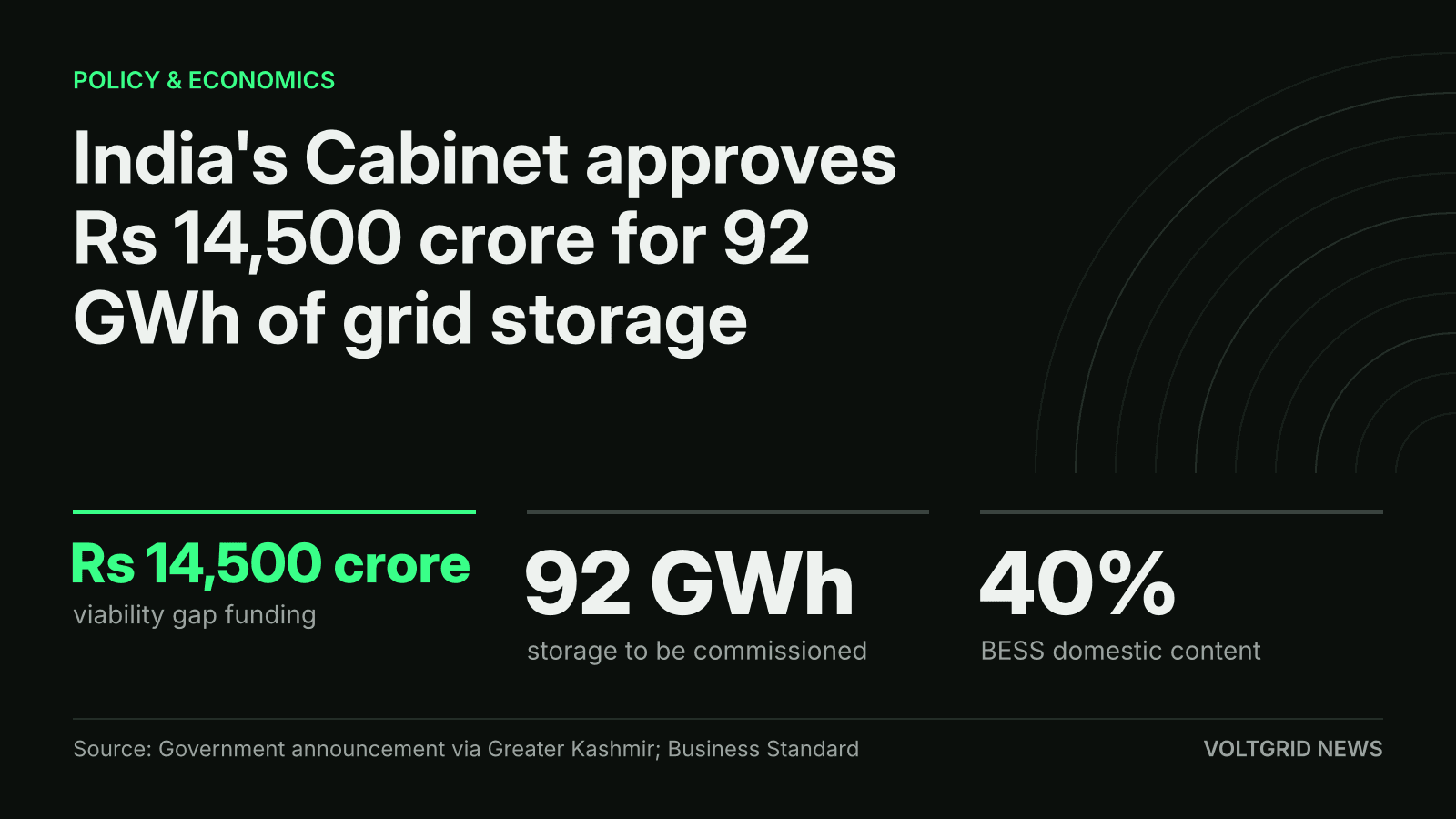
Three other governments acted on supply and storage, without reference to data centers. A subcommittee of South Korea's Regulatory Rationalization Committee confirmed 18 planned battery and storage rule changes on Nov. 2, including a grid-fee exemption for storage whose level and start date are not stated, Etoday and Kyeonggi Ilbo reported (Voltgrid's report). India's Cabinet approved Rs 14,500 crore (Rs 145 billion) of viability gap funding on Nov. 4 for 92 GWh of storage through FY2030-31, with a 40% domestic content requirement for batteries (Voltgrid's report). Germany's Bundesnetzagentur announced on Nov. 3 awards of about 5,160 de-rated megawatts (rMW) in its first long-term capacity tender (Voltgrid's report).
These three measures cover supply and storage and do not mention data centers, so they are not counted among the five data center rules.
Voltgrid News
Illustration (AI-generated)
What Each Data Center Power Rule Costs a Developer
Few of these rules carry a price, so the comparison mixes money, time and share. Norway states no fee; the cost is time, 265 days from Nov. 9, 2026 to Aug. 1, 2027 (Voltgrid's count) if the halt ends on the latest date Statnett expects. Statnett's reservations, queue and further requests are requested megawatts, not expected demand: 4,200 + 9,100 + 18,000 is 31,300 MW (Voltgrid's sum), against a national peak a little over 25,000 MW. Energy Minister Terje Aasland said applications for about 26,000 MW of new consumption of all kinds arrived in 2026, three quarters from data centers, Capacity reported. That share is roughly 19,500 MW (26,000 × 0.75, Voltgrid's arithmetic), on a different base from Statnett's categories.
Statnett's reservations, queue and further requests add up to 31,300 MW (Voltgrid's sum) against a national peak a little over 25,000 MW.
Voltgrid News
Illustration (AI-generated)
Malaysia's contracted capacity exceeded drawn capacity by 972 MW in August 2026 (2,346 minus 1,374, Voltgrid's arithmetic; drawn is 58.6% of contracted). Russia's cost arises only if the reserved 10% is called, at a capped price not yet published. The UK's cost is the proposed Ofgem security above, if adopted; the US cost is left to FERC.
Supply measures show the money more plainly, though none is a data center cost. Germany's average award was €155,296 per rMW a year, 63.6% of the €244,000 ceiling; across about 5,160 rMW that is about €801 million a year once the capacity is available (5,160 × 155,296, Voltgrid's arithmetic), and the release states no payment period. India's Rs 14,500 crore is 14.9% of the Rs 97,600 crore (Rs 976 billion) of expected investment (Voltgrid's ratio).
For a developer the checks differ by country: in Norway, whether a project holds a reservation and a section 14 approval; in Malaysia, a signed supply agreement and a 10-year projection; in the UK, whether it can meet a PUE of 1.3 and would sit above Ofgem's proposed 40 MW line; in the US, that the bill, if passed, would cover sites of any size connecting after enactment. Where terms are still open, as with Malaysia's penalty amounts and the UK's definition of "strategic", later documents will decide the allocation.
What to watch
Nov. 12: deadline for Russian data center owners to reserve 10%; the subcommission that can call the capacity was still to be formed on Nov. 2, Interfax reported, and no price cap has been published.
Russia's 10% reserve falls due Nov. 12; the Senate vote and Norway's Aug. 1, 2027 lift date are expectations, not fixed dates.
Voltgrid News
Illustration (AI-generated)
Week of Nov. 16: White & Case says a final Senate vote is likely. The 119th Congress ends Jan. 3, 2027, so the House would have to act by then; Rapidan Energy Group puts lame-duck passage odds at 20% to 25%, as Tech Times reported.
Later in 2026: Ofgem intends to decide on its commitment fee. Undated: Malaysia's guidelines, the UK's definition of strategic data centers and Norway's licensing text.
Aug. 1, 2027: the latest date Statnett expects to lift its pause. Fall 2027: Norway's licensing principles are due (CMS, Capacity).
Sources
- 01Cabinet approves Rs.14,500 crore VGF scheme for 92 GWh grid-scale energy storageGovernment of India · pmindia.gov.in
- 02Roll call vote 258, motion to proceed to H.R. 2347US Senate · senate.gov
- 03Substitute amendment to BAAJA (SA 6883 to H.R. 2347)US Senate · energy.senate.gov
- 04Malaysia affirms 30 per cent minimum renewable energy mandate for data centersW.Media · w.media
- 05Power-hungry data centres told to go greener as Malaysia sets 30pc renewable energy ruleMalay Mail · malaymail.com
- 06The Data Centre CovenantHM Treasury (gov.uk) · gov.uk