Taishan 3: CGN Pours First Concrete for 1,200 MWe Hualong One
China General Nuclear started civil construction of Taishan unit 3 on Nov. 25, its fourth reactor start of 2026, as Phase II of a six-unit, 6,000 MWe Guangdong plant begins.
3 min read
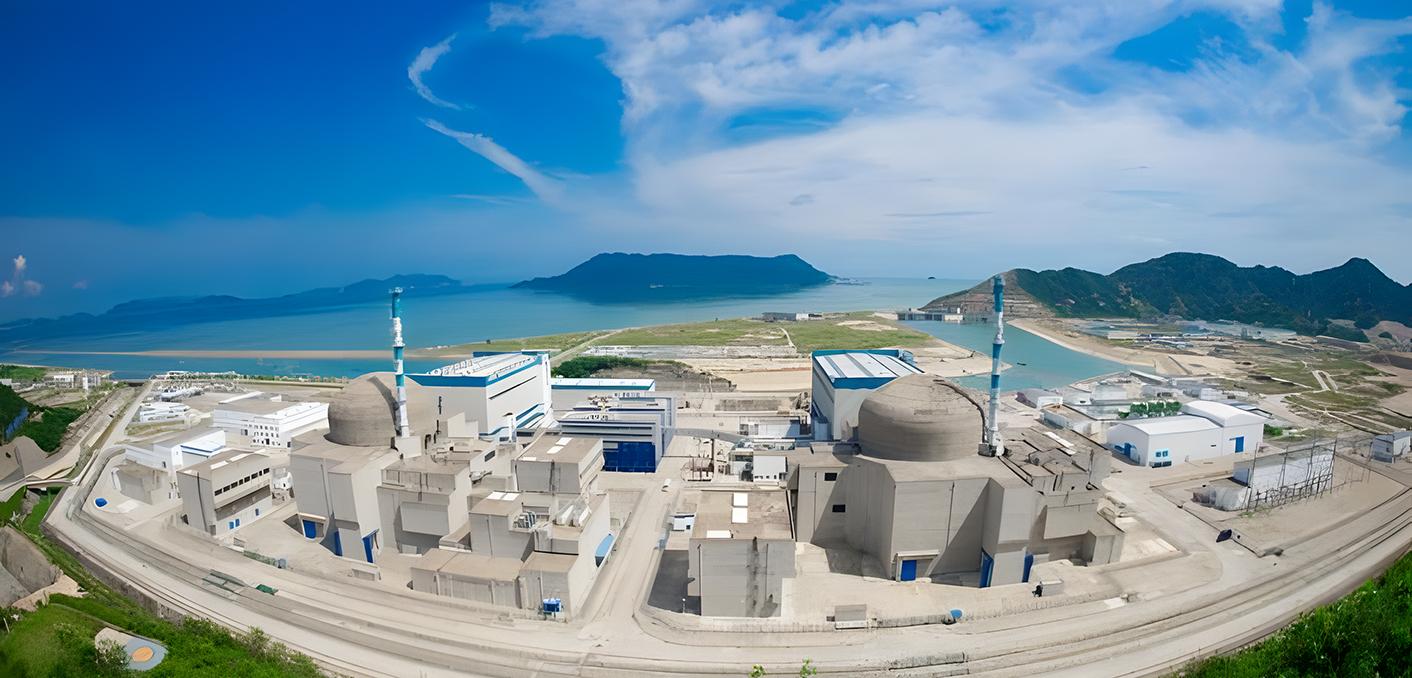
A CGN nuclear power plant image from the company's website; it is not a photo of the Taishan 3 construction site.
Image: CGN
Source · Press image from the CGN website, used for news reporting.
China General Nuclear (CGN) poured first nuclear-island concrete for Taishan unit 3, a Hualong One reactor in Guangdong province, at 10:18 on Nov. 25, according to World Nuclear News (WNN). Nuclear Engineering International (NEI) lists the unit at 1,200 MWe.
CGN said the pour starts the unit's civil construction phase and is the fourth nuclear power unit it has begun building this year, WNN reported. NEI added that the raft foundation of the nuclear island took about 8,823 cubic metres of concrete over 55 hours, and that the pour opens Phase II of the plant, units 3 and 4.
For anyone sizing firm power additions, the point is the cadence rather than one reactor. Taishan 3 is listed at 1,200 MWe by NEI, against the 300 MW the Nuclear Regulatory Commission gives for the GE Vernova Hitachi BWRX-300, the small modular reactor whose first US construction permit went to TVA in a decision dated Sept. 28. As Voltgrid reported, TVA has made no build decision. Neither source labels the Taishan figure as net or gross, so the two numbers are design sizes, not a like-for-like comparison.
Taishan 3 is listed at 1,200 MWe against 300 MW for the BWRX-300; these are design sizes, not a like-for-like comparison.
Graphic: Voltgrid News
What CGN Is Building at Taishan
Taishan 3 and 4 were among ten reactors approved at a State Council meeting on April 27, 2025, led by Premier Li Qiang, WNN reported. Phase II uses the Hualong One, China's own third-generation pressurised water reactor design. Phase I used two French-designed EPR reactors, which WNN says entered commercial operation in December 2018 and September 2019.
CGN said Phase II will use high-level water-collecting natural draft cooling towers, which return cooling water for reuse and cut heat discharge to the sea. The company said the towers save energy and reduce the effect on the marine ecology, according to WNN and NEI. The plant is planned as six units built in three phases, which NEI puts at 6,000 MWe in total.
NEI also quoted Liu Dan, chairman of CGN Taishan Second Nuclear Power, who said the project will apply CGN's Hualong One batch-construction experience and use digital tools that link design, procurement, construction and commissioning data.
How This Fits China's Build Pace
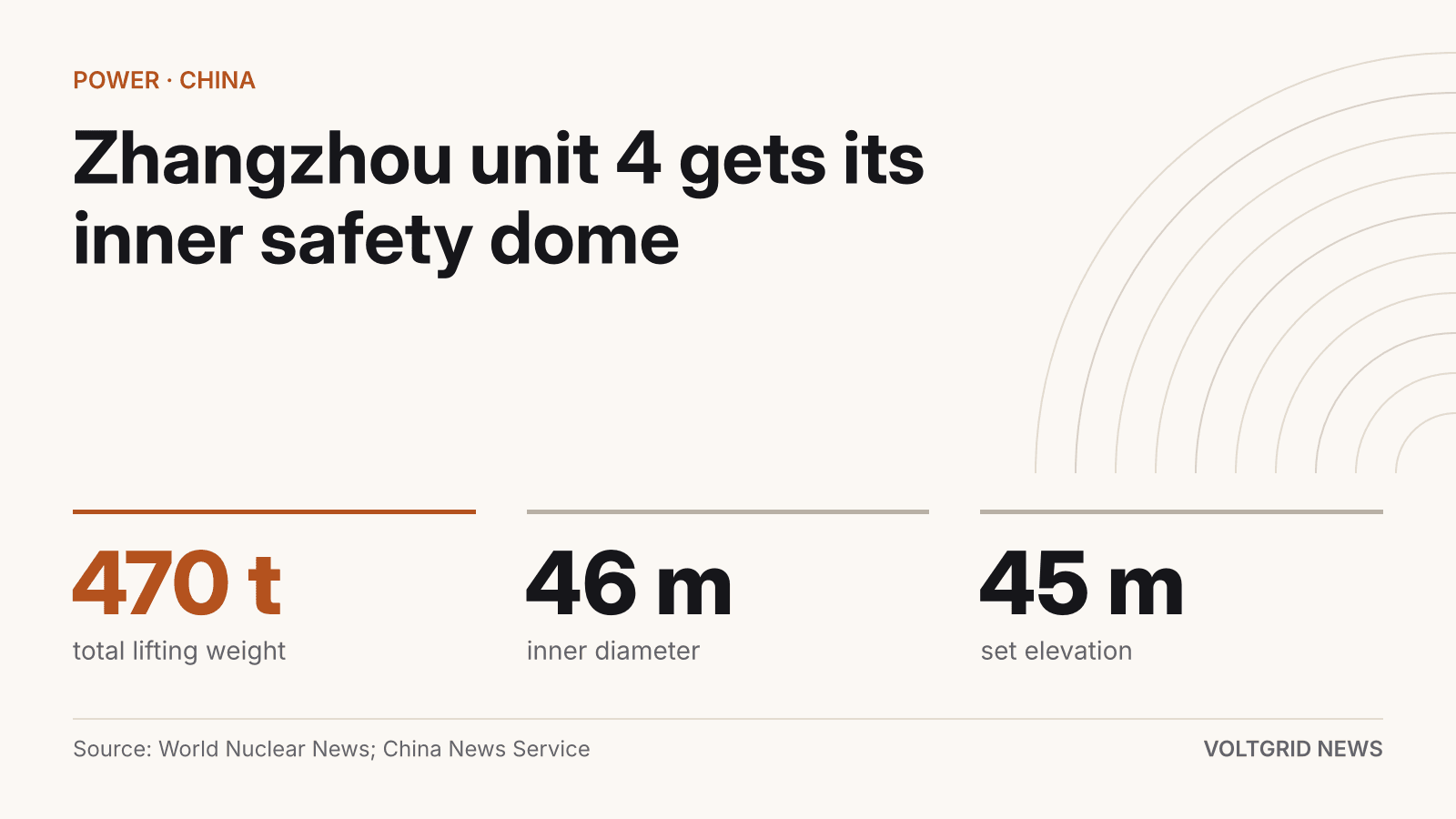
The Taishan start follows other Chinese reactor milestones that Voltgrid has covered, including the Zhangzhou Unit 4 inner dome setting on Nov. 27 and the hot tests and fuel at Tianwan Unit 8 on Nov. 26. Each step moves a large unit closer to the grid, but none of them is a supply date on its own.
What First Concrete Means for a Reactor
In a pressurised water reactor such as the Hualong One, hot pressurised water carries the core's heat to steam generators, and the steam spins the turbine. First nuclear-island concrete is the pour of the raft foundation under that reactor building. It starts civil construction; it does not start the reactor.
The gap between pour and power can be long. NEI says Taishan's Phase I unit 1 began construction in 2009 and WNN says it entered commercial operation in December 2018, which NEI says was about five years later than planned. For anyone counting firm megawatts, the date that matters is grid connection, and neither report gives one for Taishan 3.
What Is Not Confirmed Yet
Neither WNN nor NEI gives a target date for fuel load, grid connection or commercial operation of Taishan 3, and no first-concrete date for unit 4 has been published in the reports we read. CGN's own announcement was not available to read in full, so the 10:18 time and the fourth-start-this-year count rest on WNN's account of it, and the pour volume and duration rest on NEI alone. Neither outlet links the unit to a data-center customer, and any link to AI load would be an inference, not a sourced fact.
Sources
- Published
- Sources
- 2 cited