CATL Holds 40.00% of China's Record 99.4 GWh Battery Installs, BYD 21.36%
China installed a record 99.4 GWh of power batteries in October, CABIA data show. CATL's lead over BYD narrowed for a fifth month, while LFP rose to 86.9% of installs and ternary fell.
3 min read
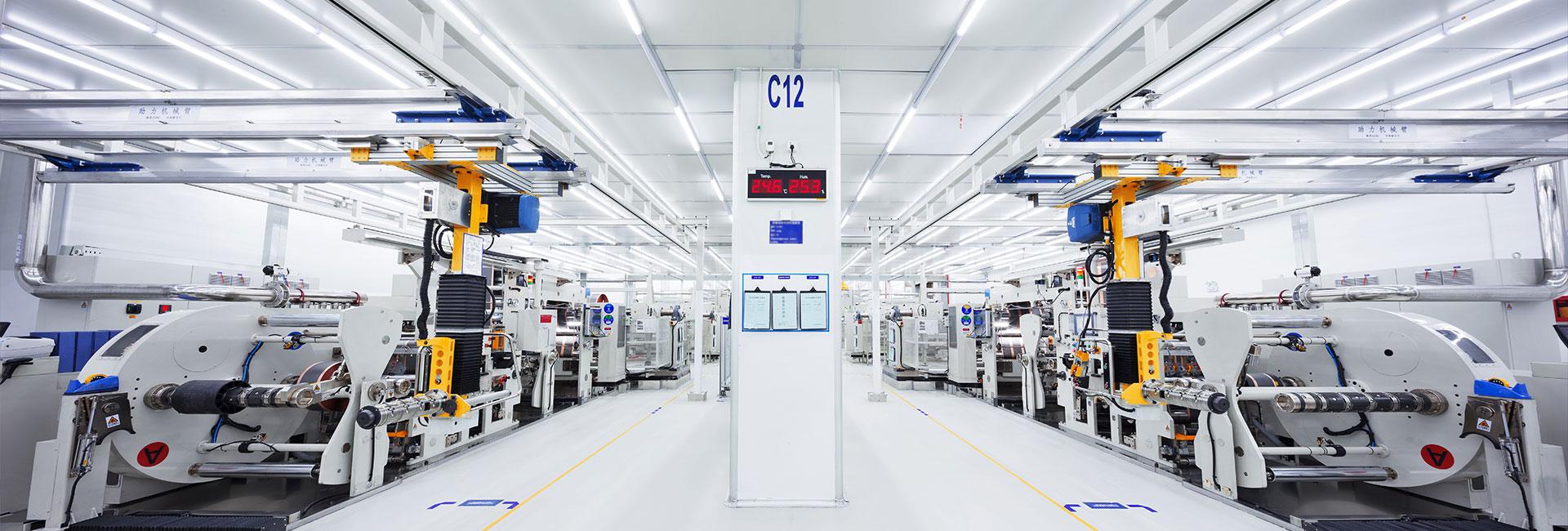
A CATL cell production line, from the company's manufacturing page. The photo is an archive image of CATL manufacturing, not a view of the October installations.
Image: CATL
Source · Press image from the CATL website, used for news reporting.
China's power battery installations reached a record 99.4 GWh in October 2026, with CATL installing 39.60 GWh for a 40.00% share and BYD 21.14 GWh for 21.36%, according to data from the China Automotive Battery Innovation Alliance (CABIA) released on Nov. 19.
CnEVPost, which reported the full CABIA tables, said installations rose 18.2% year-on-year and 14.0% from September, the third straight month of a new yearly high. Economic Observer, a Chinese business newspaper, carried the same company figures. CATL's installations rose about 11.6% from 35.49 GWh in September, but the market grew faster, so its share fell 0.93 percentage points. BYD rose from 18.29 GWh to 21.14 GWh, adding 0.26 points. CALB took third place with 8.55 GWh and an 8.64% share, up 1.67 points, and Gotion High-tech overtook EVE Energy for fourth with 5.99 GWh against 5.48 GWh.
CATL's 39.60 GWh was the largest October total, with BYD second at 21.14 GWh, according to CABIA data reported by CnEVPost and Economic Observer.
Graphic: Voltgrid News
The gap between the two leaders shrank to 18.64 percentage points from 19.83 in September, the fifth monthly contraction, per CnEVPost. In absolute terms the picture differs: by Voltgrid's arithmetic on the same tables, CATL's lead over BYD was 18.46 GWh in October against 17.20 GWh in September. BYD is closing the share gap because the market is growing, not because CATL is installing less. Over January-October CATL holds 293.28 GWh and a 43.55% share, while BYD has 127.58 GWh and 18.94%, down 3.44 points on a year earlier, CnEVPost said. Outside China, CATL and BYD together held 44.5% of EV battery installs in the first nine months, as Voltgrid reported from SNE Research data.
LFP Takes 86.9% While Ternary Shrinks
Lithium iron phosphate (LFP) batteries installed a record 86.3 GWh in October, up 27.8% year-on-year and 86.9% of the total, CnEVPost reported. Ternary cells, which use nickel-based cathodes, managed 12.8 GWh, down 22.8% year-on-year and 12.9% of installs. Economic Observer added that ternary power and storage battery output was 31.7 GWh, down 6.1% year-on-year, the first monthly year-on-year decline this year.
BYD installs only LFP in China, so all 21.14 GWh sit in the LFP table, where it holds 24.52% against CATL's 36.57% on 31.54 GWh. That LFP gap is 12.05 points and widened slightly from 11.90. CATL's weakness shows in ternary, where its share dropped 4.66 points to 63.12% on 8.06 GWh while CALB jumped 8.26 points to 19.50%. LG Energy Solution's ternary installs fell to 0.21 GWh, a 1.68% share, and it dropped out of the top 15 overall.
What It Means for Cell Supply and Storage
The shift spreads LFP demand across more suppliers: the top five makers took 81.59% of installs, up from 80.39%, and CALB, Gotion and EVE all sit above 5%. Economic Observer attributes the LFP shift to lower raw-material cost, and notes that ternary retreats to long-range, premium and cold-climate uses.
Storage draws on the same LFP lines. Economic Observer put October LFP storage battery sales at 71.7 GWh, with ternary storage sales at 0.01 GWh, so storage is almost entirely LFP. That figure counts sales of storage cells, while the 86.3 GWh is vehicle installs, so the two are not additive. For buyers of grid batteries, that means vehicle demand and storage demand now compete for one chemistry from the same set of makers, and CATL and BYD together supply 61.36% of China's vehicle installs.
What Is Not Confirmed Yet
CABIA's own release was not available to Voltgrid, so the figures come from CnEVPost and Economic Observer, which both attribute them to CABIA. Installations measure cells fitted to vehicles in China, not shipments, exports or global share. Totals of production (245.1 GWh including storage) and installs (99.4 GWh) use different bases. The next monthly CABIA release will show whether BYD keeps narrowing the share gap.
Sources
- Published
- Sources
- 2 cited