Ford LFP Battery Plant in Michigan Starts Cells, 20 GWh Planned
Ford began making CATL-licensed LFP cells at BlueOval Battery Park Michigan; CNBC puts planned capacity at 20 GWh a year, half the first plan, with cells now shipping to Fathom prototypes.
3 min read
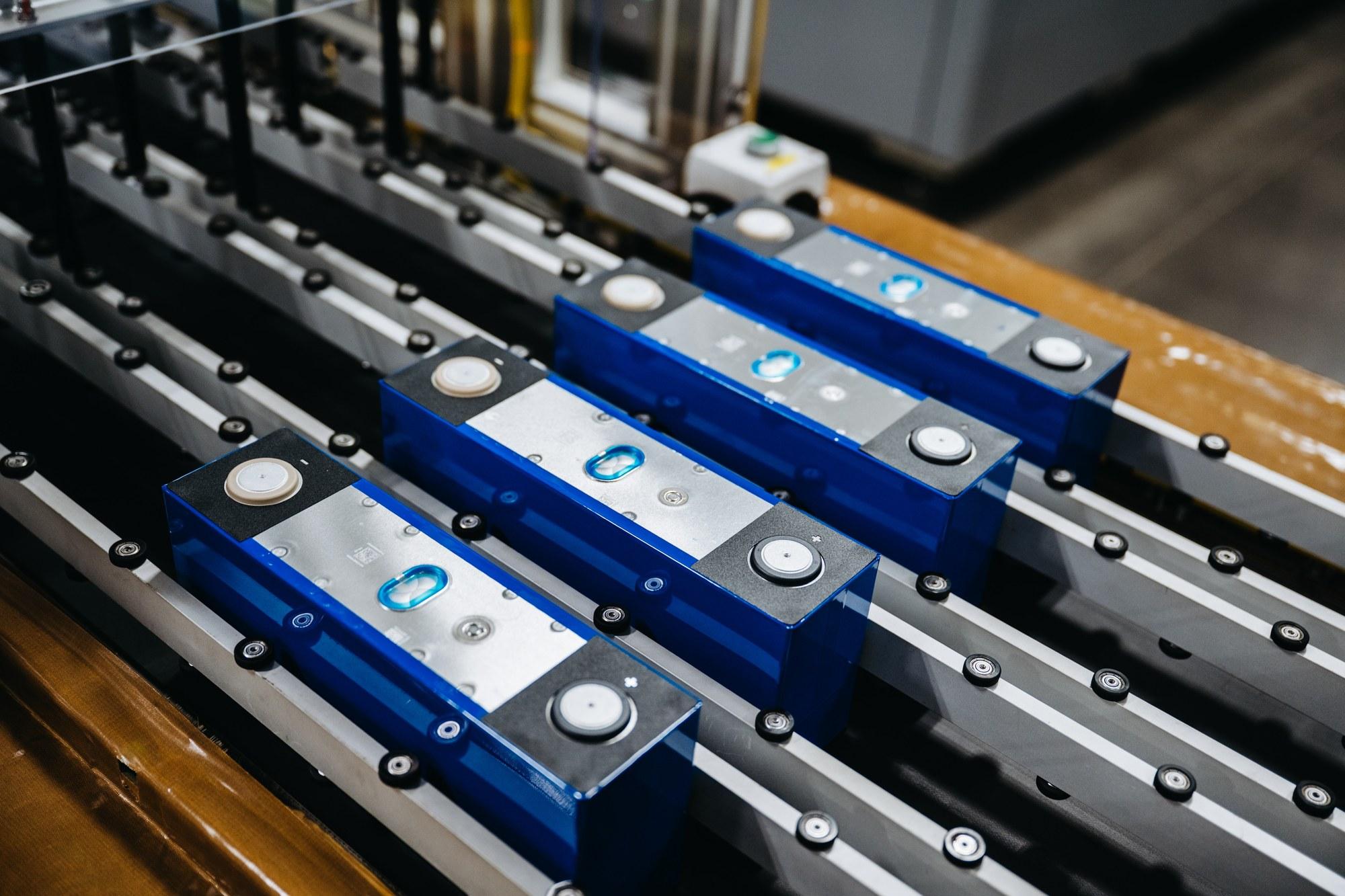
LFP prismatic cells on the line at BlueOval Battery Park Michigan in Marshall, from Ford's June 2026 plant post.
Image: Ford
Source · Press image from the Ford newsroom, used for news reporting.
Ford's LFP battery plant, BlueOval Battery Park Michigan in Marshall, has started producing lithium iron phosphate (LFP) cells, with a line rated at 40 cells a minute, CNBC and Electrek reported on Nov. 18, 2026, citing the company.
CNBC reported that cell production at the roughly $3 billion plant began in October and that the first cells are now shipping to Ford's Louisville Assembly Plant in Kentucky. They will go into prototypes of the Fathom, Ford's small electric pickup and the first vehicle on its Universal EV platform. The cells are prismatic, a format Electrek says Ford chose because it fits directly into the chassis and cuts structural cost. Ford owns and operates the plant and uses licensed technology and manufacturing expertise from CATL, according to Electrek and CNBC.
The capacity figure is smaller than the one Ford first floated. CNBC said the plant is expected to reach 20 GWh a year, shared between EVs and Ford's energy-storage business, down from initial plans of up to 40 GWh a year after the company pulled back on EVs. Ford told CNBC the plant has room for extra capacity if needed. Voltgrid has not found a Ford release that states the 20 GWh figure, so it rests on CNBC's account.
CNBC reports the Michigan plant is now expected to reach 20 GWh a year, down from initial plans of up to 40 GWh.
Graphic: Voltgrid News
Why it matters
For US cell supply, this is a domestic LFP line that is not an import. Several automakers are moving to LFP because it avoids nickel and cobalt, costs less than nickel-based cells and is considered more durable, Reuters noted. For scale, Ford's planned 20 GWh a year compares with the 16 GWh of US-made LFP cells Samsung SDI agreed to supply to storage developer Jupiter Power, as Voltgrid reported. Both lines tie US LFP output to stationary storage as well as vehicles.
Ford says it will use what it learns in Michigan for cheaper EVs and for Ford Energy, its new battery energy storage system (BESS) business in Kentucky, Electrek reported. The 20 GWh is a combined EV and storage figure, so no split between the two has been stated.
Line speed, jobs and timeline
Ford says the line can make 40 cells a minute, which Electrek describes as one of the fastest LFP prismatic assembly lines outside China. Ford also uses AI-based image inspection to catch defects and wants defective cells so rare that it tracks them per billion rather than per million. On jobs, Ford said in a June 17 post by plant CEO Scott Davis that it had hired more than 500 people, planned 800 by the end of 2026 and was working toward 1,700 jobs.
Electrek reported that Ford plans to have the battery pack plant in Michigan running in 2027, ahead of schedule. Fathom preorders open in early 2027 at $28,350 for the standard-range model, and CEO Jim Farley has said the truck remains on track to launch in the fourth quarter of 2027. Ford has not disclosed the pickup's battery capacity or range.
The CATL structure and tax-credit question
The licensing arrangement has drawn scrutiny. Reuters reported that US Transportation Secretary Sean Duffy wrote to Farley in September that the department was deeply alarmed by Ford's reliance on CATL technology. Ford called the letter a "wrongheaded attempt to capture headlines". A Ford spokesperson told Reuters the company still expects to be eligible for a federal battery manufacturing tax credit. Alan Clarke, Ford's vice president of advanced development projects, said CATL's size makes it the best supplier to teach Ford how to make LFP cells. Voltgrid News reported earlier on CATL's Debrecen plant.
What is not confirmed yet
Ford told CNBC the facility is still in the early stages of certifying its processes, and CNBC said it plans to ramp cell output next year. The 20 GWh annual figure is an expected capability, not a current output rate. Ford's cell cost, the licence terms with CATL, the tax-credit decision and the split between vehicles and storage have not been published.
Sources
- Published
- Sources
- 2 cited