Google's Wyoming Data Center: 702 MW Bloom Fuel-Cell Plant, 2.7 GW Black Hills Mix
Google's $17B Wyoming campus near Cheyenne draws on AEP's 702 MW Bloom fuel-cell plant and a separate Black Hills resource mix. No party disclosed price terms.
Nuclear & Microgrids DeskEdited by Ege Erten
4 min readAI-assisted
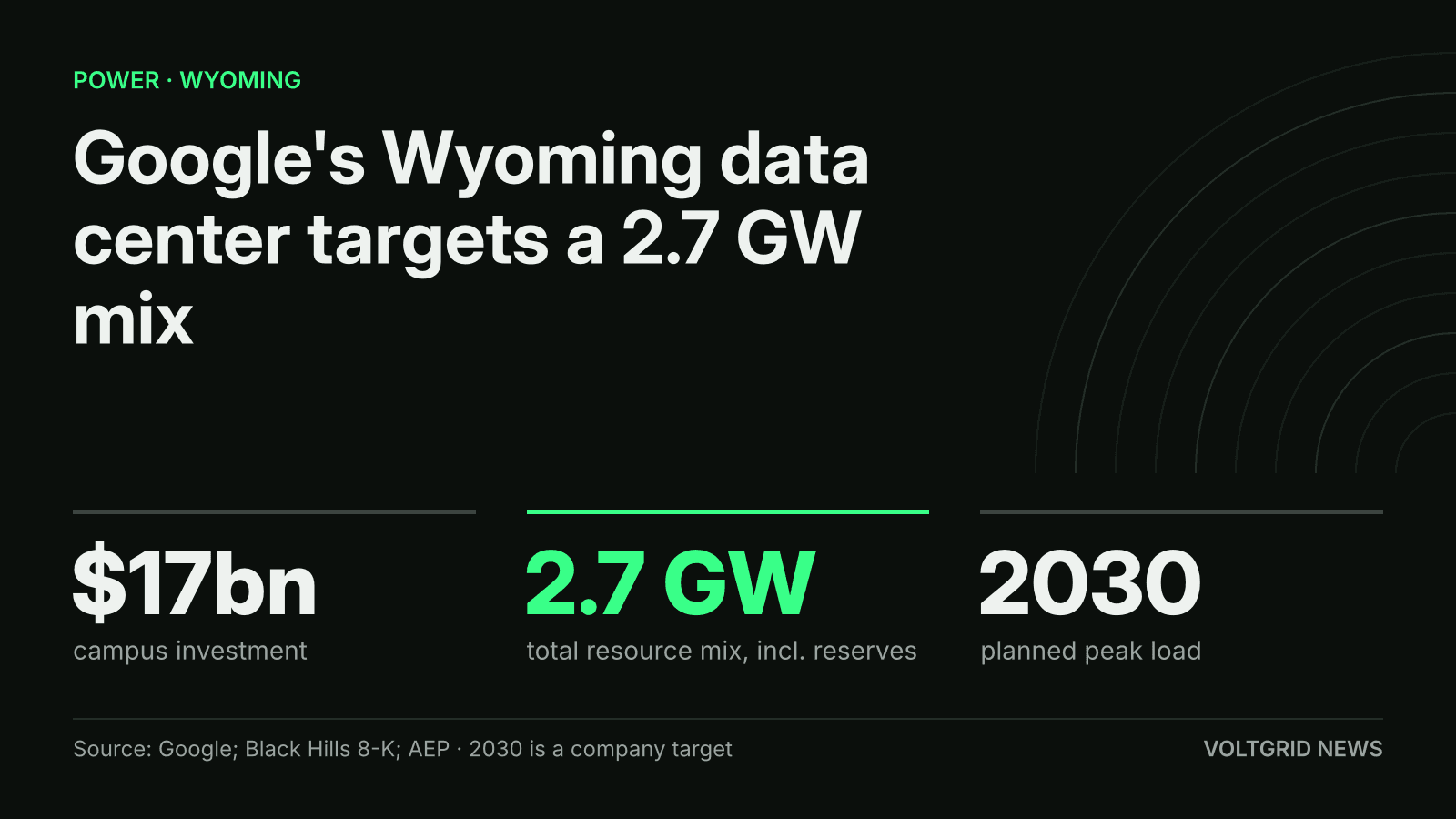
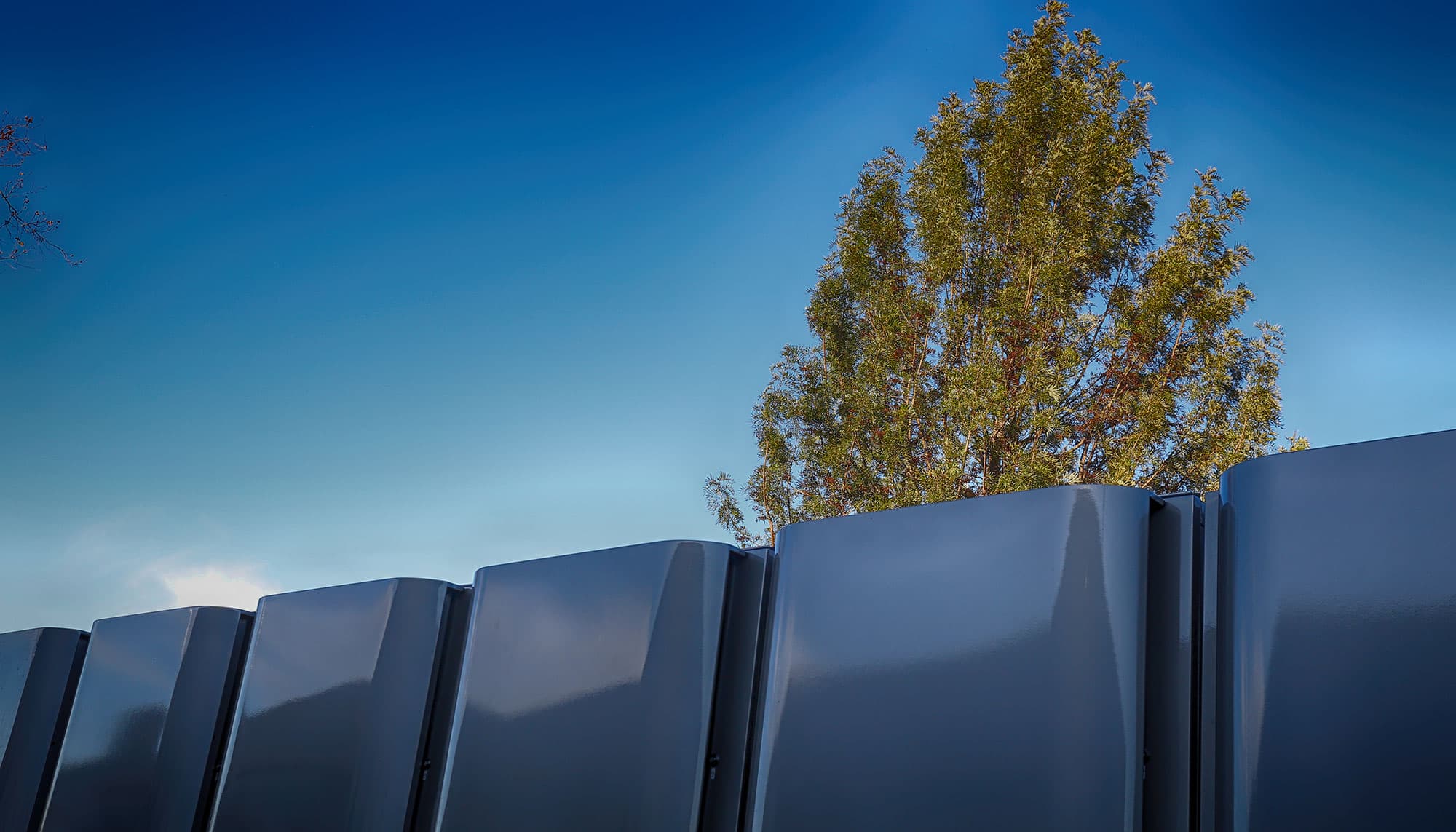
Key facts from Google and Black Hills; 2030 peak load is a company target. No official photo of the site was available.
Illustration (AI-generated)
Google's first Wyoming data center, a $17 billion campus near Cheyenne announced on Nov. 5, will draw on a 702 MW AEP fuel-cell plant with carbon capture, and Black Hills says a 2.7 GW resource mix of its own, which includes reserve margins, will serve the project.
The power arrangements predate Google's announcement. Black Hills Corp. signed definitive agreements with Google effective Sept. 30, its 8-K shows, and American Electric Power (AEP) announced a 20-year power purchase agreement (PPA) on Oct. 14. Google's own post adds that the fuel-cell plant will carry carbon capture and storage (CCS), and that it also buys power from gas generators run by Tallgrass Energy and Black Hills. In plain terms, Google is contracting its own gas-fired supply in Wyoming rather than waiting for grid capacity, and says it will pay for 100% of the power it uses.
How the 702 MW Bloom Fuel-Cell Plant Works
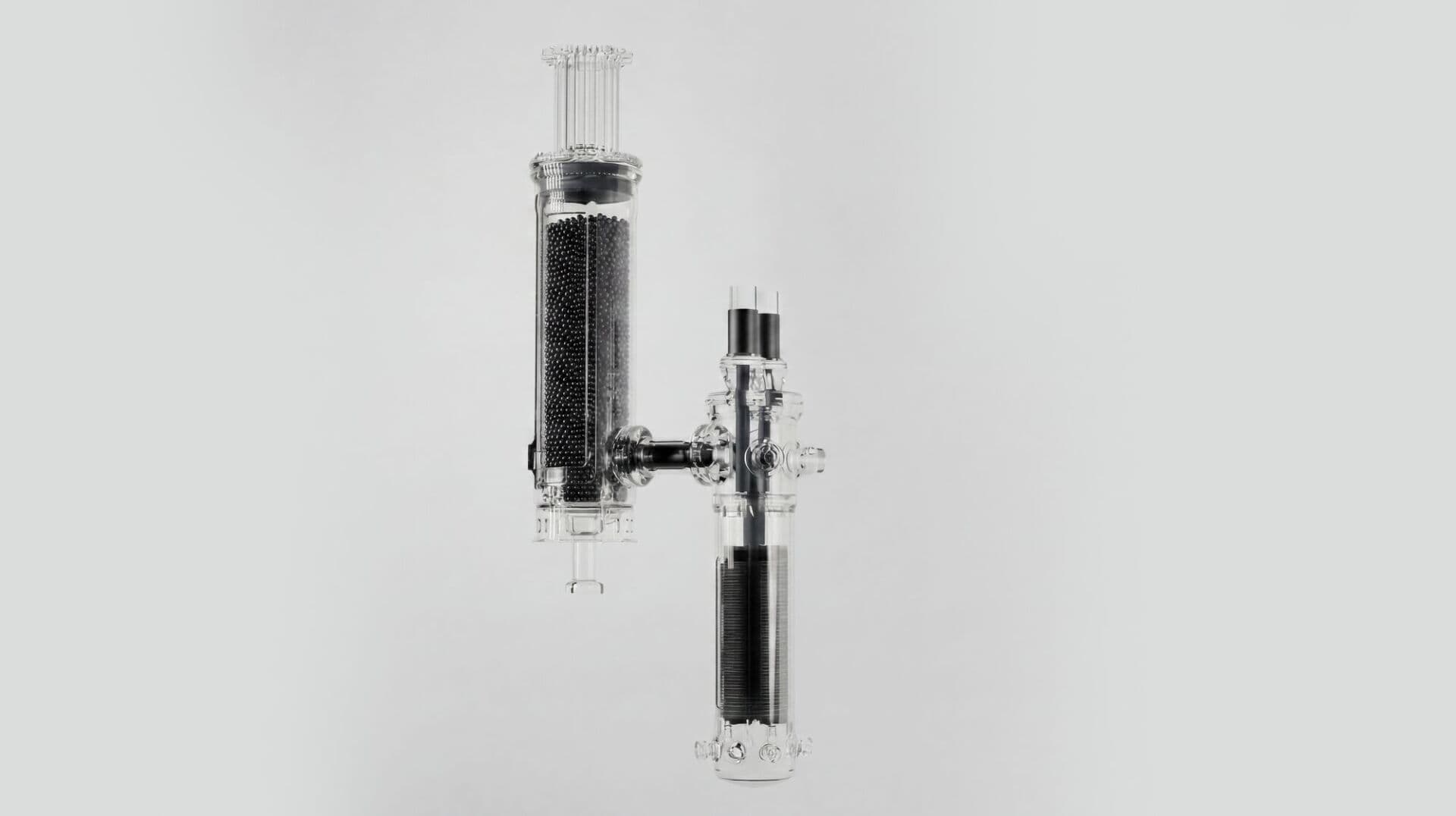
The plant uses Bloom's solid oxide fuel cells, which turn natural gas into electricity through an electrochemical reaction instead of burning it, AEP said, according to Daily Energy Insider. Because the cells come in modules and the gas arrives by pipeline, capacity can be added in steps beside the load without new long-distance transmission. Google calls the 702 MW plant the largest planned fuel-cell development with CCS to date. That is the company's claim; no independent count was offered.
The carbon capture is the least settled part. Google says the system will capture and permanently store a large majority of the plant's emissions at Tallgrass's nearby Eastern Wyoming Sequestration Hub, and that this lifts its contracted CCS capacity to nearly 1 GW. AEP describes the project as including plans to integrate carbon capture. Neither gives a capture rate or a start date for it. Google is only studying CCS on Tallgrass's combined-cycle turbines, through a front-end engineering and design (FEED) study.
Who Pays: AEP, Black Hills and Google
Google buys the fuel-cell output from Cheyenne Fuel Cell LLC, which is about 92% owned and controlled by AEP and nearly 8% owned by funds advised by Basalt Infrastructure Partners. AEP plans to invest roughly $4 billion, Daily Energy Insider reported. AEP's third-quarter 10-Q, dated Oct. 28, adds the hardware commitment: in January 2026 an unregulated AEP subsidiary signed an unconditional agreement to buy a substantial portion of its 1 GW Bloom fuel-cell option for about $2.65 billion, with a 20-year offtake for 100% of the output of a plant expected near Cheyenne. The filing calls the buyer a high investment grade customer without naming it. In the second-quarter 10-Q, AEP said that offtake was still subject to conditions, with the deadline extended in June toward December 2026. The October filing repeats the deal without that language, but does not say the conditions were met.
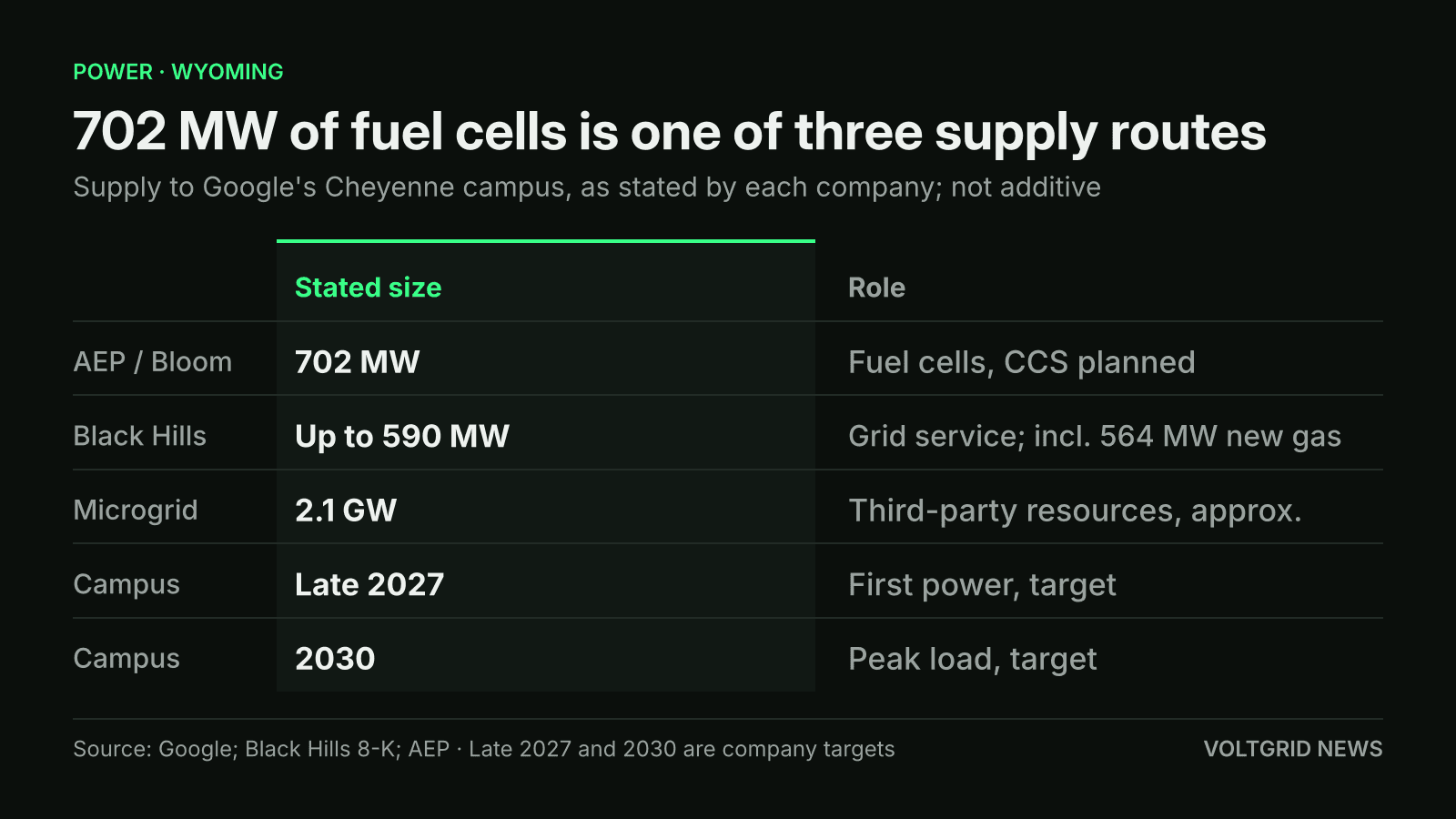
Each figure is as stated by its company and the amounts are not additive; late 2027 and 2030 are company targets.
Illustration (AI-generated)
Black Hills has a separate set of agreements. Under a Large Power Contract Services Agreement and a Generation Facilities Agreement running through 2048, it will supply up to 590 MW of grid-connected service. That is 564 MW (nameplate) of new gas generation at its Cheyenne Prairie Generating Station site, owned by a non-regulated affiliate and costing $1.8 billion over 2027 to 2029, plus 26 MW of market purchases and retail service. It will also manage the output of about 2.1 GW of third-party Wyoming resources through a privately managed microgrid, for a management fee. Google has already advanced $399 million, refundable, for long-lead equipment. Black Hills says Google bears all costs of serving the campus and expects the project to add about $150 million of net income in 2030. No price terms were disclosed by any party.
Permits and Timeline for the Cheyenne Campus
Black Hills lists its steps in the 8-K: a substation certificate approved in May 2026, an industrial siting permit for the Cheyenne Prairie expansion filed in July, and an air quality permit for that expansion approved in August. Two transmission certificates are filed or due by year-end. The campus is planned to begin taking power in late 2027 and to reach peak load in 2030, Black Hills said. AEP targets a construction start in 2026 and full operation of the fuel cells by the end of 2028. We found no air permit for the 702 MW fuel-cell plant and no named gas supplier.
The site has history. It was Project Jade, a Tallgrass and Crusoe plan whose power hub Laramie County approved on Jan. 5, which POWER Magazine described as including 2.7 GW of Tallgrass gas-fired capacity. Crusoe left in April, and Google cut the plan from five buildings to four, the Wyoming Tribune Eagle reported in September. Google's Eric Murray then put full buildout in the first half of 2031.
What it means for data centers
The structure is the news for other builders. A regulated utility acts as the microgrid's dispatcher, a second utility owns the fuel cells outside its home territory, and the hyperscaler signs for every cost. Black Hills does not say what makes up the 2.1 GW, and it describes coordination and dispatch, not the ability to run islanded from the wider grid. The 702 MW cannot simply be added to the 2.1 GW or 2.7 GW totals, because no source breaks them down that way.
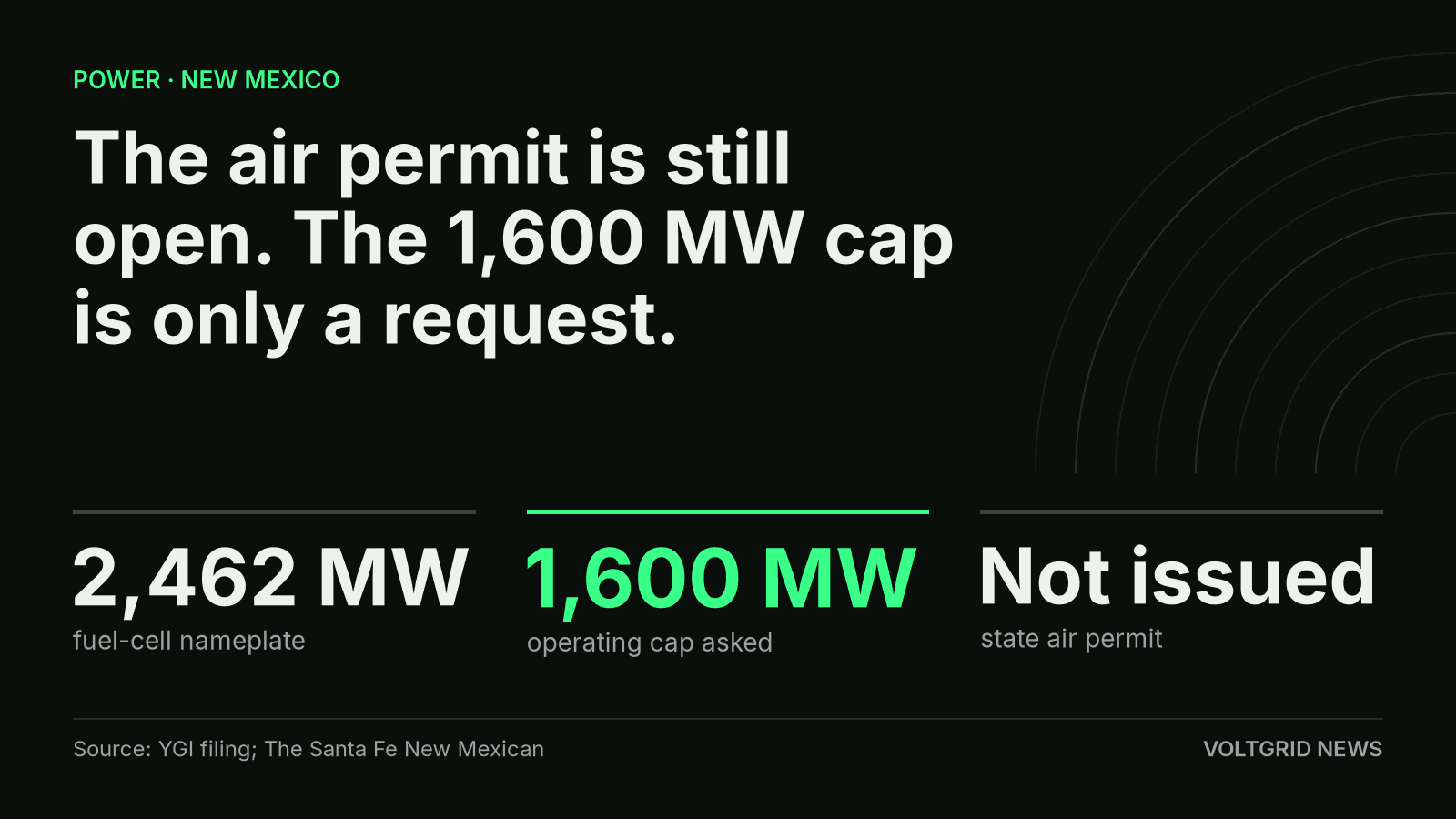
On scale, the Cheyenne plant, at 702 MW as stated by Google and AEP without a net or gross basis, is far larger than the about 98 MW of AEP Ohio fuel cells for AWS and Cologix, AEP's earlier use of the same Bloom supply agreement. Oracle's Project Jupiter has a 2,462 MW nameplate and a requested 1,600 MW cap, and its air permit is still pending. For Bloom, the plant joins a customer book that is already concentrated: its third-quarter 10-Q put two customers at about 43% and 26% of revenue.
What to watch
The first test is AEP's construction start, which it targets before the end of 2026. Next come an air permit and a gas supply contract for the fuel-cell plant, a capture rate and storage permit for the CCS, and Black Hills' Wyoming transmission filing in the fourth quarter. Then late 2027, when the campus is due to take its first power.
Sources
- 01Google's data center investment in WyomingGoogle · blog.google
- 02AEP, Google ink 20-year agreement for large-load fuel cell generation project in WyomingDaily Energy Insider · dailyenergyinsider.com
- 03Google outlines $17B Project Tembo data center campus in Laramie CountyWyoming Tribune Eagle (via Gillette News Record) · gillettenewsrecord.com
- 04Black Hills Corp. Executes Definitive Agreements to Serve Google's Planned Data Center in Cheyenne, WyomingBlack Hills Corp. (SEC 8-K) · sec.gov
- 05AEP Form 10-Q for the quarter ended Sept. 30, 2026AEP (Form 10-Q) · docs.aep.com