LUT University Runs 1,000 V Alkaline Electrolyzer, Up From 200–400 V
LUT University said on Oct. 29 its lab electrolyzer reached 1,000 V with nearly 500 cells in series. Researchers put the plant saving at 10–15%, but no peer-reviewed paper on it exists yet.
Science DeskEdited by Ege Erten
3 min readAI-assisted
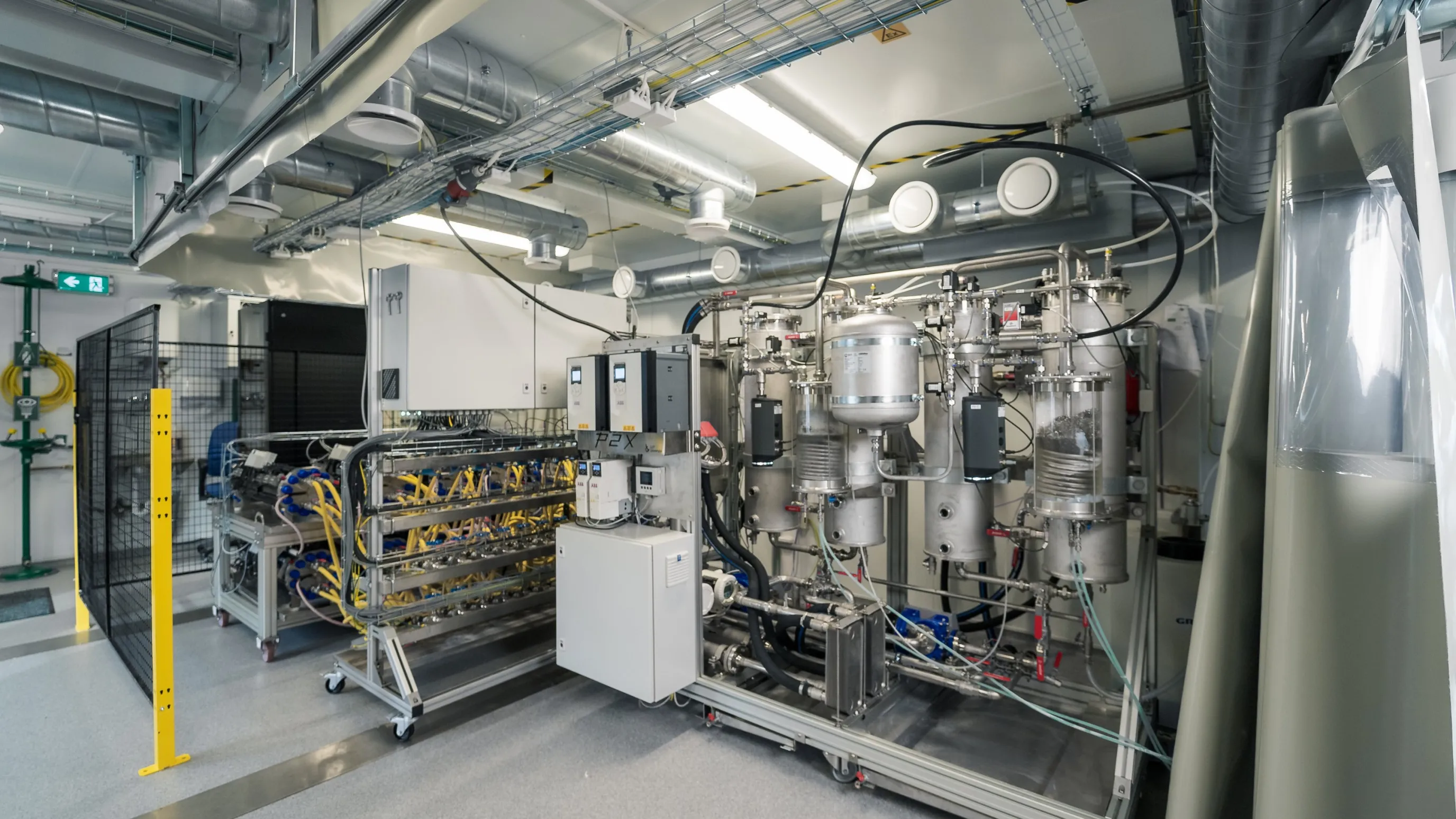
The 1,000 V alkaline electrolyzer system in LUT University's laboratory, as shown on the university's news page.
Image: LUT University
Source · Press image from the LUT University newsroom, used for news reporting.
LUT University said on Oct. 29 that its researchers ran an alkaline water electrolyzer at 1,000 V in the laboratory, against roughly 200–400 V for industrial alkaline units.
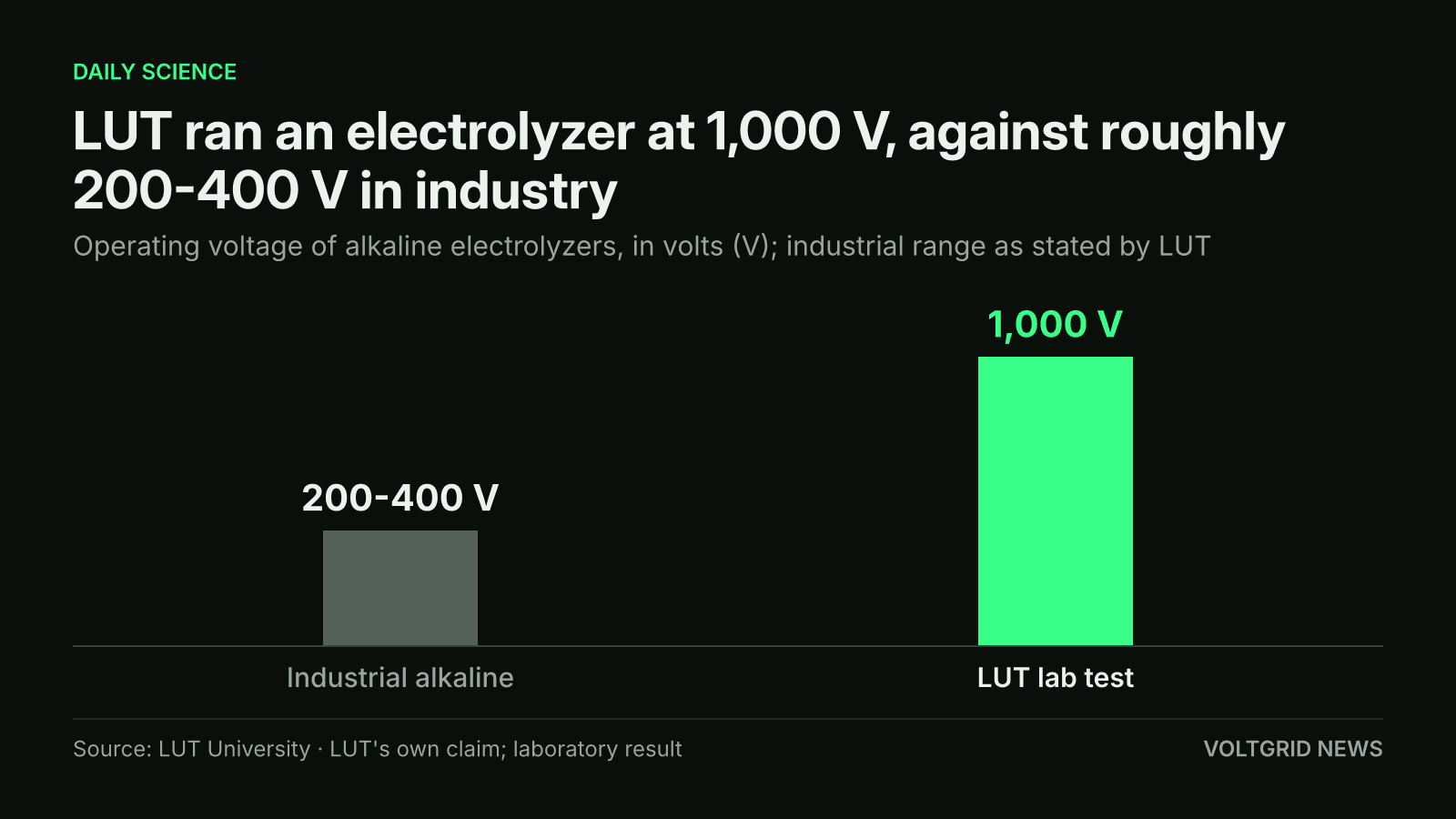
LUT says industrial alkaline electrolyzers usually run at roughly 200-400 V; its laboratory test reached 1,000 V, the university's own claim.
Illustration (AI-generated)
The record is for operating voltage, not efficiency or hydrogen output. Jero Ahola, professor of energy efficiency at LUT, said the team got there by connecting electrolyzer stacks in series and that, as far as the group knows, it is a world record. That is the university's own claim, and no outside party has confirmed it.
How 1,000 V cuts current and cost
An electrolyzer splits water into hydrogen and oxygen using direct current. One cell runs at about 2 V, LUT said, so 1,000 V takes nearly 500 cells wired in series. At a given hydrogen capacity, a higher voltage needs less current, which LUT says lowers losses and the cost of the electricity supply and power electronics.
ABB supplied the power electronics, and the stacks came from Estonia-based Stargate Hydrogen. ABB co-funds the research. Ahola said the result shows a series-connected alkaline system can run at 1,000 V on power electronics of the kind already used in wind and solar plants and in battery systems.
The cost figure is Ahola's estimate. He said power supply and power electronics make up about one fourth of a hydrogen plant's cost, and that cutting that share roughly in half by raising voltage and lowering current could trim whole-system investment by about 10–15%. Half of a quarter is about an eighth, which sits inside that range. pv magazine repeated the figure on Oct. 30 and attributed it to the researchers.
LUT adds that the saving depends on where the plant sits and whether it runs around the clock or follows wind and solar output. Fewer operating hours make the capital cost per kilogram of hydrogen weigh more, which is why the team focuses on investment cost.
The same bet as 800 VDC data center racks
The logic echoes what Voltgrid News has covered in AI data centers. Vantage Data Centers said on Oct. 21 that it had secured more than 1 GW of solid-state transformer capacity, which turns medium-voltage grid power directly into 800 VDC and, the companies say, removes conversion stages.
Chip makers are moving the same way. Infineon Technologies said on Oct. 21 that it is putting gallium nitride into 800 VDC conversion for NVIDIA's AI racks. These are vendor claims in a different industry, and LUT's result does not depend on either.
The catch: stray currents in the electrolyte
Series connection has a cost. The conductive electrolyte that circulates between the cells lets stray currents flow along unintended paths, which adds losses, LUT said. Various technical solutions can reduce them, according to the university.
The team's next steps are methods to design series-connected systems that are as cost-effective as possible, using modelling, simulation and optimisation to carry the lab lessons to larger systems, and work on cutting stray currents without sacrificing much performance.
What is not confirmed yet
This is a laboratory result, not a product, and neither LUT nor pv magazine gives a date or a price for commercial systems. LUT said a peer-reviewed article on the 1,000 V system has not been published yet, although earlier stages of the work have appeared in papers over the past three years.
The release also gives no figures for hydrogen output, stack efficiency or how much the stray currents cost at 1,000 V, so the size of that trade-off against the 10–15% estimate is not yet public.