Osaka Robot Platform Tunes Perovskite Cell to 24.4% Efficiency
University of Osaka researchers used a robot that films perovskite layers as they form to reach 24.4% efficiency in ACS Nano, but the result is a lab cell, not a product.
Science DeskEdited by Ege Erten
2 min readAI-assisted
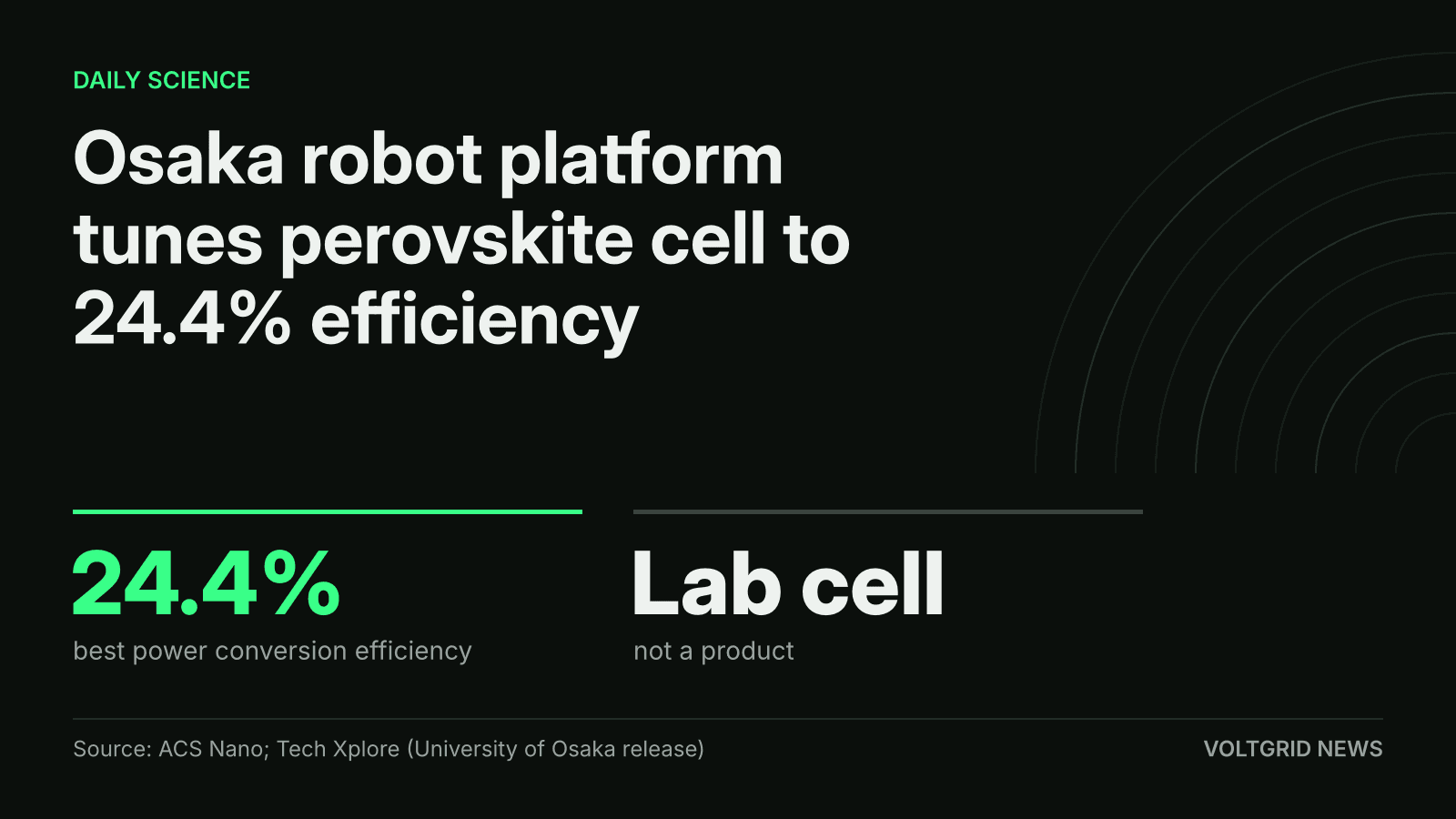
The best cell reached 24.4% power conversion efficiency; it is a lab cell, not a product.
Illustration (AI-generated)
Researchers at the University of Osaka have built a robot platform that films a perovskite solar layer as it forms, and used what it saw to make a cell with 24.4% power conversion efficiency, according to a paper in ACS Nano and the university's release carried by Tech Xplore on Nov. 2.
Perovskites are light-absorbing crystals that can be coated from a liquid. The liquid dries into a solid film within seconds, and small shifts in temperature or humidity can change the film and the cell it ends up in. The Osaka team, led by Ryosuke Kado with senior author Akinori Saeki, wanted to see those shifts instead of judging a film only after it was finished.
How the robot watches a film form
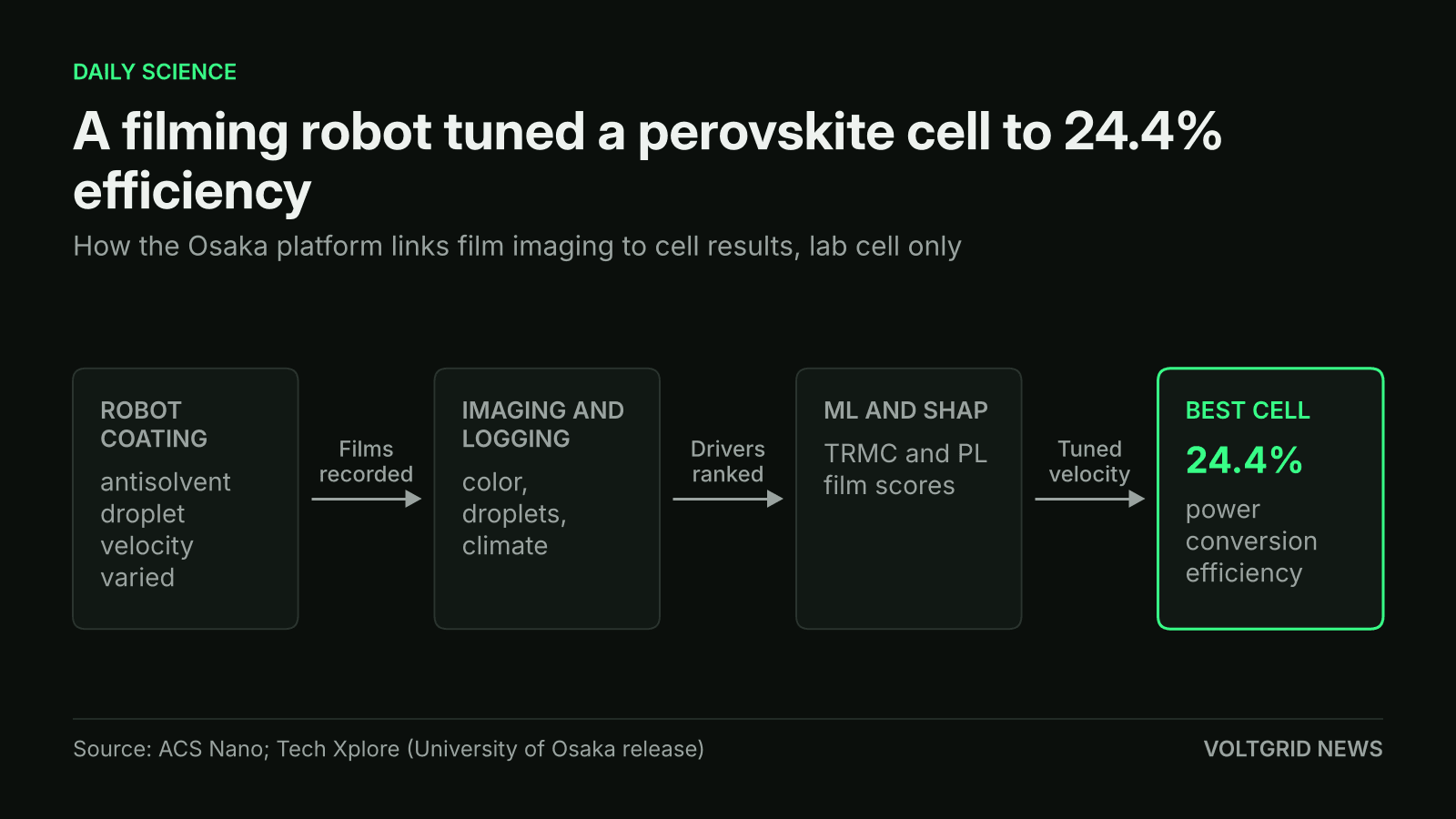
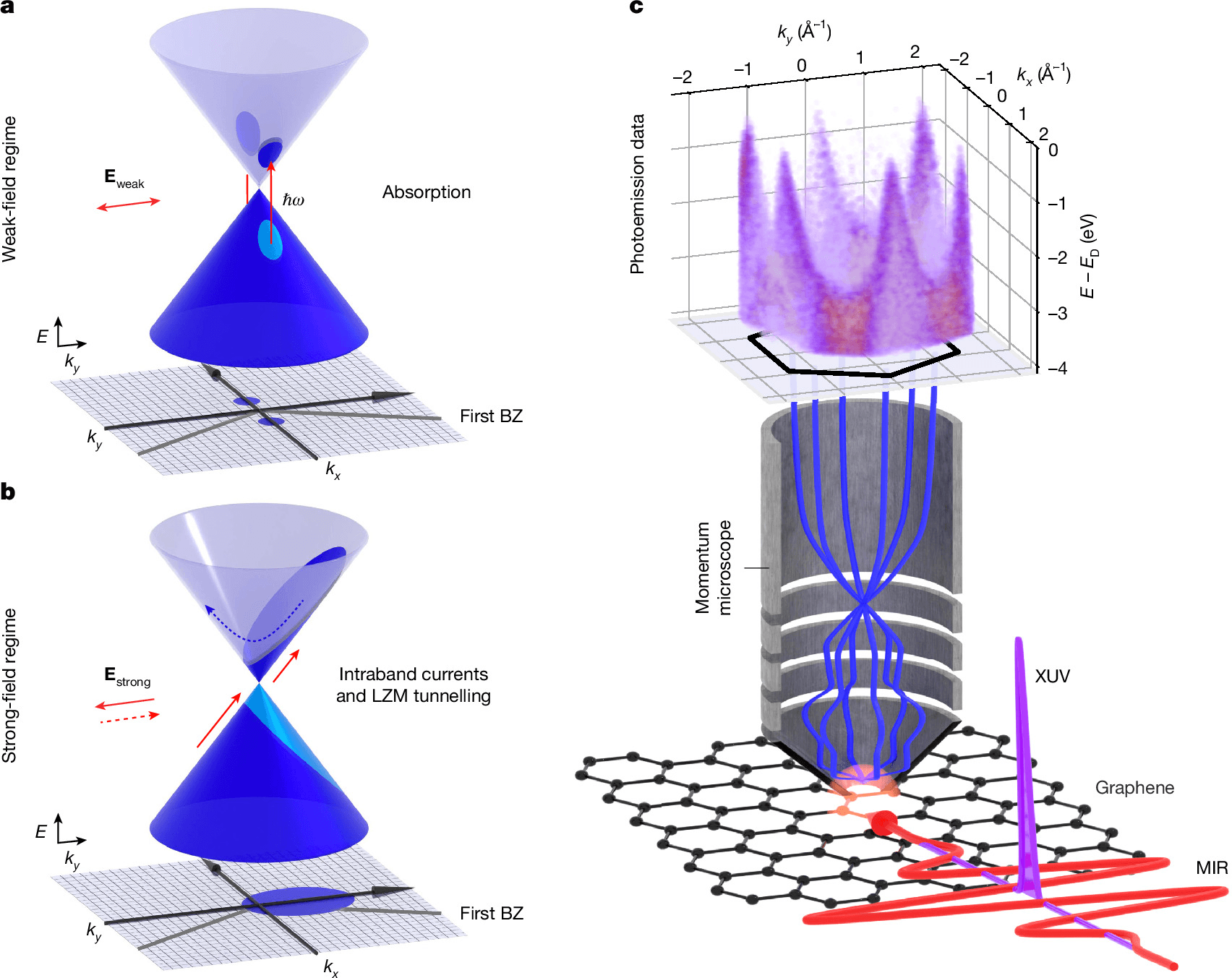
The Osaka platform records films as they form and feeds the analysis that tuned antisolvent droplet velocity to a 24.4% lab cell.
Illustration (AI-generated)
The paper, published online on Oct. 27, describes an environment-controlled, robot-assisted platform. It captures color changes in the film over sub-second intervals and the motion of antisolvent droplets within milliseconds. An antisolvent is a liquid dripped onto the wet film to push it to crystallize. At the same time the system logs slower conditions: temperature, humidity, oxygen and volatile organic compounds in the air.
Film quality was then scored with time-resolved microwave conductivity and photoluminescence intensity measurements. The researchers fed all of it to a machine-learning model and used SHAP analysis, a method that ranks which inputs move the result most, to pick out the environmental factors that matter.
What the analysis found
The team compared a two-cation perovskite, (FAPbI3)0.87(MAPbBr3)0.13, with a three-cation one, FA0.85MA0.10Cs0.05PbI3. The two reacted very differently to their surroundings, especially to temperature and the speed of the phase change during heating, the paper says. Tuning the antisolvent droplet velocity gave the maximum efficiency of 24.4%. Tech Xplore describes the cell as lead-based.
The authors also report that a cell made by hand matched the results from the automated system, which suggests the robot is not producing a result a person could not repeat.
What is not confirmed yet
The sources give one best efficiency figure, with no sample sizes, no baseline cell for comparison and no stability or scale-up data. Nothing in them gives a commercial timeline. The team's own claim is limited to a practical route for studying solution-processed solar films in a quantitative way.
For the solar supply chain, the point is process control: knowing which variable drives film quality is what a production line needs. Voltgrid News has covered the policy side, such as Japan's roughly ¥100 billion plan for perovskite cells to 2029, and a simulated hemispherical perovskite cell that has no built device. The Osaka cell was actually made and measured, but only in a lab.