Samsung 48GB HBM4E, Huawei 4096-DQ HBM Share ISSCC 2027 Session
ISSCC's Feb. 16, 2027 memory session lists Samsung's 48GB HBM4E at 17Gb/s per pin beside Huawei's custom HBM and CXMT DDR5; China has 124 of 274 accepted papers.
3 min read
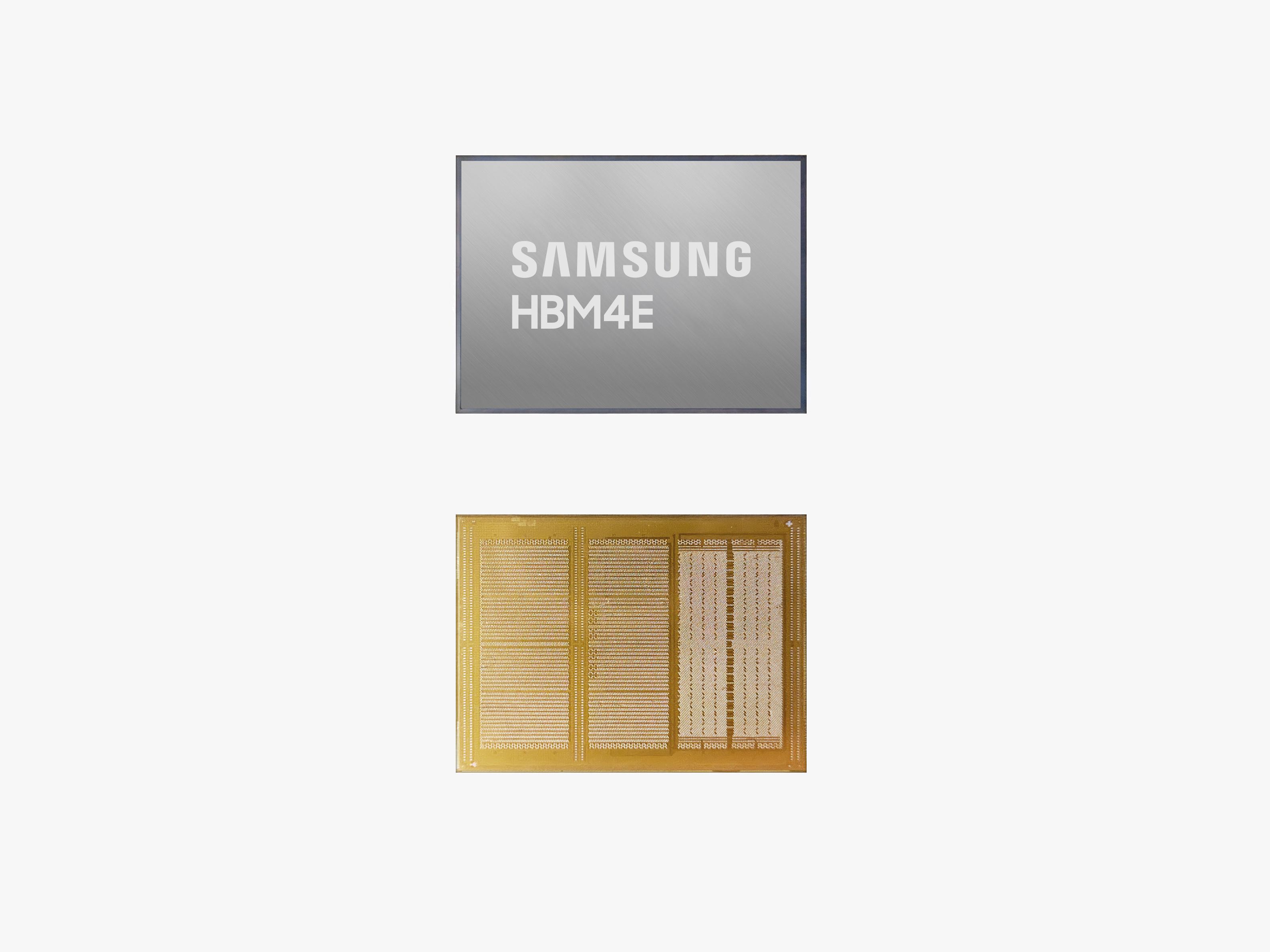
Samsung's 12-layer, 48GB HBM4E, which has shipped as samples since June 1 (Samsung).
Image: Samsung Electronics
Source · Press image from the Samsung Newsroom, used for news reporting.
Samsung Electronics will present a paper titled as a 48GB HBM4E at 17Gb/s per pin at ISSCC 2027, and Huawei will follow it on stage with a paper titled as a 64-channel, 4096-DQ custom HBM, according to the conference's draft program dated Nov. 23.
Both papers sit in Session 22 ("SRAM, HBM and DRAM") on Feb. 16, 2027, at the International Solid-State Circuits Conference in San Francisco (Feb. 14 to 18). Huawei's paper title also names memory controllers and 5-layer wafer-on-wafer hybrid bonding. A Samsung paper on a 4nm all-digital 3D-DRAM PHY (the physical-layer interface) for custom HBM platforms comes next. TheElec reported the line-up after the ISSCC Korean Committee briefed press in Seoul on Nov. 25.
Why it matters for AI memory supply
HBM (high-bandwidth memory) is the stacked DRAM beside an AI accelerator, and its capacity and speed cap what each accelerator can serve. Samsung said on Feb. 12 that its HBM4 had entered mass production and commercial shipment, with 36GB in a 12-layer stack running at 11.7Gb/s per pin and up to 13Gb/s; TheElec cites the same figures. Samsung has also shipped 12-layer 48GB HBM4E samples since June 1, rated 14Gb/s per pin and scalable to 16Gb/s. The ISSCC paper is titled as a 48GB stack at 17Gb/s per pin. It reports a circuit result, and the program says nothing about a 17Gb/s product or when one would ship.
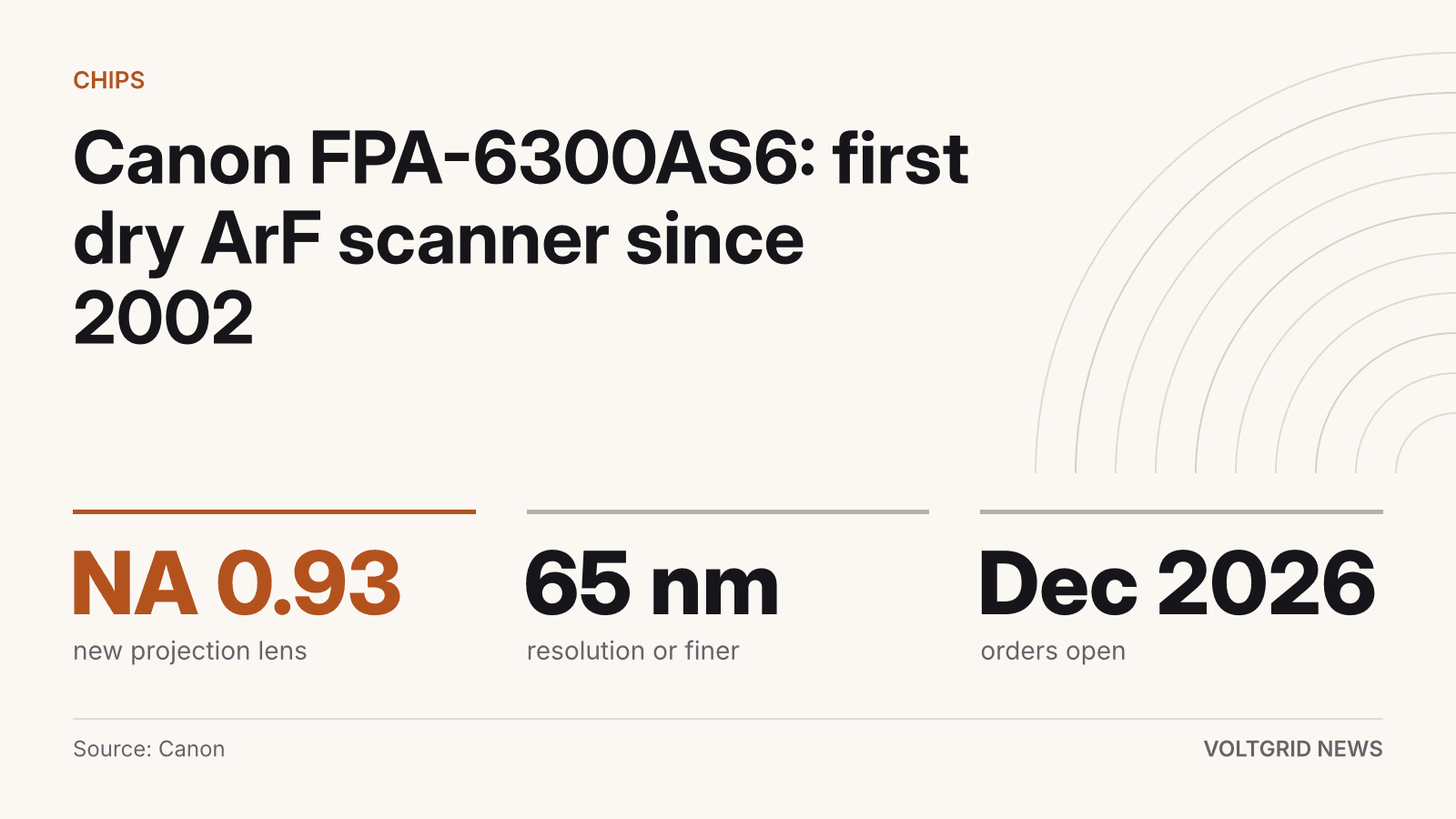
The 17Gb/s in Samsung's ISSCC paper title is a circuit result, above the 14Gb/s of its HBM4E samples; the program names no product.
Graphic: Voltgrid News
Huawei's entry matters because Voltgrid reported that China's AI stack stalls at HBM. TheElec describes the paper as a customized HBM (cHBM) that builds the memory controller, which handles DRAM reads and writes, into the HBM itself. The program title is all that is public so far: it gives no bandwidth, capacity or yield figure.
How Per-Pin Speed Sets HBM Bandwidth
An HBM stack moves data over a very wide bus, so its bandwidth is the number of pins times the speed of each pin. JEDEC's HBM4 standard specifies a 2,048-bit interface and up to 8Gb/s per pin, which it puts at up to 2TB/s per stack. Samsung's HBM4 runs at 11.7Gb/s per pin and up to 13Gb/s, which Samsung puts at up to 3.3TB/s per stack.
That is why the ISSCC titles matter to buyers of AI accelerators. Samsung's HBM4E samples are rated up to 3.6TB/s per stack, while the paper title says 17Gb/s per pin. A conference result shows what the circuit can do, not what a vendor will ship, and Huawei's 4096-DQ title gives no stack count, so its bandwidth cannot be read from the program.
The DRAM papers
CXMT (ChangXin Memory Technologies) and SK hynix present back to back on vertical-gate DDR5. CXMT's paper describes a 32Gb DDR5 at 9.2Gb/s per pin, built with a vertical surrounding-gate transistor and wafer-on-wafer hybrid copper bonding. SK hynix will show a 16Gb DDR5 with a vertical-gate cell transistor and a peripheral-on-cell layout, joined by wafer-to-wafer fusion bonding and deep silicon vias. TheElec adds that CXMT will also present an LPDDR6 interface at 17.6Gb/s per pin.
Vertical gates shrink the cell by turning the transistor's current path upright. Samsung calls its version vertical channel transistor, SK hynix calls it vertical gate, TheElec said. Voltgrid has tracked CXMT's push into DRAM share and the US export-control debate around it; Samsung's own custom HBM work was reported earlier as a Meta project on a 2nm base die.
China's share of the program
ISSCC 2027 accepted 274 of 1,029 submitted papers, TheElec said. China, including Hong Kong and Macao, has 124 of them (45.3%), up from 96 a year earlier; the US has 49 (17.9%) and South Korea 45 (16.4%). In memory, South Korea holds 12 of 28 papers and China 8. Samsung and MediaTek lead the companies with five papers each, and SK hynix has two.
What is not confirmed yet
The program is a draft and can change. It lists titles and authors only; abstracts and measured results appear at the conference. Whether Huawei's 4096-DQ design reaches a product, and on whose DRAM, is not stated in either source. TheElec's description of Huawei's paper as a customized HBM with an integrated memory controller comes from the press briefing, not from a Huawei release.
Sources
- 01Samsung Ships Industry-First Commercial HBM4Samsung Newsroomnews.samsung.com
- 02ISSCC 2027 Advance Program (draft of Nov. 23, 2026)ISSCCsubmissions.mirasmart.com
- 03Huawei, CXMT Challenge Samsung and SK hynix at ISSCCTheElecthelec.net
- 04Samsung Begins Shipment of Industry-First HBM4E SamplesSamsung Newsroomnews.samsung.com
- Published
- Sources
- 4 cited