AI Chip Export Bills: Thune, Wicker Say No Deal Yet on 3 in NDAA
Thune sees a "high probability" of tighter China limits, but he and Wicker told Semafor on Nov. 12 that no deal yet puts three AI chip export bills in the final NDAA.
3 min read
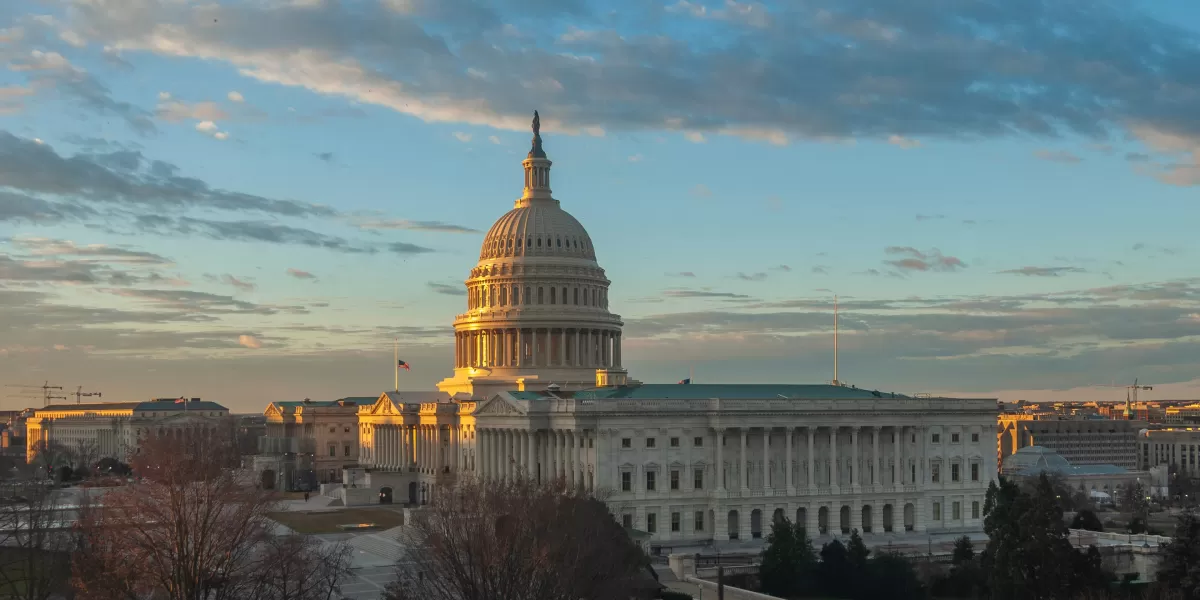
The US Capitol, where the Senate and House are negotiating the final NDAA and the AI chip export bills. File photo.
Image: Architect of the Capitol
Source · U.S. federal government work, public domain.
Senate Majority Leader John Thune and Armed Services Committee Chair Roger Wicker said on Nov. 12 there is no deal yet to keep three AI chip export bills in the final National Defense Authorization Act (NDAA), Semafor reported.
Thune told Semafor there is a "high probability" that Congress imposes more restrictions on chip exports to China. The AI Overwatch Act, the Chip Security Act and the MATCH Act are all in the Senate's version of the defense bill, which the two chambers are still negotiating. House Speaker Mike Johnson told reporters on Nov. 12 that there is "a developing consensus in Congress" on limiting China's access to advanced chips, according to Reuters as carried by The Korea Times on Nov. 13.
What the Chip Export Bills Would Do
Reuters counts at least four pending chip-export bills, based on lawmakers' statements since Nov. 9. The AI Overwatch Act would give Congress more power over advanced AI chip exports; Semafor says it would treat chip sales more like foreign arms sales, with Congress overseeing Commerce licences for "countries of concern" such as China. The Chip Security Act would require companies to track where advanced AI processors go, in part by verifying their location after shipment, to deter smuggling. The MATCH Act would push US allies to restrict sales and maintenance of chipmaking equipment destined for China. The fourth, the Remote Access Security Act, would give Commerce the tools to stop Chinese firms renting overseas data centers to reach NVIDIA chips; Reuters did not place it in the Senate defense text.
Three of the four chip export bills are in the Senate defense text; Thune and Wicker say there is no deal yet to keep them in the final NDAA.
Graphic: Voltgrid News
For planners the difference is practical: location tracking changes what an exporter builds into shipments, licence review changes how long a sale waits, and the equipment and remote-access bills reach tooling and cloud capacity. None of it is law until both chambers agree a final version and it is signed.
Where Senators and Democrats Stand
Senator John Kennedy (R-La.) gave the effort "a better than even chance", and Senator Mike Rounds (R-S.D.) said there is "strong demand" but that it is not yet clear which approach will take priority. Semafor also reported that Democrats such as Representative Adam Smith (D-Wash.), the incoming House Armed Services chair, want to use the defense bill or a December government funding deadline as leverage on other issues, which Semafor said could cost the chip bills Republican support. Senator Maria Cantwell (D-Wash.) said Congress has already done more on chip exports than many realise and urged thought before doing more.
House Democratic leader Hakeem Jeffries said on Nov. 9 that he "strongly supports" chip restrictions in the final defense bill, as Voltgrid reported. Semafor's Nov. 12 report adds that Senate Democratic leader Chuck Schumer wants all three bills passed, and that Anthropic has publicly backed all three. The Information Technology Industry Council, a tech trade group, has argued the bills would "undermine the American tech stack."
What Comes Next for the NDAA
Former NVIDIA chief executive Jensen Huang, who resigned on Nov. 12, is expected to testify to Congress before Thanksgiving on Nov. 26, according to Reuters: House Foreign Affairs Chairman Brian Mast (R-Fla.) said on Nov. 12 that committee staff spoke with NVIDIA on the night of Nov. 11 about a date and location. The Senate Banking Committee has separately sought testimony from Huang and Commerce Secretary Howard Lutnick, and Lutnick has agreed to appear; our export ledger tracks the requests. Voltgrid News also covered the Trump China trip and export controls.
Last year the GAIN AI Act, an earlier version of the AI Overwatch Act, was in the Senate defense bill but was dropped from the final text after pressure from NVIDIA, the chip industry and the White House, Semafor reported. Neither Reuters nor Semafor reported a new White House or NVIDIA response this time. Until the conference text is public, no new export restriction is in force.
Sources
- Published
- Sources
- 2 cited