US AI Chip Export Ledger: 5 Requests From Nov. 9-12, No New Curb
The only BIS rule this month kept a curb on hold. Lawmakers sent five sets of requests from Nov. 9 to 12. Several US probes are reported and Trump says the FBI is investigating; no agency has announced one.
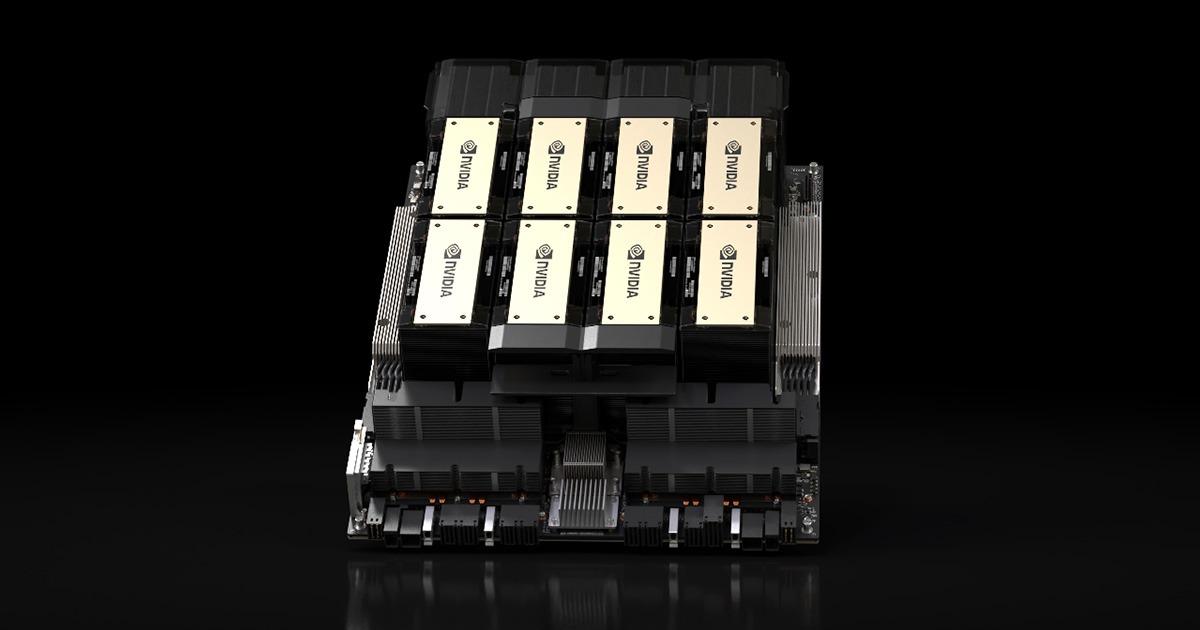
NVIDIA's H200, the chip at the centre of this month's export requests and reported probes.
Image: NVIDIA
Source · Press image from the NVIDIA H200 product page, used for news reporting.
Through Nov. 13, Washington has put no new AI chip export restriction into force this month. One BIS rule only extended a suspension, while lawmakers sent five sets of requests between Nov. 9 and Nov. 12 and several US probes were reported instead.
The Federal Register's index of Bureau of Industry and Security (BIS) documents for Sept. 1 to Nov. 13 lists 12 items: 2 rules and 10 notices, and no Entity List addition. The Entity List is the US trade blacklist that cuts a company off from US technology. Licence decisions are not published, so they cannot be counted.
Rules and licences in force
The rule that governs NVIDIA's H200 is the BIS final rule published on Jan. 15, 2026 (91 FR 1684). It moved licence review for chips with a total processing performance (TPP) below 21,000 and DRAM bandwidth below 6,500 GB/s ("e.g., NVIDIA H200 or AMD MI325X") from a presumption of denial to case-by-case review for China and Macau.
In plain terms, an export licence is Commerce's permission to ship a controlled product to a named buyer. For top AI chips bound for China the default has been a presumption of denial: refusal unless there is a strong reason to approve. Case-by-case review judges each application on its own record against the rule's conditions. It is not a general permission, and a licence granted does not mean chips were shipped.
Under the rule, applicants must certify that US supply is sufficient, that shipments to China and Macau will be no more than 50% of the product shipped to US customers, that the buyer runs know-your-customer checks against unauthorised remote access, and that the item undergoes independent, third-party testing in the United States to verify its performance specifications.
NVIDIA's filing for the quarter ended July 26, 2026 shows the practice. The company said the US government granted licences from February 2026 for small amounts of H200 to specific China-based customers, but that Beijing restricted the sales and NVIDIA has not been able to sell all it is licensed for. It took a $0.4 billion charge on H200 inventory and purchase obligations in the first half of fiscal 2027, and shipments were under 1% of data-center revenue in the latest quarter. The US inspection step makes each unit subject to a 25% tariff on import into the United States, which NVIDIA said it cannot pass on.
The two BIS rules in the index are not chip rules: a Sept. 24 rule on polysilicon stockpiling, and a Nov. 9 final rule extending the suspension of the September 2025 interim rule on end-user controls for affiliates of listed entities, to Jan. 10, 2027. The suspension had been due to end on Nov. 9, and the text gives no reason for the extension. Reuters has reported that no Entity List additions have been posted since October 2025, as our Nov. 12 report on Senator Cotton's letter recorded.
Requests: five sets of letters in four days
A request binds nobody. Five sets of lawmakers wrote between Nov. 9 and Nov. 12 (Meeks and two colleagues; Cotton; LaHood and Gottheimer; Scott; Mast), by our count. They followed a Nov. 4 letter from three House chairs asking Huang for a closed-door briefing on Nov. 18, as ABC News reported and we covered.
From Nov. 9 to 12 lawmakers sent five sets of requests; the only BIS rule extended a suspension. The probes are reported, not announced.
Chart: Voltgrid News
Illustration (AI-generated)
Senator Tom Cotton (R-Ark.) wrote to Commerce Secretary Howard Lutnick on Nov. 12, asking Commerce to add memory maker CXMT to the Entity List and to explore a ban on selling CXMT products in the US.
Representatives Darin LaHood (R-Ill.) and Josh Gottheimer (D-N.J.) asked five agencies, including the Justice Department and the FBI, to investigate Jensen Huang's reported relationship with Alice Huang, a former Megaspeed executive who is reportedly linked to Chinese intelligence. Gottheimer's office published the letter on Nov. 12. The release accuses no one of a crime; it warns of "PRC infiltration" risks. The espionage claim is unproven. Our report on the letter notes that Politico dates the sending to Nov. 10.
Senate Banking Committee Chairman Tim Scott (R-S.C.) sent letters on Nov. 12 asking Huang, who resigned as NVIDIA's chief executive this week, and Lutnick to testify voluntarily. The letter says the committee is "prepared to use all tools at our disposal, including subpoenas" if either does not appear, Fortune reports. The committee's own post, embedded by Fortune, gives Dec. 3 for Huang and Dec. 10 for Lutnick, and NBC News reports the same dates. Al Jazeera, and Fortune's own summary, give Dec. 3 for both; this ledger uses the committee's dates. Lutnick's spokesperson told NBC he "proactively agreed to appear voluntarily", as we reported.
House Foreign Affairs Chairman Brian Mast (R-Fla.) asked Huang on Nov. 12 for a closed-door, transcribed interview on Dec. 1, with a subpoena threatened, NBC reports. Al Jazeera describes it as a joint letter from Mast, China committee chair John Moolenaar and Intelligence chair Rick Crawford, asking Huang and NVIDIA general counsel Tim Teter to appear on Dec. 1 and 2, and says Under Secretary of Commerce Jeffrey Kessler was summoned for Dec. 3 without saying by whom. We count it as one request. The fifth is a Nov. 9 letter, per NBC, from Foreign Affairs Democrats Gregory Meeks, Gabe Amo and Sydney Kamlager-Dove asking Lutnick about approvals of advanced AI chip exports.
Probes and cases: reported, not charged
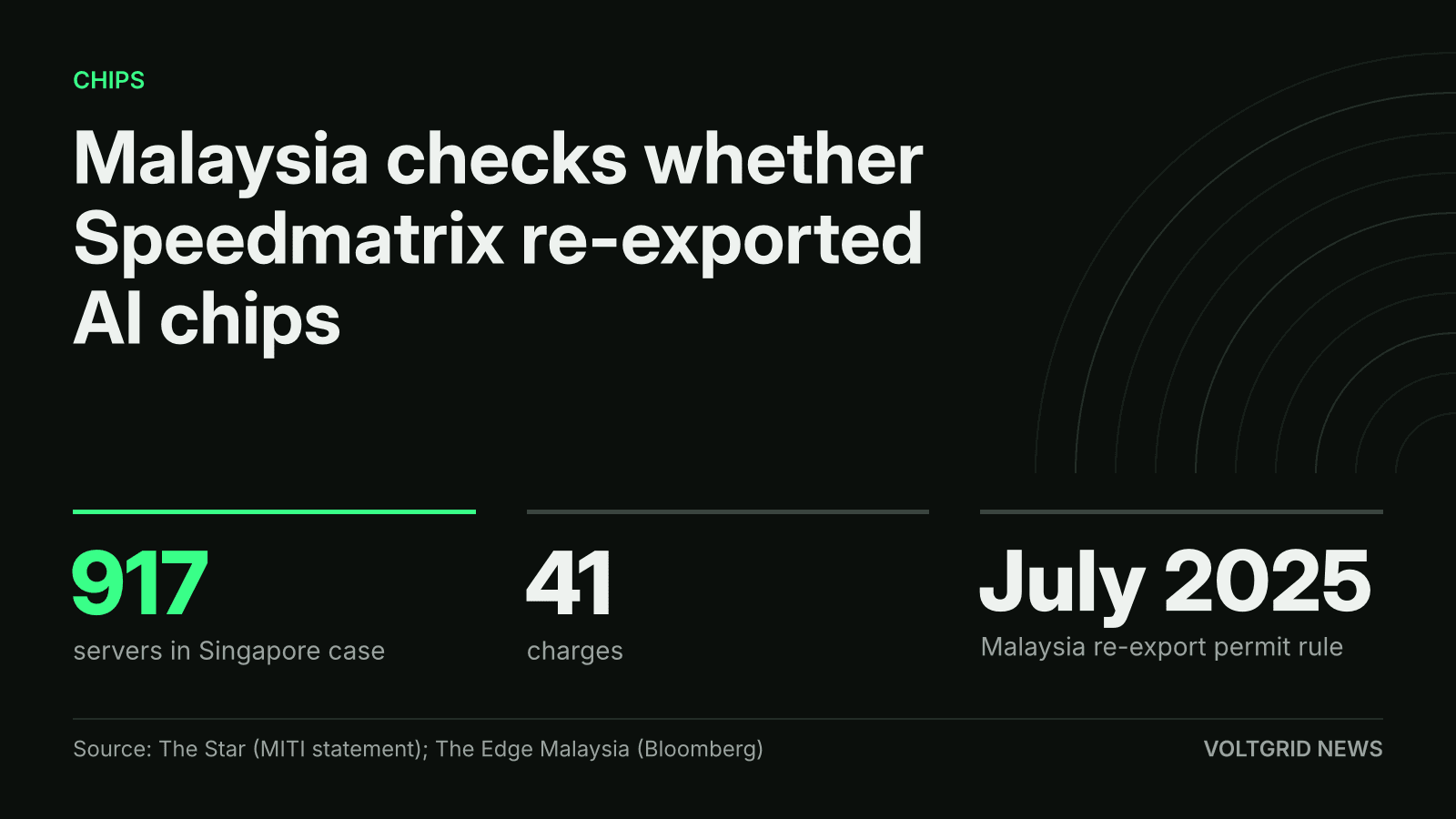
The one charged case dates from March, when federal prosecutors charged Super Micro co-founder Yih-Shyan "Wally" Liaw and two others. Prosecutors allege that they routed about $2.5 billion of servers containing NVIDIA H200 and B200 GPUs to China through a Southeast Asian front company, Fortune reports. Super Micro was not charged and says it was a victim, and NVIDIA is not accused of wrongdoing in the indictment. Liaw has pleaded not guilty and his trial has moved to March 2027. Super Micro has also disclosed a grand jury subpoena and inquiries from the SEC and BIS, Fortune reports.
The other inquiries are reported, not announced. The New York Times reported on Nov. 9 that a Commerce inquiry into Singapore data-centre company Megaspeed had moved to the Justice Department, which is running a criminal inquiry, according to Investing.com and Seeking Alpha; we covered the report. Bloomberg reported, according to Fortune and citing an anonymous source, that the Justice Department is running several probes into NVIDIA, one on antitrust and two on Megaspeed and Super Micro. Separately, the US Attorney's Office in Manhattan is examining whether entities linked to Alice Huang helped smuggle Super Micro servers, Bloomberg reported on Nov. 12, according to Fortune, as we reported. And President Donald Trump told reporters this week that the FBI is investigating Jensen Huang's relationship with Alice Huang, Fortune reports.
No US agency has confirmed any of these on the record in the reports we read; the FBI inquiry rests on the President's own remarks. NVIDIA has said that it complies with US export laws, NBC reports, and Megaspeed has denied the allegations, as we reported. China has denied the spying allegations, Al Jazeera and Fortune report. Huang's representatives did not immediately respond to NBC. Singapore is the exception on the record: its Ministry of Home Affairs said its police and customs have opened investigations into Megaspeed and Alice Huang, Fortune reports.
Axios reported on Nov. 11, citing unnamed sources, that Lutnick stalled a third crackdown on chip diversion that Trump authorised on Nov. 5, as we reported; the White House said the president "maintains complete confidence" in Lutnick. NVIDIA's board has opened its own, private investigation.
What the market data shows
For engineers and investors the question is how many restricted chips are already in China, and no public figure answers it. Reuters reported that more than 150 Chinese procurement notices, plans, contracts and disclosures show NVIDIA H100, H200 and H800 processors anchoring AI projects worth more than 23 billion yuan ($3.2 billion), according to our summary. The total mixes plans, contracts and finished sites, and covers buildings and power systems, not chips alone; the review does not show a breach by NVIDIA. The five projects Reuters itemises add up to 14.12 billion yuan (6.2 + 3 + 2.26 + 1.5 + 1.16), at most about 61% of the more than 23 billion yuan total (14.12 / 23).
Two other datapoints sit on different bases. Reuters reported on Nov. 5, from two unnamed sources, that about 600,000 H200 chips are held in Hong Kong because Beijing has not approved large-scale imports, according to The Next Web, as we reported. Reuters reported on Nov. 11, as carried by Al Jazeera, that a university on the Entity List bought two H200 chips from a reseller for 874,700 yuan on Oct. 21, as we covered. The 600,000 count, the two chips and the 23 billion yuan are not additive.
NVIDIA's August guidance for the third quarter of fiscal 2027 was revenue of $108.0 billion, plus or minus 2%, and assumed no China data-center compute revenue. Demand in Chinese tenders sits outside that guidance. With the 25% tariff and Beijing's reported import limits, licences do not equal shipments.
What to watch
Nov. 17: NVIDIA reports third-quarter results at about 1:20 p.m. PT, its first since Huang's resignation, which the board accepted on Nov. 11 and announced on Nov. 12; the 8-K gives no reason for his departure. Nov. 18: the briefing date in the Nov. 4 letter; NBC reports Huang agreed to brief lawmakers, date unsettled. Nov. 19: the only Senate Banking hearing listed, a nomination hearing. Dec. 1 to Dec. 3: the House requests and the committee's Dec. 3 date for Huang. Dec. 10: Lutnick, per the committee post and NBC. Jan. 10, 2027: the end of the stay on the affiliates rule. March 2027: Liaw's trial.
The Senate Banking Committee asked Lutnick to testify on Dec. 10; the hearing dates are requests, not scheduled hearings.
Chart: Voltgrid News
Illustration (AI-generated)
Commerce has not said whether it will act on Cotton's CXMT request, and a Federal Register notice would be the first sign. No hearing notice for Lutnick had been posted when we checked. The allegations about Alice Huang and Megaspeed rest on press reports and unpublished documents, and none has produced a charge against NVIDIA, Super Micro or Jensen Huang.
Sources
- 01Hearings calendar (checked Nov. 13, 2026)Senate Banking Committeebanking.senate.gov
- 02Extension of the Suspension of Expansion of End-User Controls for Affiliates of Certain Listed Entities (91 FR 70789)Federal Register / BISgovinfo.gov
- 03Revision to License Review Policy for Advanced Computing Commodities (91 FR 1684)Federal Register / BISgovinfo.gov
- Editor
- Ege Erten
- Published
- Sources
- 3 cited
- Standards
- AI-assisted