HP Z2 Mini G1a Review: Labs Split 40 vs 24 tok/s on gpt-oss-120b
HP's Z2 Mini G1a ran gpt-oss-120b at close to 40 tok/s in StorageReview's LM Studio test with 96 GB of GPU memory, but at about 24 tok/s at HotHardware, which could use only 64 GB.
Local AI DeskEdited by Ege Erten
8 min readAI-assisted
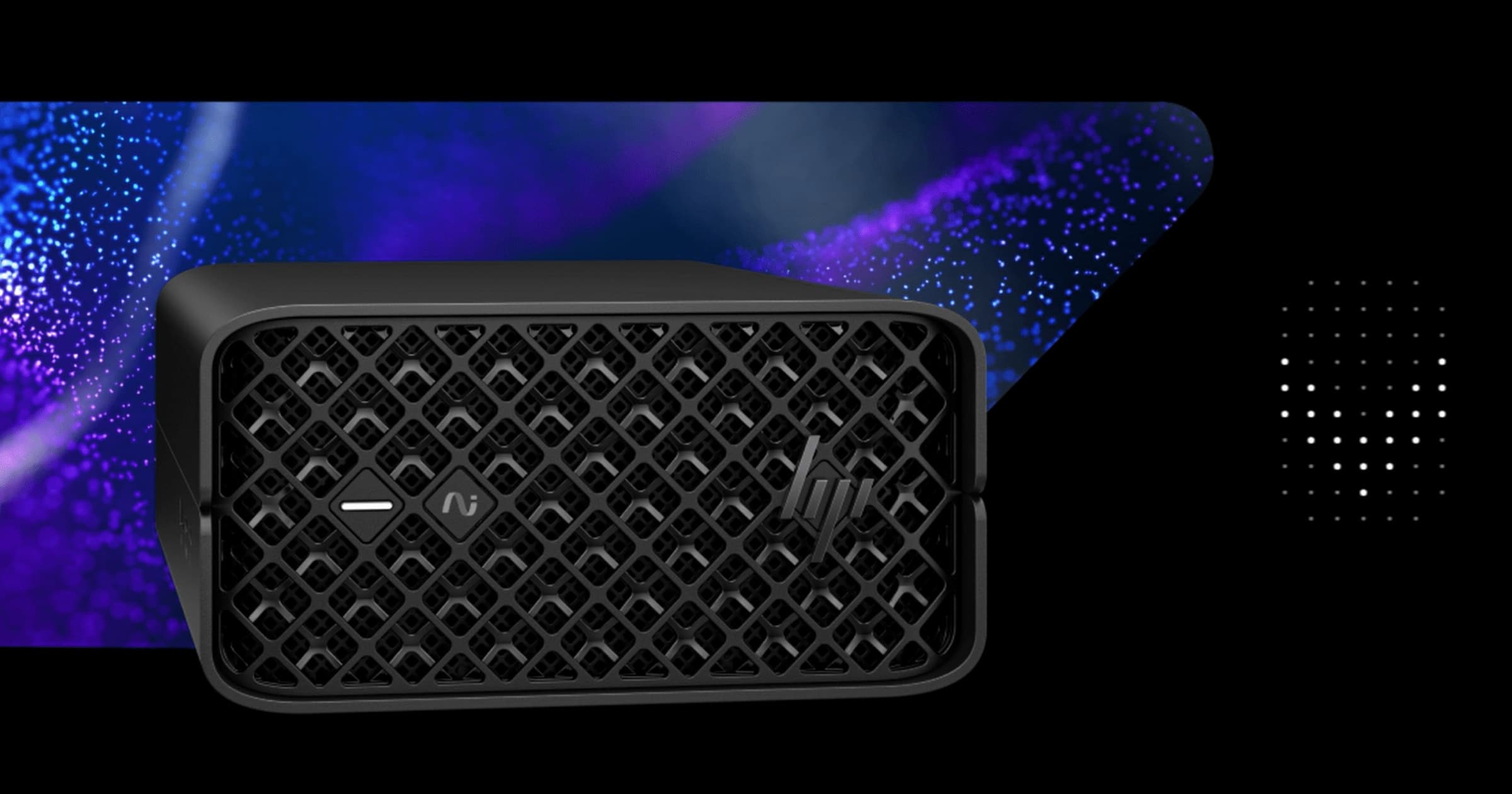
The HP Z2 Mini G1a, as shown on HP's product page.
Image: HP
Source · Press image from the HP newsroom, used for news reporting.
HP's Z2 Mini G1a ran OpenAI's gpt-oss-120b on its integrated Radeon GPU in both independent reviews that timed it, but they disagree: StorageReview measured close to 40 tokens per second in LM Studio, HotHardware about 24.
Both outlets tested the top configuration, AMD's Ryzen AI Max+ PRO 395 with 128 GB of shared memory, and both used LM Studio. The two runs differ in the settings each outlet reported. StorageReview's LM Studio saw the GPU with 96 GB of memory and loaded a 63.39 GB GGUF build of the model with full GPU offload, in a review published Aug. 8, 2025. HotHardware, on Windows 11 in a review published Sept. 24, 2025, found 64 GB the largest practical LM Studio GPU-memory setting and saw crashes once context passed 8,192 tokens. Neither outlet explains the speed gap, and Voltgrid does not average the two.
For a buyer, the split matters more than either number. A box that is sold on fitting a 120B model only delivers that if the software stack hands the model enough memory. On this machine, that depends on the app, the driver setting and possibly the operating system, not just on the 128 GB on the spec sheet.
What's new in the Z2 Mini G1a
The Z2 Mini G1a is HP's compact workstation built on AMD's Strix Halo chip, the Ryzen AI Max PRO family, instead of a separate graphics card. HP's product page lists up to the Ryzen AI Max+ PRO 395, up to 128 GB of memory at transfer rates up to 8000 MT/s, and up to 96 GB of that memory assignable to the GPU. HP rates the neural processing unit (NPU) at up to 50 TOPS.
The memory is the design choice that defines the product. A discrete graphics card holds a model only in its own memory: the 16 GB Radeon RX 7800 XT that HotHardware ran alongside it failed three of its AI tests for lack of room. Here the CPU and the Radeon 8060S GPU draw from a shared pool of soldered memory (LPDDR5X, per StorageReview's spec table), so a model of more than 60 GB can sit where the GPU reads it, although HotHardware notes Windows still sees separate CPU and GPU banks and calls the memory not truly unified. HP does not state the bandwidth in GB/s on its page. Framework rates its Desktop, built on the same Max+ 395 chip, at 256 GB/s, and AMD lists the same figure for the Ryzen AI Halo. For single-user decoding, memory bandwidth is the main limit, though no outlet tested that on the Z2 Mini.
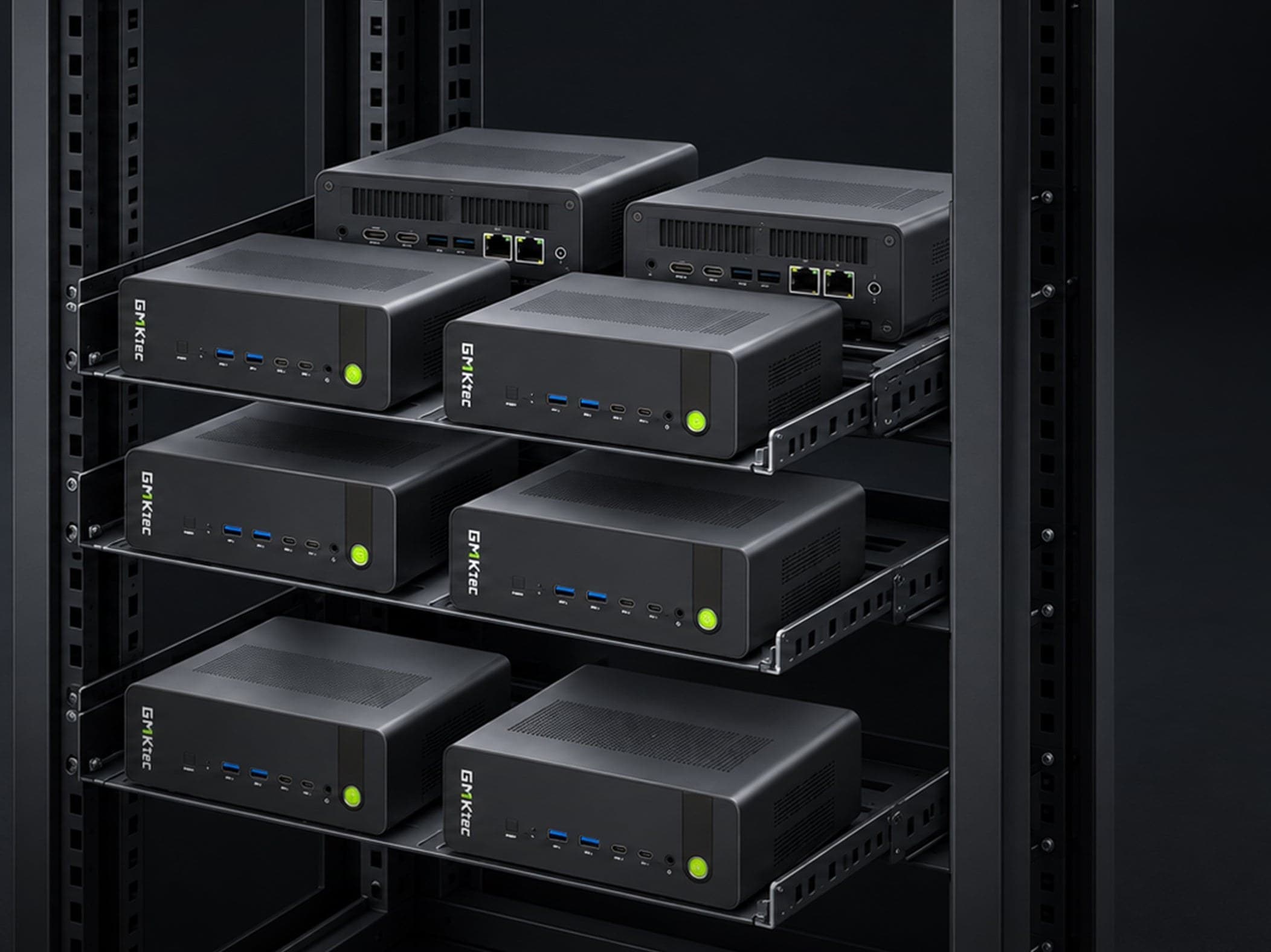
HP also built the box for racks and offices. It specifies a 300 W internal power supply, so there is no external brick, and says five units fit across a 4U rack, with the mounting hardware sold separately. The BIOS offers High Performance, Performance, Quiet and Rack modes, and HP supports Windows 11 Pro, WSL2 or Linux. StorageReview's spec table lists Flex IO slots that take options up to a 10GbE port and an HP remote management controller.
What it solves
The Z2 Mini G1a lets a team run a 120B-parameter mixture-of-experts model locally without buying a workstation GPU. StorageReview, citing OpenAI, said the model's mixture-of-experts weights are post-trained with MXFP4 quantization, which brings them to 4.25 bits per parameter, which is why the whole model fits in the 96 GB the GPU can address. It said hardware like NVIDIA's 96 GB RTX 6000 Pro would traditionally cost three times as much.
In Ollama, StorageReview measured output rates of 112.18 tokens per second at 1.5B parameters, 36.86 at 7B, 18.90 at 14B, 9.38 at 32B and 4.24 at 70B, with the 70B run taking 164.73 seconds to complete. StorageReview named the models only as Gemma3 variants where applicable and did not state the quantization. At 4.24 tokens per second, a model of that size is slow for interactive use, while the mixture-of-experts gpt-oss-120b, which activates only a fraction of its weights per token, is the model this machine suits.
Why 96 GB of Shared Memory Matters
A discrete graphics card holds a model only in its own memory, and the 16 GB Radeon RX 7800 XT that HotHardware tested against the Z2 Mini failed three AI tests for lack of room. The Z2 Mini G1a lets the GPU draw on the same 128 GB pool as the CPU, and HP says up to 96 GB of it can be assigned to the GPU.
StorageReview, citing OpenAI, says gpt-oss-120b's weights are stored at 4.25 bits per parameter in MXFP4, so its 63.39 GB file fits inside that 96 GB. Fitting is only the first test. HotHardware found LM Studio on Windows practical only up to a 64 GB setting, and it crashed above 8,192 tokens of context. The spec sheet number counts only when the software hands the memory over.
Pros and Cons
The strongest pro is StorageReview's result. It measured close to 40 tokens per second on gpt-oss-120b, with GPU power just below 100 W and GPU and CPU temperatures of 51 to 54 °C during the run. It credited AMD's driver and runtime updates for the result, saying the same class of chip had disappointed it in HP's ZBook Ultra G1a laptop earlier in 2025, and gave the Z2 Mini its Editor's Choice award.
The strongest con is HotHardware's account of the memory setting. On Windows, the GPU memory can be fixed or left on "auto", and HotHardware found that auto did not work with LM Studio. Setting the full 96 GB did not work either, because LM Studio first loads the model into system memory and so needs at least as much system RAM as GPU memory. That made 64 GB the largest practical setting. HotHardware said the setup left little memory for context: LM Studio defaults to 4,096 tokens, gpt-oss-120b supports 131,072, and anything above 8,192 crashed on the second or third prompt. HotHardware said it understood command-line llama.cpp avoids the limit but did not test it.
HotHardware also measured 256 W at the wall at most under a full CPU and GPU stress load, against a 160 W combined CPU and GPU power limit. The CPU cores reached their 100 °C ceiling under Cinebench, with clocks falling to 4.2 to 4.3 GHz. The machine was silent at idle and loud under sustained load. HotHardware found it performed measurably better in Linux and recommended Linux with AMD's ROCm software for AI work, saying that also saves about $200. For images, it found ComfyUI and AUTOMATIC1111 hard to set up on Windows with an AMD GPU and pointed to AMD's recommended Amuse app, which does see the full 96 GB.
Who it's for
The Z2 Mini G1a fits an IT department that wants a managed, rackable box to serve gpt-oss-120b to a small team, where about 24 to close to 40 tokens per second in LM Studio, as the two reviews measured, is enough for one user at a time (HotHardware called 24 plenty fast for interactive use). HP's internal power supply, Rack mode and five-per-4U density are the reasons to pick it over a consumer mini PC.
It also fits a developer who needs a 120B mixture-of-experts model on the desk and plans to run Linux or a command-line runtime, where HotHardware understood the 64 GB ceiling it hit in LM Studio does not apply. That expectation is still unmeasured on this model.
It does not fit a buyer who needs long context on Windows through LM Studio. HotHardware's 8,192-token ceiling limits it to short prompts in that setup. It is also a poor fit for anyone who needs to serve many users at once: no outlet has measured the Z2 Mini in vLLM or at batch sizes above one.
How it compares
The closest rival is the Framework Desktop, built on the same Ryzen AI Max+ 395 with 128 GB. Framework lists it at $3,449 for the DIY Edition, out of stock as of Oct. 30, 2026. ServeTheHome measured roughly 45 tokens per second on gpt-oss-120b MXFP4 in LM Studio on Windows 11 Pro. That is the same model and tool as both Z2 Mini results, but a third lab with its own settings, so the three numbers show a range for this chip, not a ranking. HotHardware itself pointed buyers who do not need Flex IO or HP's management and security tools to the Framework.
AMD's own Ryzen AI Halo uses the same Ryzen AI Max+ 395, listed at $3,999 with a 2 TB SSD. StorageReview reported the $3,999 price and the July 2026 configuration. In our Ryzen AI Halo review, StorageReview's vLLM serving test put it at 222 tokens per second in aggregate at batch 64 on gpt-oss-120b, against 701 on NVIDIA's DGX Spark. Those are multi-user serving numbers and cannot be set against the single-user LM Studio figures above.
The DGX Spark carries 128 GB at 273 GB/s and listed at $6,950 for the 4 TB model on NVIDIA's marketplace on Oct. 31, 2026 (stock unverified; the marketplace had shown it out of stock on Oct. 21), as covered in our DGX Spark review. The GB10 machines built on the same NVIDIA chip run gpt-oss-120b at similar speeds to one another, as our GB10 comparison found. Against them the Z2 Mini's case is price and x86 Windows compatibility; HP publishes no bandwidth figure, while Framework and AMD list 256 GB/s for the same chip and NVIDIA lists 273 GB/s for DGX Spark.
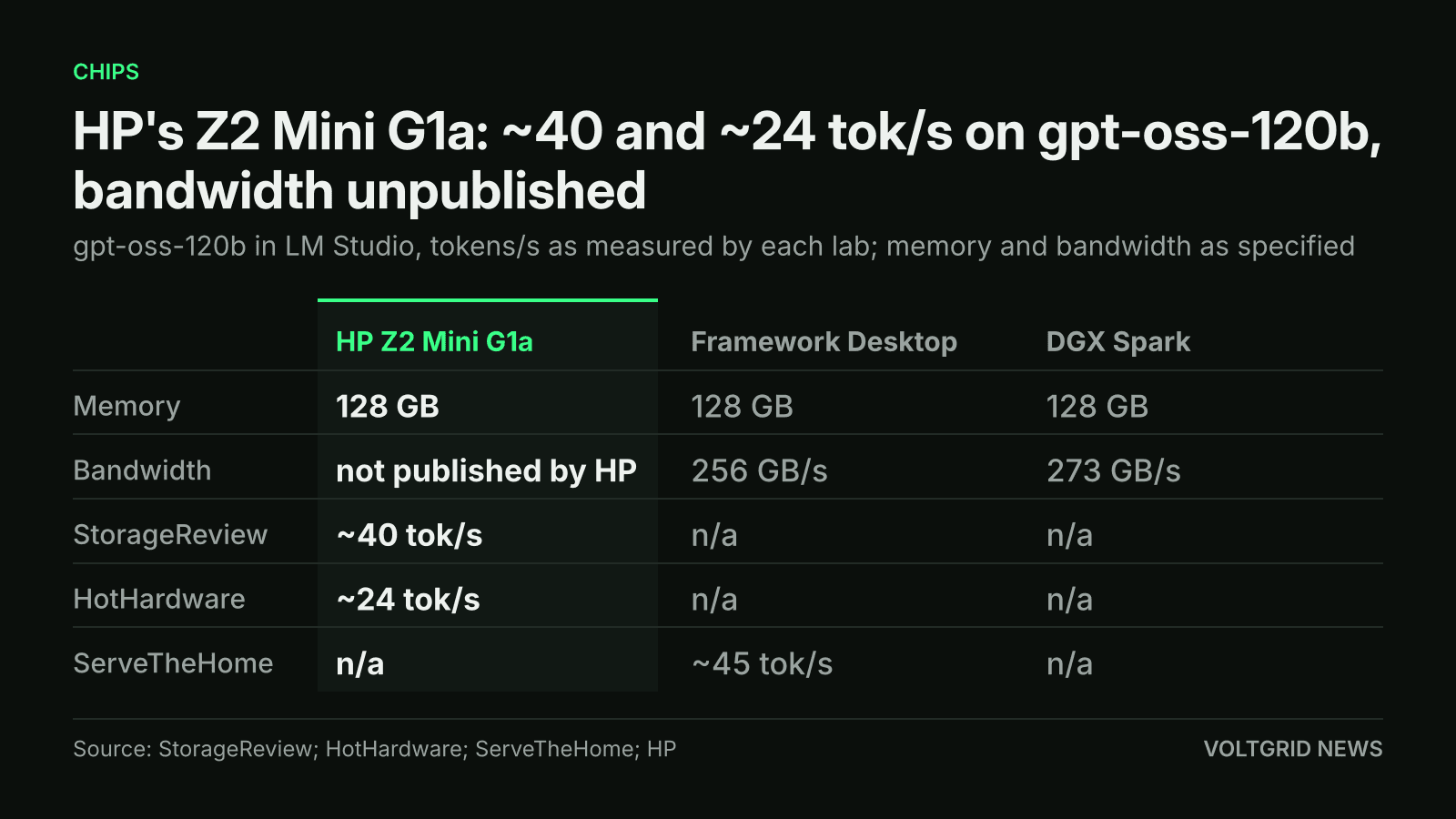
Each speed comes from one lab on one model and tool; HP publishes no memory bandwidth figure.
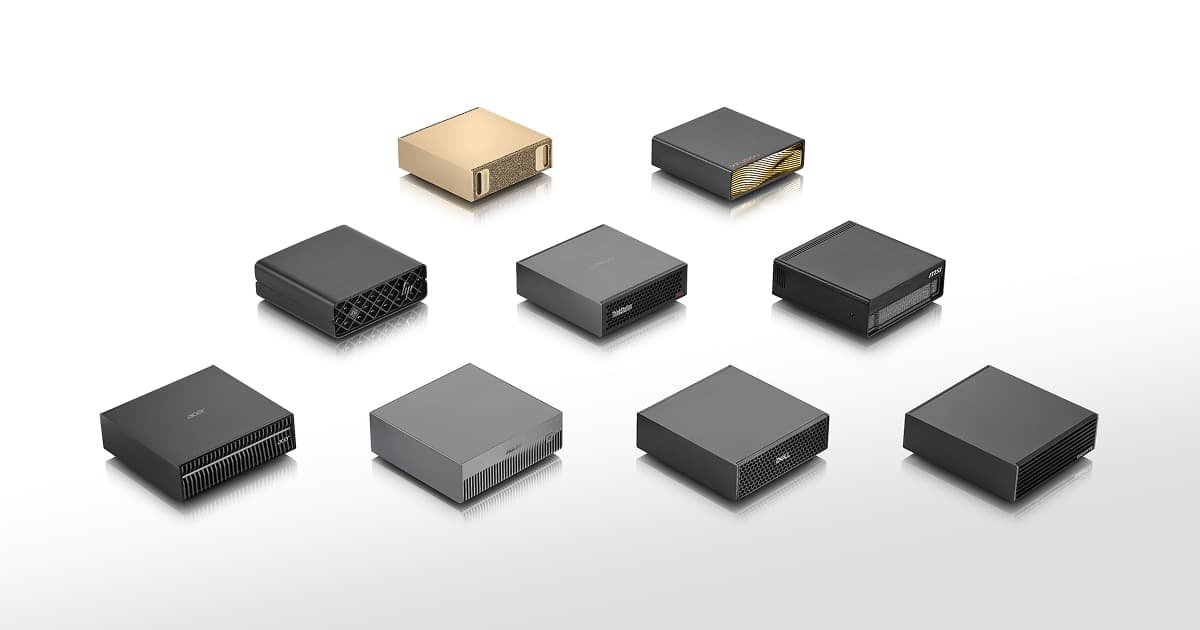
Illustration (AI-generated)
Price is the hardest number to pin down. StorageReview's unit with two 1 TB SSDs listed at $4,781, and HotHardware's 2 TB unit at $5,021 as tested. Both outlets found it far cheaper in practice in 2025: $3,342.65 at B&H for the top 2 TB model, and $2,569 for HotHardware's configuration in HP's own web shop. HP's product page showed no US price when Voltgrid read it on Nov. 3, 2026, and a search found no newer dated US price.
What to watch
Three things would settle the speed question. The first is a llama.cpp or ROCm measurement on Linux on this exact model, which no outlet has published. The second is an LM Studio result with the full 96 GB assigned, on a current driver, at long context. The third is a vLLM or batch test that shows how many users one box can serve.
Voltgrid found no HP announcement of a Z2 Mini on AMD's next Ryzen AI Max PRO generation, or a date for one. HP's current US list price for the 128 GB model is the other figure to check before buying.
How it compares
Full table| Product | Memory | Bandwidth | AI compute | Measured speed | Price |
|---|---|---|---|---|---|
| HP ZGX Fury AI StationHP | 252 GB HBM3e GPU + 496 GB LPDDR5x CPU (4x 128 GB SOCAMM); 748 GB unified[1] | 7.1 TB/s (GPU HBM3e); 396 GB/s (CPU LPDDR5x)[1] | — | Two-unit cluster with an ASUS ET900N G3 over two 400G DACs: GLM-5.3 NVFP4 5,018 output tok/s at 256 streams, 512/512, vLLM 0.27.1 TP2 with MTP (StorageReview); no single-unit HP result[2] | Japan list price from 28,490,000 yen incl. tax (sales from Oct 27, 2026); no US list price published[3] |
| NVIDIA DGX StationNVIDIA (systems built by ASUS, Dell, GIGABYTE, HP, MSI, Supermicro and Exxact) | 748 GB coherent: 252 GB HBM3e (GPU) + 496 GB LPDDR5X (CPU)[4] | GPU HBM3e 7.1 TB/s; CPU LPDDR5X 396 GB/s; NVLink-C2C 900 GB/s between them[4] | 15 PFLOPS FP4 (without sparsity)[4] | Over 26,000 output tokens/s aggregate on Qwen3.6-35B-A3B NVFP4 at 512 concurrent users (24-30-token input, 1,024-token output), Gigabyte W775-V10-L01; idle never below 250 W.[5] | No NVIDIA list price; first public US OEM list price is Dell Pro Precision with GB300 at $160,195 default config (Dell.com, read Nov 1, 2026); ServeTheHome had heard about $100K[6] |
| NVIDIA RTX PRO 6000 Blackwell Workstation EditionNVIDIA (sold through PNY, TD SYNNEX and workstation makers) | 96 GB[7] | 1,792 GB/s[7] | 4,000 AI TOPS (FP4, with sparsity) (sparse)[7] | LM Studio: Mistral Small (26 GB) at 42.4 tokens/s vs 17 on an RTX 5090; Gemma 3 27B at 29 vs 5; tied with the RTX 5090 at about 81 tokens/s on DeepSeek Llama 8B Distil, where VRAM does not limit.[8] | $16,000 on NVIDIA's US marketplace (Workstation Edition), listed out of stock[9] |
| Apple Mac Studio (M5 Ultra)Apple | up to 512 GB unified (96 GB on 30-core M5 Ultra; 256 GB or 512 GB on 36-core/80-core M5 Ultra)[10] | 1.2 TB/s[10] | — | Qwen 3.8 27B 4-bit MLX in LM Studio: about 55 tok/s on M5 Ultra (36-core, 256 GB) vs about 40 on M3 Ultra (BGR)[11] | $22,299 minimum with 512 GB ($6,799 36-core CPU/80-core GPU M5 Ultra config plus $15,500 memory upgrade; Oct 28, 2026)[12] |
| NVIDIA RTX Spark (N1X) PCsNVIDIA (MediaTek collaborated on the custom CPU design) | Up to 128 GB LPDDR5X (20-core CPU / 6,144-core GPU version); up to 64 GB (18-core / 5,120-core laptop version)[13] | Up to 300 GB/s: LPDDR5X-9400 on a 256-bit bus (NVIDIA's product page lists no bandwidth)[14] | — | gpt-oss:20b via Ollama in a Codex CLI coding agent, 64K context: 58.5 tok/s generation, 3 of 4 tasks passed (Dell XPS 16, 20-core N1X, 64 GB; StorageReview)[15] | Laptops from $2,599; pricing and configurations vary by region[16] |
| ASUS Ascent GX10ASUS | 64 GB or 128 GB LPDDR5X-8533 unified[17] | 273 GB/s (8533 MT/s), as listed by StorageReview; ASUS's spec page states no bandwidth[18] | Up to 1 PFLOP FP4 (GB10; NVIDIA's footnote: theoretical, using the sparsity feature). ASUS's pages say 1 petaFLOP / FP4 with no sparsity label (sparse)[19] | gpt-oss-120b, vLLM online serving, equal ISL/OSL: 70 tok/s at batch 1 rising to 680 tok/s aggregate at batch 64 (StorageReview)[18] | $5,999 (128 GB, 1 TB, GX10-GG0010BN, ASUS eShop US, Oct 30, 2026)[20] |
| Dell Pro Precision with GB10 (model FCM1253; launched as Dell Pro Max with GB10)Dell | 128 GB LPDDR5x up to 8533 MT/s onboard (64 GB option also listed)[21] | 273 GB/s (128 GB LPDDR5x, 256-bit)[22] | — | gpt-oss-120b, vLLM online serving, equal ISL/OSL: 68.57 tok/s at batch 1 rising to 670.83 tok/s aggregate at batch 64 (StorageReview)[23] | $7,967 (128 GB, 2 TB Gen4 QLC SSD default config, Dell.com US, read Nov 2, 2026 16:40 UTC)[21] |
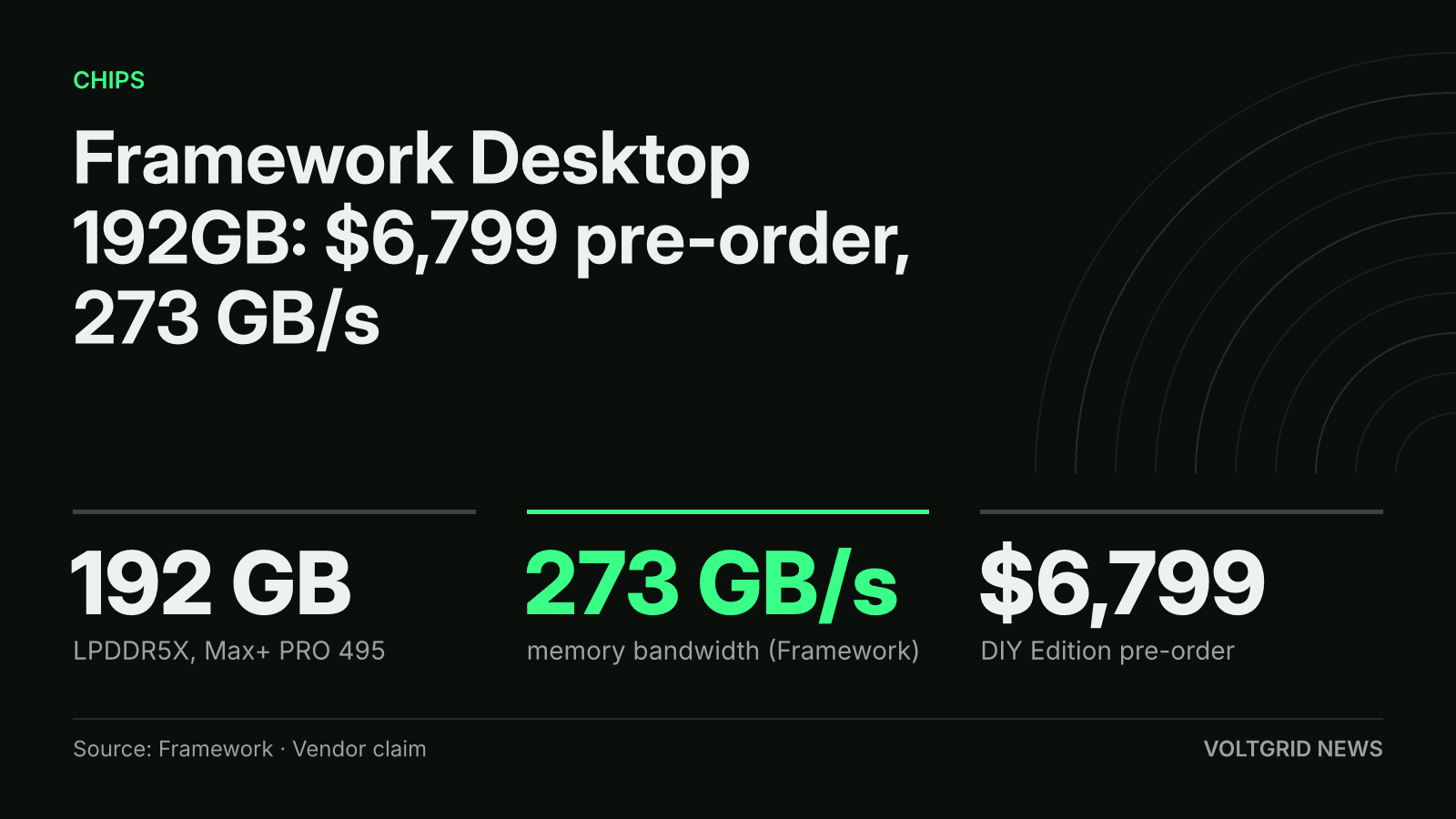
| Framework Desktop (Ryzen AI Max+ PRO 495, 192 GB)Framework | 192 GB LPDDR5X-8533 soldered[24] | 273 GB/s (256-bit)[24] | — | — | $6,799 (Max+ PRO 495 192 GB DIY Edition pre-order, Nov 3, 2026; storage not included)[25] |
| GIGABYTE AI TOP ATOMGIGABYTE | 128 GB unified system memory[26] | 273 GB/s (LPDDR5x-8533, 256-bit)[27] | — | gpt-oss-120b, vLLM online serving, equal ISL/OSL: 60.71 tok/s at batch 1 rising to 649.62 tok/s aggregate at batch 64 (StorageReview)[27] | $7,312.00 advertised at CDW US against a $7,999.99 list (128 GB, 4 TB, ATAGB10-9000; read Nov 2, 2026)[28] |
| GMKtec EVO-X5 Pro AI Mini PCGMKtec | 192 GB LPDDR5X-8533 onboard (8 x 24 GB, non-upgradeable); up to 160 GB allocatable as VRAM[29] | Up to 273 GB/s[30] | — | GMKtec Laboratory table: GLM-5.3-Flash UD-IQ4_XS (146.05 GB) decode 17.79 tok/s, prefill 70.18, TTFT 14.71 s; Qwen3.8-Flash-Next ROCmFP4-FAST (93.48 GB) decode 45.08 tok/s[29] | $6,799 (192 GB/2 TB) and $7,099 (192 GB/4 TB), GMKtec US store, Nov 2, 2026[29] |
| HP ZGX Nano AI Station (G1n)HP | 128 GB coherent unified system memory[31] | 273 GB/s (128 GB LPDDR5x)[32] | GB10: up to 1 PFLOP FP4, theoretical, using the sparsity feature; HP and reviewers list 1,000 TOPS FP4 (sparse)[19] | gpt-oss-120b, vLLM online serving, equal ISL/OSL: 69.6 tok/s at batch 1 rising to 722.9 tok/s aggregate at batch 64 (StorageReview)[33] | $7,399.00 at the HP Store for the 4 TB model; $4,759 on Amazon (Notebookcheck, review updated Oct 5, 2026)[34] |
| Lenovo ThinkStation PGXLenovo | 128 GB LPDDR5X unified (256-bit)[35] | 273 GB/s[35] | — | — | about $4,100 for the 1 TB configuration (Mar 2026)[36] |
| MSI EdgeXpert (MS-C931)MSI | 64 GB or 128 GB LPDDR5x unified (256-bit)[37] | 273 GB/s[37] | 1 PFLOPS FP4 (sparse)[37] | — | No list price; MSI sells via quote (Get a quote)[37] |
| NVIDIA DGX SparkNVIDIA (partner GB10 systems from Acer, ASUS, Dell, GIGABYTE, HP, Lenovo and MSI) | 128 GB; a 64 GB configuration is sold only through OEM partners[19] | 273 GB/s[19] | Up to 1 PFLOP FP4 (theoretical, using the sparsity feature) (sparse)[19] | Qwen 3.8 27B (dense) with multi-token prediction: decode of about 20 tokens/s, with time-to-first-token staying interactive out to the full 262K context.[38] | $6,950.00 (128 GB, 4 TB) on NVIDIA's enterprise marketplace with an Add To Cart button in a copy cached 07:59 UTC on 2026-10-31; stock unverified (listed out of stock on 2026-10-21); 64 GB partner systems from $4,999[39] |
| NVIDIA DGX Spark 64 GBNVIDIA (sold by Acer, ASUS, Dell, Gigabyte, HP and MSI) | 64 GB LPDDR5X unified (two units pool 128 GB over ConnectX-7)[40] | 273 GB/s (256-bit; NVIDIA spec table covers both 64 GB and 128 GB)[19] | 1 PFLOPS FP4 (sparse; NVIDIA spec table covers both memory configurations)[19] | — | from $4,999 (partner systems, Oct 2026; no Founders Edition)[40] |
| AMD Ryzen AI Halo Developer PlatformAMD | 128 GB LPDDR5x-8000 unified[41] | 256 GB/s[41] | — | gpt-oss-120b, vLLM online serving, equal ISL/OSL 256/256: 222 tok/s aggregate at batch 64 vs 701 on DGX Spark (StorageReview)[42] | $3,999 with 2 TB SSD (Jul 2026)[42] |
| Framework Desktop (Ryzen AI Max+ 395)Framework | 128 GB LPDDR5x-8000 soldered (32 GB and 64 GB options)[43] | 256 GB/s[44] | — | gpt-oss-120b MXFP4 in LM Studio (out-of-the-box setup): roughly 45 tok/s (ServeTheHome; Ryzen AI Max+ 395, 128 GB, Windows 11 Pro)[45] | $3,449 (DIY Edition, Max+ 395 with 128 GB, system only; out of stock, Nov 3, 2026)[46] |
| Acer Veriton GN100 AI Mini WorkstationAcer | 128 GB LPDDR5x coherent unified[47] | — | — | gpt-oss-120b, vLLM online serving, equal ISL/OSL: 69.65 tok/s at batch 1 rising to 713.18 tok/s aggregate at batch 64 (StorageReview)[48] | from $3,999 in North America (announced Sep 3, 2025; prices vary by region)[47] |
| ASRock Industrial AI BOX-A395ASRock Industrial | 128 GB LPDDR5X-8000 soldered[49] | — | — | AgentSTH V7, 32 threads: 15% ahead of the next-closest Ryzen AI Max+ 395 box (single-core within 1%); estimated SPEC CPU2026 int rate: top of a 44% spread across four 395 systems; measured by ServeTheHome, Ubuntu 26.04[50] | — |
| Dell Pro Precision with GB300 (model FCT6263; announced as Dell Pro Max with GB300)Dell | 252 GB HBM3e GPU + 496 GB LPDDR5X CPU[6] | — | — | — | $160,195 (Dell.com US default config with RTX PRO 2000 display GPU and 16 TB SSD, read Nov 1, 2026)[6] |
| GMKtec EVO-X2 AI Mini PCGMKtec | 64 GB or 128 GB onboard LPDDR5X-8000 (non-upgradeable)[51] | — | — | — | $3,499.99 (128 GB/1 TB, GMKtec US store, Oct 30, 2026; listed against $3,999.99)[51] |
| HP Z2 Mini G1a WorkstationHPThis story | up to 128 GB unified, up to 96 GB assignable to the GPU, up to 8000 MT/s[52] | — | up to 50 NPU TOPS[52] | gpt-oss-120b GGUF (63.39 GB, full GPU offload) in LM Studio: close to 40 tok/s (StorageReview)[53] | $4,781 list for StorageReview's review configuration; about $3,300 street (B&H top spec with 2 TB SSD at $3,342.65, Aug 2025)[53] |
| Microsoft Surface RTX Spark Dev BoxMicrosoft | 128 GB unified memory[54] | — | up to 1 PFLOP of AI compute (Microsoft; precision and sparsity not stated on the page) (sparse)[54] | — | From $5,999.99 (Microsoft Store US, pre-order, read Nov 1, 2026)[54] |
| MSI XpertStation WS300MSI (NVIDIA DGX Station platform) | 252 GB HBM3e GPU + 496 GB LPDDR5X CPU (748 GB coherent)[55] | — | — | GPT-OSS-120B MXFP4, vLLM, 512/512 ISL/OSL, concurrency sweep to 128: peak 9,294 output tok/s vs 3,384 on an RTX PRO 6000 and 500 on DGX Spark (StorageReview, MSI-hosted unit, no add-in GPU)[55] | ServeTheHome calls it a $100K+ system; no MSI list price given[56] |
| Tenstorrent TT-QuietBox 2 (Blackhole)Tenstorrent | 128 GB GDDR6 on the accelerators + 256 GB DDR5-5600 system memory[57] | — | — | — | $9,999 (Oct 30, 2026)[57] |
| WiCi One (RTX 5060 Ti edition)WiCi | 16 GB GDDR7 VRAM; 1 TB NVMe 4 SSD for TurboStream weight paging (WiCi's claim: NVMe used as working VRAM). System RAM not stated[58] | — | — | — | $2,599 list (WiCi shop, Oct 2026); a $600-off code (WICIWELCOME) is applied at checkout. Early-access price was $1,999 (Notebookcheck, Engadget, Sep 2026)[58] |
| WiCi One (RTX 5090 edition)WiCi | 32 GB GDDR7 VRAM; 4 TB NVMe 5 SSD for TurboStream weight paging (WiCi's claim: NVMe used as working VRAM). System RAM not stated[58] | — | — | — | $9,999 list (WiCi shop, Oct 2026); a $600-off code (WICIWELCOME) is applied at checkout[58] |
Italic values are reported by an outlet or measured by an independent lab; the rest come from the maker. Measured speeds use different models, quantizations and tools, so read each with its source rather than against the others. Voltgrid News does not test hardware itself.
Sources (58)
- [1] HP
- [2] StorageReview
- [3] HP Japan
- [4] NVIDIA
- [5] ServeTheHome
- [6] Dell
- [7] NVIDIA
- [8] Gamers Nexus
- [9] NVIDIA
- [10] Apple
- [11] BGR
- [12] MacRumors
- [13] NVIDIA
- [14] ServeTheHome
- [15] StorageReview
- [16] NVIDIA
- [17] ASUS
- [18] StorageReview
- [19] NVIDIA
- [20] ASUS eShop
- [21] Dell
- [22] HotHardware
- [23] StorageReview
- [24] Framework Blog
- [25] Framework
- [26] GIGABYTE (PR Newswire)
- [27] StorageReview
- [28] CDW
- [29] GMKtec
- [30] GMKtec
- [31] HP
- [32] HotHardware
- [33] StorageReview
- [34] Notebookcheck
- [35] Lenovo PSREF
- [36] ServeTheHome
- [37] MSI
- [38] Tom's Hardware
- [39] NVIDIA Marketplace
- [40] NVIDIA Blog
- [41] AMD
- [42] StorageReview
- [43] Framework
- [44] Framework Blog
- [45] ServeTheHome
- [46] Framework
- [47] Acer
- [48] StorageReview
- [49] ServeTheHome
- [50] ServeTheHome
- [51] GMKtec
- [52] HP
- [53] StorageReview
- [54] Microsoft
- [55] StorageReview
- [56] ServeTheHome
- [57] Tenstorrent
- [58] WiCi