Amazon's 65% Carbon-Intensity Goal Leans on Existing Reactors, Not New Ones
Amazon's goal to cut the carbon intensity of its electricity 65% by 2030 vs 2019 draws pre-2030 nuclear from existing plants; the Xe-100 build is aimed at 2039.
5 min read
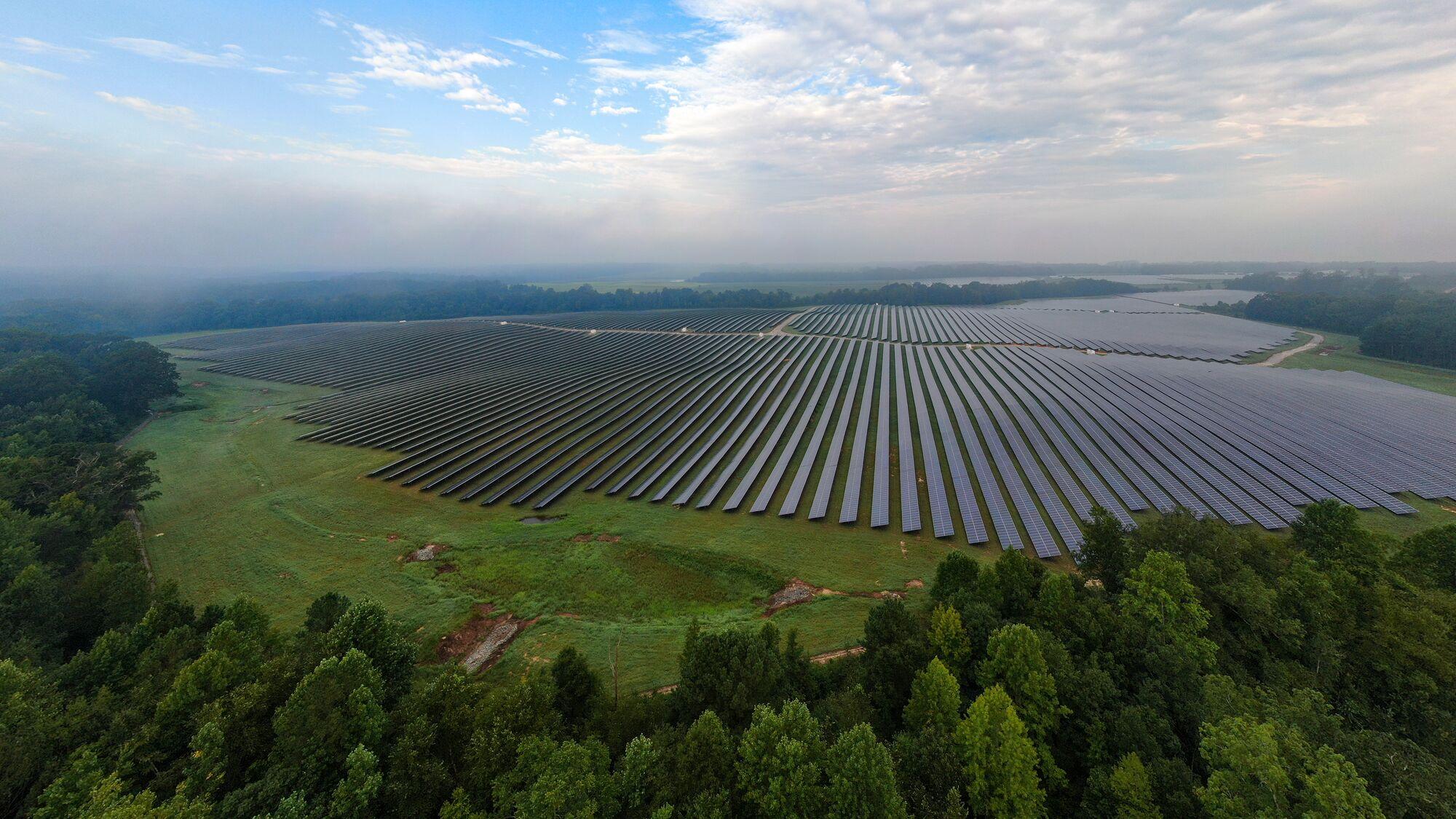
Header image of Amazon's release on its 65% carbon-intensity goal; it shows a solar farm, not a nuclear plant (Amazon).
Image: Amazon
Source · Press image from the Amazon newsroom, used for news reporting.
Amazon said on Nov. 17, 2026 that it aims to cut the carbon intensity of the electricity its global operations use by 65% by 2030, compared with 2019. On the dates in the filings, the nuclear power that can count by 2030 is output from reactors already running, bought under contract, while the new reactors Amazon backs are aimed at 2039.
What Amazon's Goal Says and Leaves Out
The goal was set out in a post by Kara Hurst, Amazon's chief sustainability officer. Carbon intensity is measured as carbon dioxide equivalent (CO2e) per megawatt-hour (MWh) of electricity consumed, so the target is about each unit of power, not about total emissions. Amazon said it built the goal and its methodology on the International Energy Agency's Net Zero by 2050 pathway and had a draft reviewed by academics at Carnegie Mellon University and MIT and a researcher at RMI, a nonprofit. It will report progress every year in its Sustainability Report. Power Technology also reported the target, with its 2019 baseline, as a step toward Amazon's net-zero 2040 commitment.
The release gives no baseline value: it states neither Amazon's 2019 intensity in CO2e per MWh nor today's figure. It also does not say whether the intensity is counted on contracts Amazon holds (a market-based method) or on the average mix of the grids it draws from (a location-based method). From the release alone, readers cannot tell how far Amazon has to go.
Amazon put its portfolio at more than 700 carbon-free energy projects and over 40 GW of capacity, which it says would power more than 12.1 million U.S. homes "once completed", so not all of it is running yet; the release does not give the operating share. The only nuclear project it names is the X-energy plan: more than 5 GW of new advanced nuclear across the U.S. by 2039. That aim rests on a non-binding partnership, not a supply contract, as Voltgrid reported. The same day, Amazon announced its India renewables plan, which Voltgrid covered separately.
Why Existing Reactors Matter Before 2030
The argument here is ours, and it starts from dates the sources give. The Xe-100 fleet is aimed at 2039, after the goal's 2030 deadline, and neither Amazon-backed Xe-100 project, in Washington or Indiana, has filed for an NRC construction permit. Whatever that program delivers, the sources give no sign that it will produce electricity before 2030.
Amazon's nuclear supply that is dated before 2030 comes from existing plants. Talen Energy's 10-Q for the second quarter says it is expected to supply Amazon Web Services (AWS) with up to 1,920 MW from the Susquehanna plant in Pennsylvania, in a front-of-the-meter model through 2042, and that the transition to that revised power purchase agreement (PPA) occurred in April 2026. That filing sets out no ramp schedule; Talen's 10-K for 2025 says full volume is expected no later than 2032, with the potential to accelerate.
Vistra's 10-Q says its 20-year PPA, with options for up to 20 more years, will supply AWS with 1,200 MW from the Comanche Peak plant in Texas, with deliveries expected to start in the fourth quarter of 2027 and ramp to full capacity by 2032.
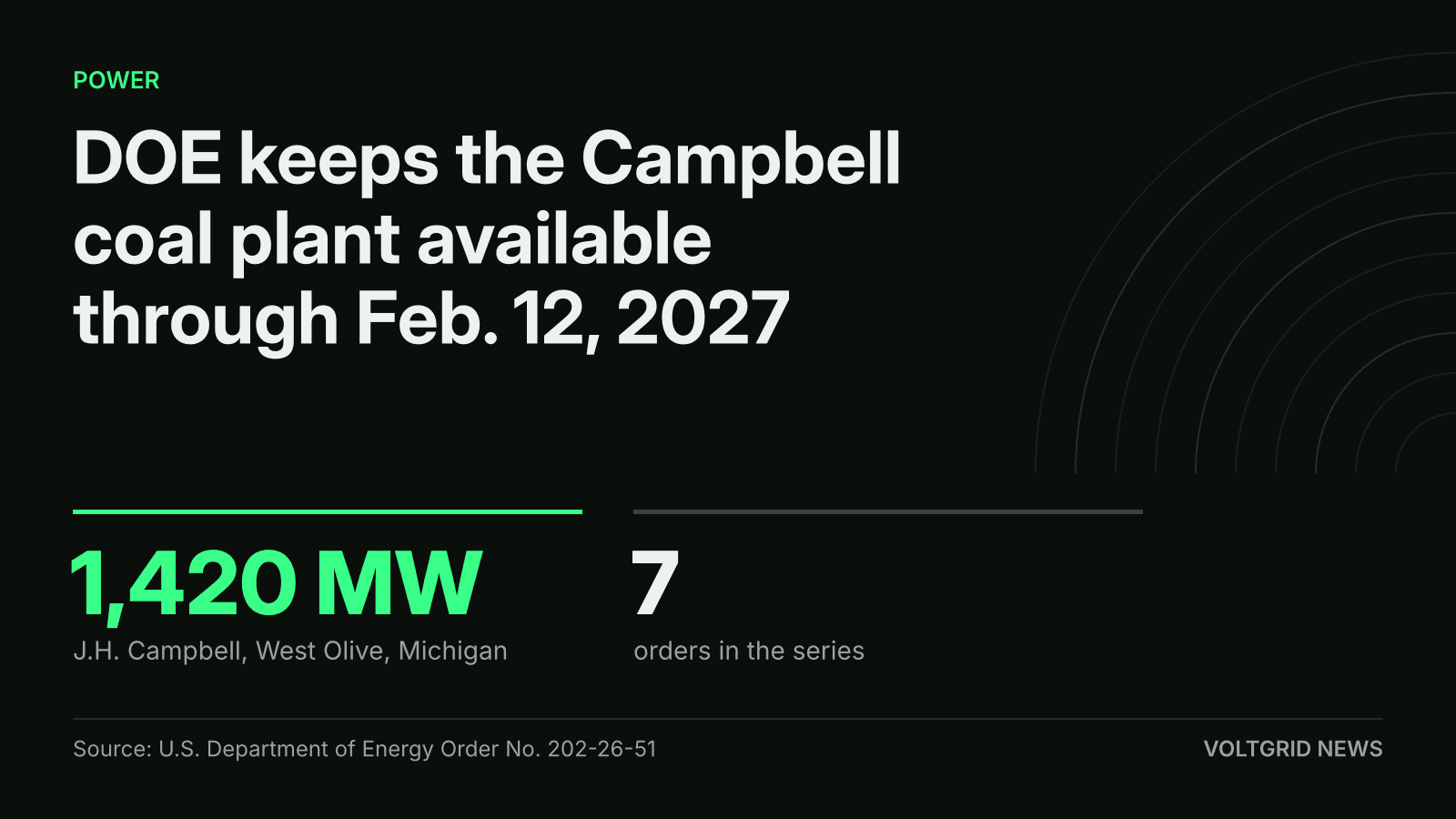
Amazon's 2030 goal date falls before Comanche Peak and Susquehanna are due at full volume, by 2032, and before the 2039 Xe-100 aim; most dates are targets.
Graphic: Voltgrid News
Constellation's uprates for Amazon and Google, described as coming from 2028 to 2032, still need NRC approval.
That suggests nuclear counts toward 2030 only as power from reactors that already exist, and only partly: Comanche Peak could still be ramping in 2030, since Vistra gives full capacity only by 2032, and Susquehanna could be too, on Talen's no-later-than-2032 wording. If that holds, the bulk of the 2030 cut has to come from wind, solar and the other carbon-free projects Amazon already buys, and nuclear is mainly Amazon's bet for the decade after. The release itself points the same way. It says each new carbon-free project can displace fossil generation on the grid, and its stress falls on new capacity in countries with carbon-heavy grids, not on reactors.
The Case Against This Reading
The strongest objection is that existing-reactor supply is already large and already flowing. Susquehanna moved to the revised PPA in April 2026, Talen's filing names up to 1,920 MW, and Talen's 10-K says the ramp to full volume has the potential to meaningfully accelerate. If Amazon counts contracted MWh, firm nuclear output that runs around the clock could weigh more in an intensity figure than its share of nameplate capacity suggests, because solar and wind produce for fewer hours. On that reading, nuclear is a 2030 lever, not only a post-2030 one.
A second objection is that the accounting is open. Under a grid-average method, buying output from a plant that was already on the grid may change Amazon's figure little, and the goal would then turn on new projects and on grid mixes Amazon does not control. Under a contract-based method, the same PPAs could count in full. Until Amazon publishes the method, both readings stand.
The third point cuts against the goal itself. Amazon's scope 2 emissions, those from purchased electricity, rose 34% in 2025, ESG Dive reported from its sustainability report, even as Amazon said it matched all its global energy use with renewable energy. Gas is also in the mix: NIPSCO's GenCo gas plant for Amazon is now expected in 2030. ESG Dive also reported that absolute emissions rose 16% in 2025, while carbon intensity rose only slightly and stayed below its 2019 baseline. An intensity target allows absolute emissions to keep rising while each MWh gets cleaner.
What It Means for Amazon's Suppliers
For Talen and Vistra, the goal adds a public reason for Amazon to take the contracted volumes on time; it does not change the contracts. For X-energy, the release restates the 2039 aim but adds no binding term, and X-energy's own 10-Q shows both Amazon Xe-100 projects depend on Amazon development funding. Amazon's long-dated buying is already visible in its accounts: its energy contracts under fair-value accounting reached about 690 million MWh, most of it due after 2036. The wider picture of signed and announced hyperscaler nuclear is in our Big Tech nuclear ledger.
What to Watch in 2027 and Beyond
The first test is Amazon's next Sustainability Report, due in 2027 if Amazon keeps its yearly schedule, which should give the first figure against the 65% goal and, ideally, the 2019 baseline and the method. The fourth quarter of 2027 is Vistra's start date for Comanche Peak deliveries to AWS. Talen's next filings may show how Susquehanna volumes to AWS build toward 1,920 MW. The goal's deadline is 2030; Vistra's full-capacity date is 2032; the X-energy aim is 2039. If Amazon's reports credit nuclear for a large share of the cut by 2030, the thesis here is wrong.
Sources
- 01Amazon 2025 emissions jump as AI brings momentum and complexity: reportESG Diveesgdive.com
- 02Talen Energy 2025 annual report (Form 10-K)Talen Energy (SEC 10-K)sec.gov
- 03Vistra Corp. Form 10-Q for the quarter ended June 30, 2026Vistra (SEC filing)sec.gov
- 04Amazon to invest $7bn in Indian renewable projects by 2030Power Technologypower-technology.com
- 05Talen Energy Corporation Form 10-Q for the quarter ended June 30, 2026Talen Energy (SEC filing)sec.gov
- 06Amazon sets goal to cut electricity carbon intensity 65% by 2030Amazonaboutamazon.com
- Published
- Sources
- 6 cited