AI Agents Need System RAM: 8 Sessions Can Take 515 GB of KV Cache
Eight long AI agent sessions can need 515 GB of KV cache at FP8, Voltgrid calculates, more than five 96 GB GPUs hold. Offloading parks the overflow in system RAM, which increasingly sets how many agents a machine can run.
Local AI DeskEdited by Ege Erten
12 min readAI-assisted
Follows our story: DeepSeek V4.1 Flash KV Cache: 1.7 GB at FP8 for 1M Tokens, Rivals 43-73 GB
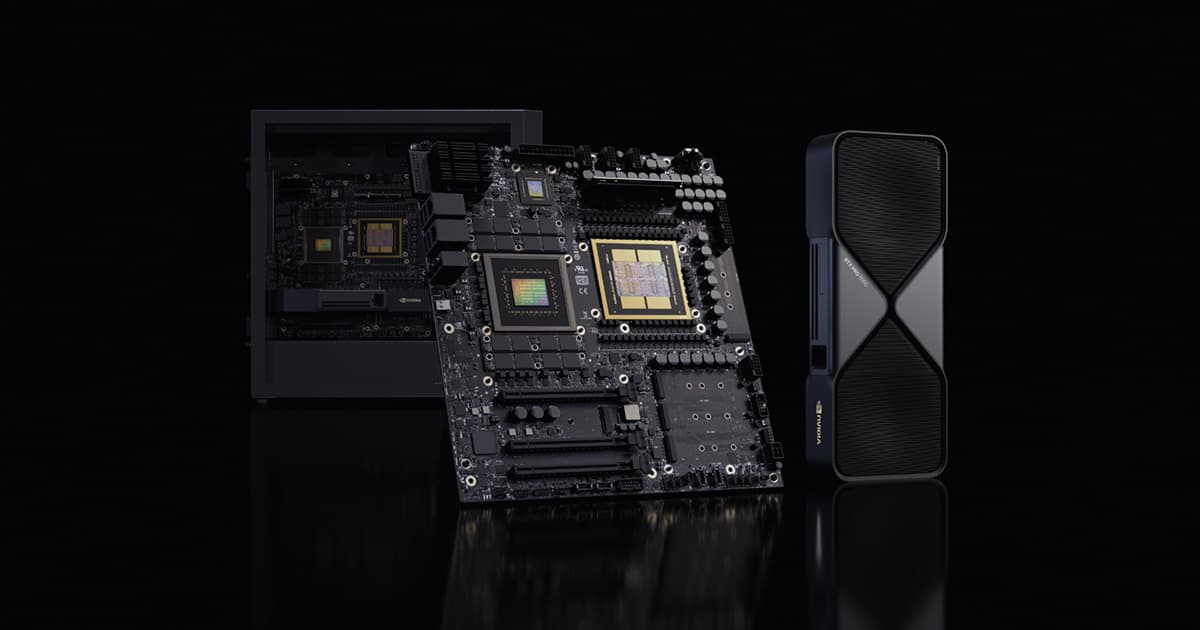
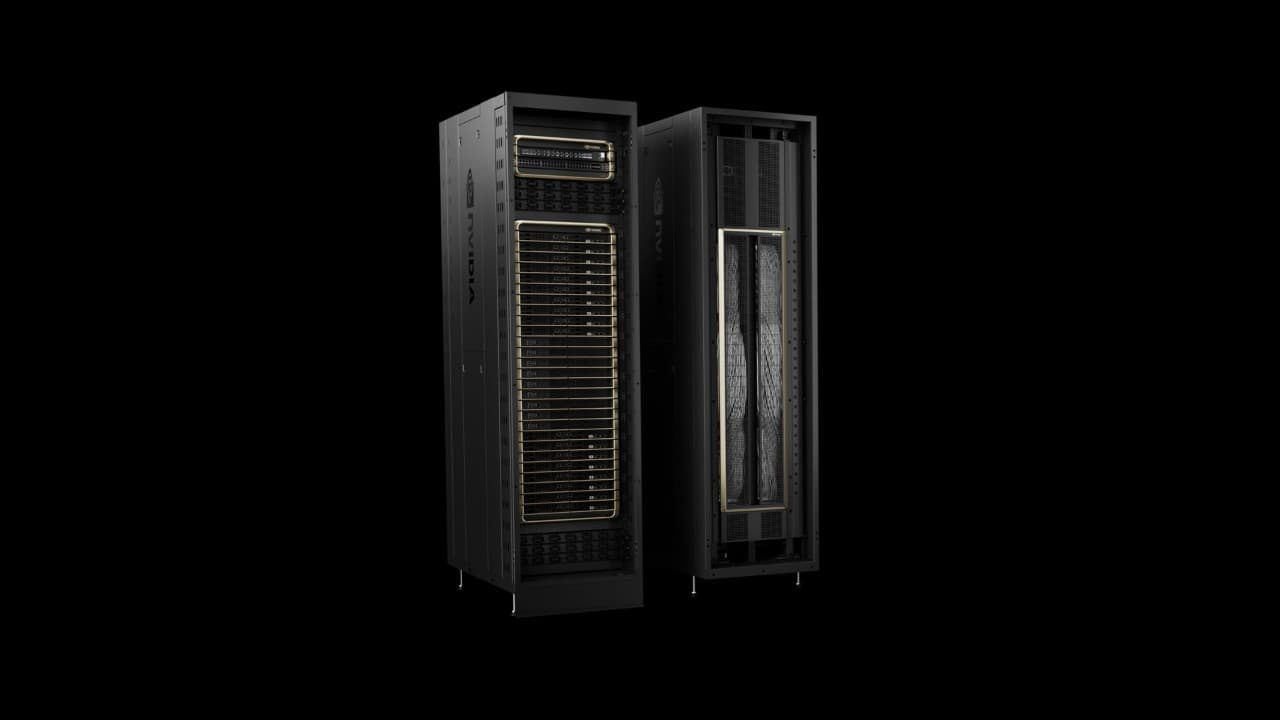
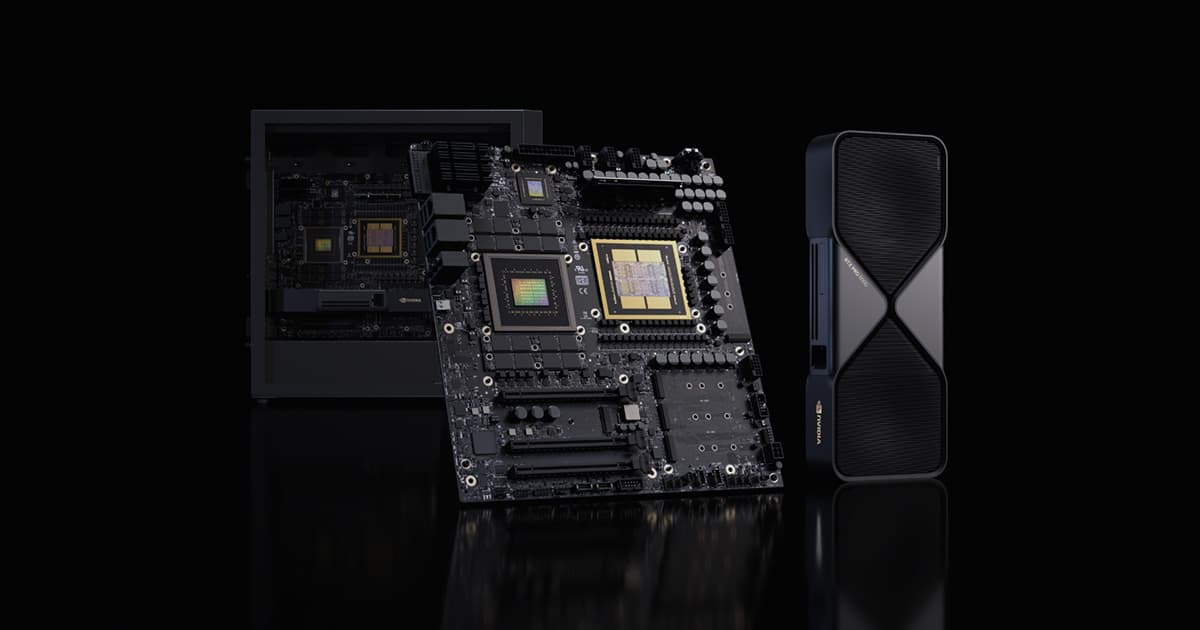
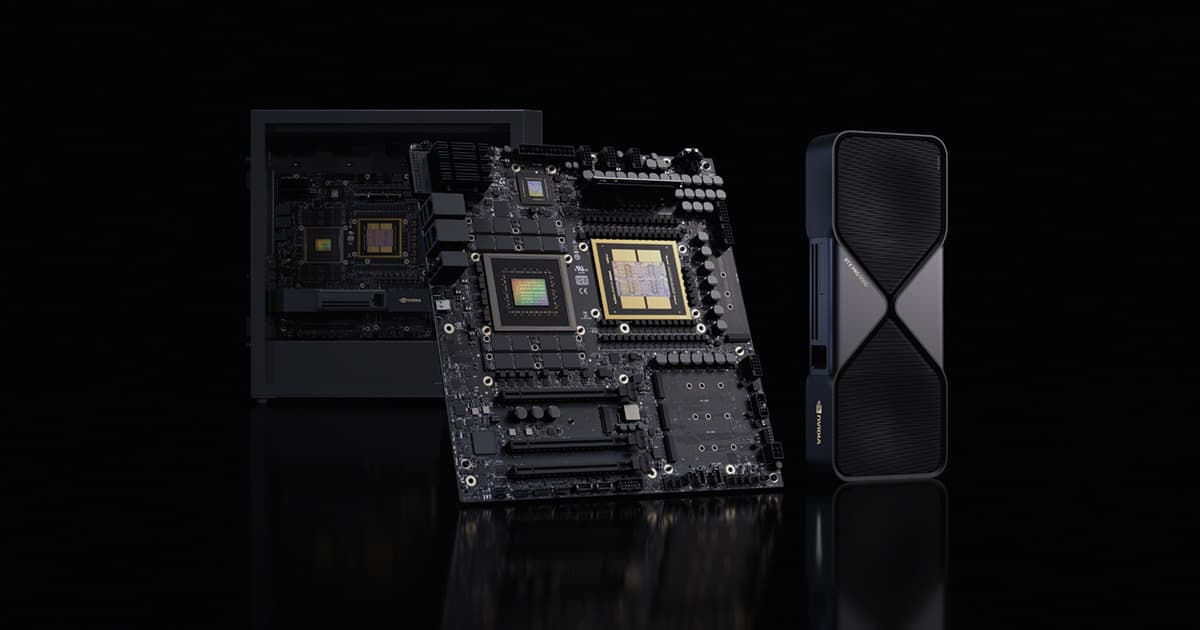
NVIDIA's DGX Station, which pairs 252 GB of HBM3e with 496 GB of LPDDR5X, shown in a product image from the maker's page.
Image: NVIDIA
Source · Press image from the NVIDIA product page, used for news reporting.
Eight AI agent sessions that each hold a million tokens of context need 515 GB of KV cache, the memory a model keeps for each conversation, at FP8 on MiniMax M3.1-Flash, Voltgrid calculates, more than five 96 GB workstation GPUs hold. Serving software already sends that overflow to system RAM, the computer's ordinary memory, and that is where the memory bottleneck for AI agents is moving.
Chip makers see the shift from their side. AMD told investors on Nov. 3 that agents are "quickly becoming the next killer app for CPUs in the cloud," and Arm said on Nov. 4 that persistent agents make efficient processors more critical in data centers.
An AI agent is a model that works through a task in steps. It reads, calls a tool such as a web search or a code runner, waits for the result, and reads again. Each time, the model keeps running notes on every token, the small chunks of text it processes, so it need not reread the whole conversation at the next step. Engineers call those notes the key-value (KV) cache. They grow with every token, and each conversation keeps its own.
A chatbot answers and is often done. An agent holds its conversation open while it waits on a tool, and a team or a cloud service runs many agents at once. The graphics processor's memory is fast but small. Serving software can therefore park the notes of paused conversations in main memory, the DDR5 or LPDDR5X attached to the CPU, and spill the rest to an SSD, much as an office moves papers from a small desk to a filing cabinet in the same room: slower to reach, far roomier.
For people buying a workstation to run models locally, system RAM now decides how many agents can work at once. For data centers, the ordinary server, a processor surrounded by memory, is back in demand while memory is scarce. Voltgrid tested no machine for this piece: every figure is a maker's rating, a named outlet's report or Voltgrid's arithmetic, labelled as such.
Why Every Agent Session Needs Its Own Cache
A language model has no memory of a conversation. To write each new word it consults notes it made about every earlier word as it read them. Those notes are the key-value (KV) cache, and without them the model would reread the whole conversation for every word.
The notes belong to one conversation, so each agent session keeps its own copy, and it grows with every token. Voltgrid calculates that one session of 1,048,576 tokens on MiniMax M3.1-Flash needs 64.4 GB at FP8, an 8-bit format, and eight sessions need 515 GB. One RTX PRO 6000, by NVIDIA's specification, holds 96 GB.
An agent pauses while a tool runs, and its notes must wait somewhere or be rebuilt. Graphics-card memory is fast but small, so software parks paused sessions in the computer's ordinary RAM, which is slower and far roomier.
DDR5, GDDR7 and HBM: The Memory Ladder
At the top sits high-bandwidth memory. NVIDIA's DGX Station puts 252 GB of HBM3e beside its GPU at 7.1 TB/s, according to NVIDIA. One rung down, the RTX PRO 6000 Blackwell carries 96 GB of GDDR7 at 1,792 GB/s, both in the 600 W Workstation Edition and in the 300 W Max-Q edition, which NVIDIA says scales to four cards per system. Apple rates the unified memory of the Mac Studio with M5 Ultra, shared by CPU and GPU, at 1.2 TB/s, with up to 512 GB on the top chip.
System memory comes next. AMD's WRX90 platform for Threadripper PRO runs eight DDR5 channels and up to 2 TB, and AMD says its Threadripper PRO 9000 WX-Series takes registered DDR5-6400 modules. Eight channels at 6,400 million transfers per second, 8 bytes each, give a theoretical peak of 409.6 GB/s by Voltgrid's calculation; it is a ceiling, since no source says a full 2 TB build runs at 6,400 MT/s, and real throughput is lower. The DGX Station's own CPU side, 496 GB of LPDDR5X on NVIDIA's Grace processor, is rated at 396 GB/s, almost the same on paper. At the bottom, a PCIe 5.0 SSD such as Samsung's 9100 PRO is rated at 14.8 GB/s for sequential reads, in sizes up to 8 TB.
By Voltgrid's arithmetic, eight-channel DDR5 is about 4.4 times slower than the RTX PRO 6000's GDDR7 and about 17 times slower than the Station's HBM3e, but about 28 times faster than that SSD, and the 2 TB ceiling holds about 21 times the 96 GB on one card. By the same arithmetic, reading a 64.4 GB session cache out of the Station's LPDDR5X takes at least 0.16 seconds at its rated 396 GB/s, and out of the SSD at least 4.4 seconds. Those floors leave out the hop to the GPU: the Station joins its memories at 900 GB/s over NVIDIA's NVLink-C2C, while a Threadripper workstation crosses PCIe, for which we have no sourced figure.
Price runs the other way. TrendForce's spot table, in its Oct. 26 module update, put a 32 GB DDR5 RDIMM (4800/5600) at a session average of $2,165, or $67.7 per gigabyte by Voltgrid's arithmetic. That is a spot price, not what large buyers pay under contract. Samsung lists the 8 TB 9100 PRO at $2,719.99, or $0.34 per gigabyte by the same arithmetic, about one two-hundredth of the RDIMM's spot price per gigabyte. No maker or analyst we read prices HBM3e, GDDR7 or LPDDR5X per gigabyte. One comparison shows how dear plain DRAM has become: by Voltgrid's arithmetic, eight of those modules, 256 GB to fill a WRX90 board's eight slots, would cost $17,320, more than the $16,000 NVIDIA listed for a 96 GB RTX PRO 6000 Workstation Edition on Aug. 10, when the card showed as out of stock.

Makers' ratings, not measurements; the 409.6 GB/s DDR5 ceiling, the ratios and the per-GB prices are Voltgrid's calculations. Sources: NVIDIA, AMD and Samsung specifications; TrendForce spot table, Oct 26.
Illustration (AI-generated)
How Many Agent Sessions Multiply KV Cache Memory
On Nov. 4, Voltgrid calculated the KV cache four open models need for one session of 1,048,576 tokens at FP8, an 8-bit format. MiniMax M3.1-Flash needs 64.4 GB, or up to 72.5 GB if its index keys are kept per token. Z.ai's GLM-5.3 needs 49.9 GB and Mistral Large 4 needs 43.4 GB. DeepSeek V4.1 Flash, whose design compresses the cache, needs 1.68 GB. That is the cache alone; the weights come on top.
Every extra session brings its own copy. Multiplying the same figures, eight full-length sessions need 515 GB for MiniMax, 399 GB for GLM-5.3, 347 GB for Mistral Large 4 and 13.4 GB for DeepSeek, and sixteen need 1,031 GB, 799 GB, 694 GB and 26.8 GB. Against those, one RTX PRO 6000 has 96 GB, two have 192 GB, the DGX Station has 252 GB of HBM3e and 748 GB in all, and a WRX90 board tops out at 2 TB.

Voltgrid's calculation from published model configurations: eight 1M-token MiniMax sessions need 515.4 GB of KV cache, up to 579.8 GB with index keys. Cache only; shorter sessions need less.
Illustration (AI-generated)
A million tokens is a ceiling, and shorter sessions shrink the bill in proportion. In a scenario of 131,072 tokens (128K) each, an eighth of the ceiling, sixteen MiniMax sessions would still need 128.8 GB of cache at FP8 by Voltgrid's arithmetic, more than one 96 GB card, before the model's 252.4 GB of weights. On paper, by Voltgrid's arithmetic and ignoring everything else in memory, 2 TB of system RAM holds 31 full-length MiniMax caches at 64.4 GB each and the Station's 496 GB of CPU memory holds seven; if MiniMax keeps its index keys for every token, at 72.5 GB a session, those fall to 28 and six.
How KV Cache Offloading Works in vLLM and Dynamo
The main serving stacks already treat CPU memory as the second rung. NVIDIA's Dynamo documentation describes its KV Block Manager as a unified memory layer and write-through cache for vLLM and TensorRT-LLM, spanning GPU memory, host memory, SSD and remote storage. Two rules show where the load falls: a CPU cache smaller than the GPU's brings no benefit, the docs warn, and to spare SSDs from wear only blocks that score as frequently reused move on from CPU memory to disk.
vLLM, the open-source serving engine, gained an offloading connector in version 0.11.0, its developers at IBM Research wrote in January. It copies KV data to CPU DRAM in the background, for the case many parallel agents create: when concurrent requests fill the GPU, the engine may preempt one and discard its cache, and offloading it first saves the recomputation. Ray's serving guide names agents outright: a session that resumes after a pause may find its cache evicted from the GPU and have to recompute the whole prompt, unless a CPU or external tier kept it.
AMD, Arm, Intel and TrendForce Signals on Agent Demand
In prepared remarks for its third-quarter results on Nov. 3, it said agents "work continuously and in parallel," adding to accelerator demand while bringing what AMD called a substantial increase in CPU demand, and that cloud providers added significant EPYC capacity for agents. Data Center revenue was a record $8.5 billion, up 97% from a year earlier. Its all-CPU Helion rack holds up to 144 "Venice" processors, and AMD expects server CPU revenue to double in 2027, as Voltgrid reported.
Arm made the same case in its Nov. 4 shareholder letter: persistent agents run software, call tools and coordinate work between calls to the accelerator, which makes efficient CPUs more important to data-center performance. Arm said its data-center royalties doubled and, by its own count, Arm-based servers went from 15% of the top hyperscalers' server market in 2024 to more than 50% in 2025, with more than 60% expected by the end of 2026, as Voltgrid reported.
Intel's Oct. 29 results release said its immediate priority is more supply to meet what it called extraordinary demand for Xeon, and its Data Center and AI revenue rose 78% to $7.3 billion. The release ties Xeon to agents only through a Hot Chips 2026 showing of the coming "Diamond Rapids" Xeon for agentic orchestration.
TrendForce draws the memory line. On Sept. 30 it projected conventional DRAM contract prices up 10% to 15% quarter on quarter in the fourth quarter, with server DRAM undersupplied as cloud providers and server makers buy more bits for RDIMMs in general servers running agentic AI. It expects enterprise SSD bit demand to grow more than 80% in 2026. On Oct. 29 it said the move to inference and agents is driving a new wave of CPU demand, and that every CPU brings DDR5 with it.

AMD, Arm and TrendForce tie agents to CPU and memory demand; Intel reports strong data-center revenue without citing agents. Company figures are the companies' own. Sources: TrendForce, Intel, AMD and Arm filings.
Illustration (AI-generated)
How Much System RAM a Local AI Workstation Needs
Three designs answer the agent question differently. A Threadripper PRO tower with RTX PRO 6000 cards splits the job: up to four 96 GB Max-Q cards, 384 GB in all per NVIDIA, for speed, and up to 2 TB of DDR5 for capacity. ASUS's Pro WS WRX90E-SAGE SE board, for one, has eight slots for registered ECC DDR5. AMD is building the same shape: its Threadripper Halo Station pairs a 96-core Threadripper PRO 9995WX with two 144 GB Instinct MI350P cards and up to 2 TB of DDR5, ServeTheHome reported from AMD's Sept. 4 IFA keynote, about seven gigabytes of system memory per gigabyte of accelerator memory at the full 2 TB with two cards, by Voltgrid's arithmetic. AMD gave no price and said 2027.
NVIDIA's spec page lists one memory configuration for the DGX Station: 252 GB of HBM3e and 496 GB of LPDDR5X, about two gigabytes of CPU memory for every gigabyte on the GPU by Voltgrid's arithmetic, joined at 900 GB/s. The lowest US partner listing our desk found, Exxact's, starts at $98,450, as read on Nov. 4. Voltgrid's DGX Station review shows the cost of the lower rung: StorageReview measured 35 to 44 tokens a second for one user on GLM-5.2 and GLM-5.3 when part of the model sat in the Grace memory.
Apple's Mac Studio has one pool, up to 512 GB at 1.2 TB/s shared by CPU and GPU, so there is no trip between tiers, but Tom's Hardware notes the memory cannot be upgraded. MacRumors put the 512 GB model at a minimum of $22,299, of which $15,500 is the memory option. On a 256 GB unit, MacStories saw a long-context run fail for lack of memory, our review noted.
Voltgrid's reading: for one person and one model, GPU memory still decides the experience, because it sets how fast the answer arrives. Our DGX Station review said capacity decides which models run and HBM how fast. Agents add a third question, how many conversations stay warm while they wait, and that answer lives in system RAM. Only the Threadripper-class tower is built around standard slots a buyer can fill later; NVIDIA specifies one memory configuration for the Station, and the Mac's cannot be upgraded. Because Dynamo's documentation says a CPU cache smaller than the GPU's cache space brings no benefit, a buyer planning for several agents should treat system RAM at least equal to GPU memory as a rough floor, not a target, and price it at today's DRAM rates.
What Agents Mean for Data Center Memory and CPUs
In a data center the same arithmetic runs across fleets: agents that keep conversations alive between GPU calls and run tools on CPUs need more host memory per GPU server and more ordinary servers per fleet. Voltgrid has tracked those CPU tiers, from Oracle's EPYC-based OCI E7, which AMD says will run agent sandboxes and in-memory caches, to Dell's rack of 256 Vera CPUs.
TrendForce says memory makers cannot fully meet that demand this quarter, held back by component supply, packaging and test capacity and limited flexibility in DRAM production. Prices, not volume, carry the market: Counterpoint figures relayed by Korean press put third-quarter DRAM revenue at roughly $200 billion, up 369% from a year earlier, on bit shipments up only about 4%, as Voltgrid reported on Nov. 5.
Someone else pays: AMD said memory and component costs weighed on PC demand, and Arm said memory pricing hurt its smartphone royalties. Voltgrid's reading: agents turn the general-purpose server back into a large DRAM buyer just as suppliers steer capacity toward server parts, so a workstation owner adding DDR5 pays a price set largely by cloud demand.
The Case Against System RAM as the Bottleneck
Model design can shrink the problem. DeepSeek V4.1 Flash's cache, 1.68 GB for a full session, is about a 38th of MiniMax's 64.4 GB at FP8 in our Nov. 4 calculation, and 0.93 GB in DeepSeek's own FP4 format; if compressed attention spreads, the pressure on system RAM eases. Much of the CPU demand AMD and Arm describe comes from agents running tools and code, not from parked caches, which argues for more processors rather than more memory per processor. SSDs may also take part of the overflow, as TrendForce's enterprise SSD forecast and the disk tiers in Dynamo and the LMCache cache layer suggest. And for one user with one conversation, little of this applies.
What We Don't Know Yet
No source we read measures how many agents a machine can run against its system RAM; this piece rests on documented software design and arithmetic, not a benchmark. We have no sourced figure for the PCIe link between GPU and CPU memory on a Threadripper workstation, so the real cost of moving a cache back there is unknown. How long real agent sessions run, and how many run at once, is unmeasured here. The DDR5 price is a spot average for 32 GB 4800/5600 modules, not a contract price and not the larger modules a 2 TB build needs, and Apple's spec page does not name the Mac Studio's memory type. The Dynamo pages we read cover version 1.3.0; newer releases may tier differently.
What to watch: AMD says the first Helion systems ship this quarter, NVIDIA expects DGX Station for Windows from partners in December, Digital Trends reported that the first 512 GB Mac Studio orders arrive on Dec. 3, and TrendForce's next contract-price outlook will show whether agent servers keep server DRAM short into 2027.
How it compares
Full table| Product | Memory | Bandwidth | AI compute | Measured speed | Price |
|---|---|---|---|---|---|
| ASUS ExpertCenter Pro ET900N G3ASUS (NVIDIA DGX Station GB300 platform) | 748 GB coherent: 252 GB HBM3e (GPU) + 496 GB LPDDR5X (CPU)[1] | 7.1 TB/s (GPU HBM3e); 396 GB/s (CPU LPDDR5X)[1] | up to 20 PFLOPS AI performance (ASUS gives no precision or sparsity label) (sparse)[2] | GPT-OSS-120B MXFP4, vLLM, 512/512, 1-128 streams: 9,280 aggregate output tok/s at 128 streams; 5,023 on 8,192/1,024 (StorageReview, ASUS-supplied unit, no add-in GPU)[3] | $111,999.99 at Central Computers, US (model ET900N G3-2SSD-V2, request a quote, unavailable online, read Nov 4, 2026); no ASUS list price[4] |
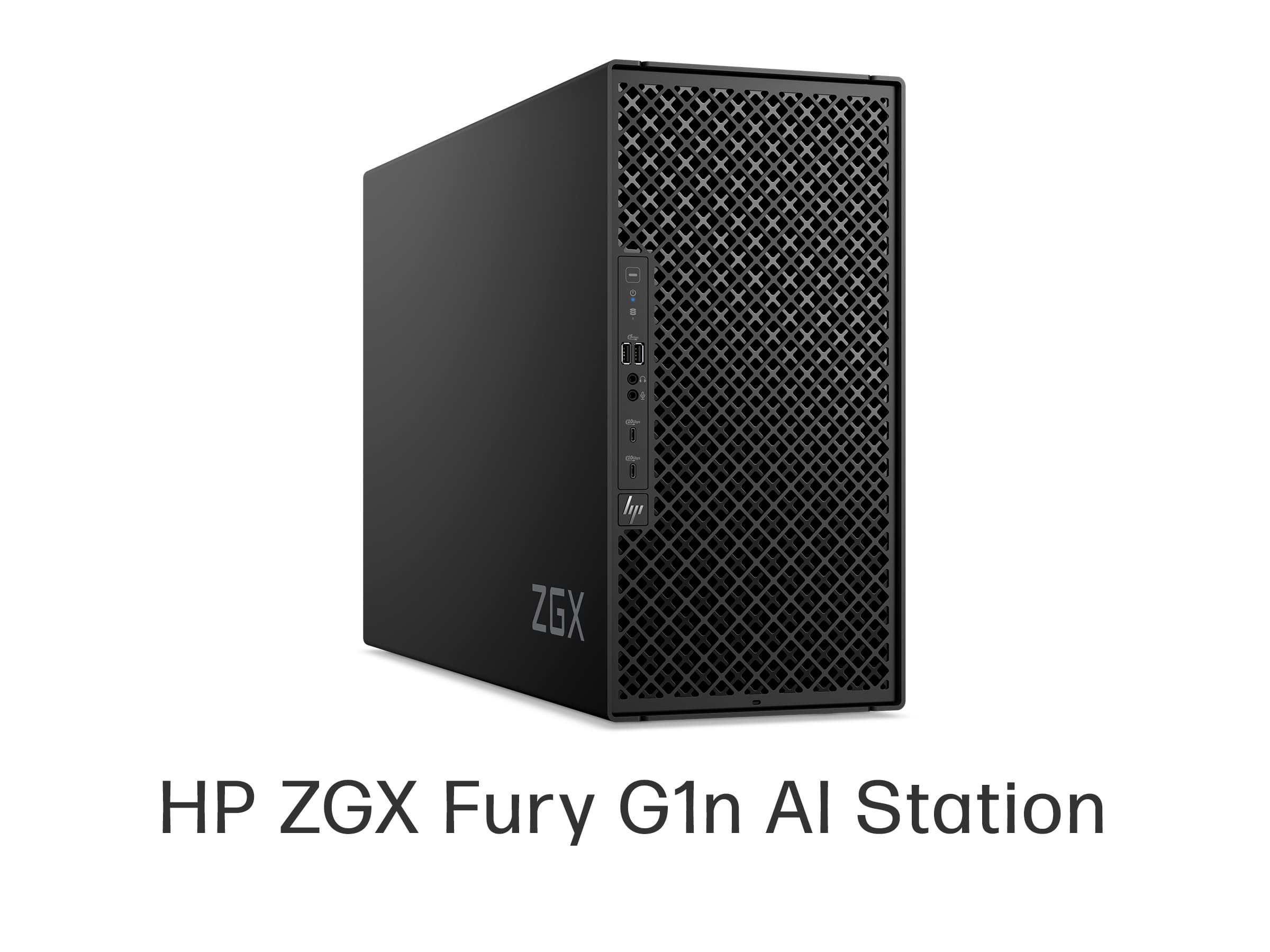
| HP ZGX Fury AI StationHP | 252 GB HBM3e GPU + 496 GB LPDDR5x CPU (4x 128 GB SOCAMM); 748 GB unified[5] | 7.1 TB/s (GPU HBM3e); 396 GB/s (CPU LPDDR5x)[5] | up to 20 petaFLOPS FP4 (HP gives no sparsity label) (sparse)[5] | Two-unit cluster with an ASUS ET900N G3 over two 400G DACs: GLM-5.3 NVFP4 5,018 output tok/s at 256 streams, 512/512, vLLM 0.27.1 TP2 with MTP (StorageReview); no single-unit HP result[6] | Japan list price from 28,490,000 yen incl. tax (sales from Oct 27, 2026); no US list price published[7] |
| NVIDIA DGX StationNVIDIA (systems built by ASUS, Dell, GIGABYTE, HP, MSI, Supermicro and Exxact) | 748 GB coherent: 252 GB HBM3e (GPU) + 496 GB LPDDR5X (CPU)[8] | GPU HBM3e 7.1 TB/s; CPU LPDDR5X 396 GB/s; NVLink-C2C 900 GB/s between them[8] | 15 PFLOPS FP4 (without sparsity)[8] | gpt-oss-120b MXFP4, stock vLLM, 512/512 chat workload: 9,280 output tok/s at 128 streams (5,023 on 8,192/1,024 prompts), single GB300 (StorageReview, ASUS ExpertCenter Pro ET900N G3)[9] | No NVIDIA list price; lowest US partner listing read Nov 4, 2026: Exxact Valence VWS-158270643 from $98,450 (Tom's Hardware found $94,930 in Aug); Dell Pro Precision with GB300 lists $160,195[10] |
| NVIDIA RTX PRO 6000 Blackwell Workstation EditionNVIDIA (sold through PNY, TD SYNNEX and workstation makers) | 96 GB[11] | 1,792 GB/s[11] | 4,000 AI TOPS (FP4, with sparsity) (sparse)[11] | gpt-oss-120b MXFP4, stock vLLM, 512/512 chat workload: 3,064 output tok/s at 128 streams (1,169 on 8,192/1,024 prompts); Server Edition at 600W (StorageReview)[9] | $16,000 on NVIDIA's US marketplace (Workstation Edition), listed out of stock[12] |
| Apple Mac Studio (M5 Ultra)Apple | up to 512 GB unified (96 GB on 30-core M5 Ultra; 256 GB or 512 GB on 36-core/80-core M5 Ultra)[13] | 1.2 TB/s[13] | — | Qwen 3.8 27B 4-bit MLX in LM Studio: about 55 tok/s on M5 Ultra (36-core, 256 GB) vs about 40 on M3 Ultra (BGR)[14] | $22,299 minimum with 512 GB ($6,799 36-core CPU/80-core GPU M5 Ultra config plus $15,500 memory upgrade; Oct 28, 2026)[15] |
| NVIDIA RTX Spark (N1X) PCsNVIDIA (MediaTek collaborated on the custom CPU design) | Up to 128 GB LPDDR5X (20-core CPU / 6,144-core GPU version); up to 64 GB (18-core / 5,120-core laptop version)[16] | Up to 300 GB/s: LPDDR5X-9400 on a 256-bit bus (NVIDIA's product page lists no bandwidth)[17] | — | gpt-oss:20b via Ollama in a Codex CLI coding agent, 64K context: 58.5 tok/s generation, 3 of 4 tasks passed (Dell XPS 16, 20-core N1X, 64 GB; StorageReview)[18] | Laptops from $2,599; pricing and configurations vary by region[19] |
| AMD Ryzen AI Halo (Ryzen AI Max+ PRO 495, 192 GB)AMD | 192 GB LPDDR5X (256-bit)[20] | 273 GB/s[20] | — | — | $7,299.99 for the Linux version (released the week of Oct 12, 2026); Windows version coming soon[20] |
| ASUS Ascent GX10ASUS | 64 GB or 128 GB LPDDR5X-8533 unified[21] | 273 GB/s (8533 MT/s), as listed by StorageReview; ASUS's spec page states no bandwidth[22] | Up to 1 PFLOP FP4 (GB10; NVIDIA's footnote: theoretical, using the sparsity feature). ASUS's pages say 1 petaFLOP / FP4 with no sparsity label (sparse)[23] | gpt-oss-120b, vLLM online serving, equal ISL/OSL: 70 tok/s at batch 1 rising to 680 tok/s aggregate at batch 64 (StorageReview)[22] | $5,999 (128 GB, 1 TB, GX10-GG0010BN, ASUS eShop US, Oct 30, 2026)[24] |
| Dell Pro Precision with GB10 (model FCM1253; launched as Dell Pro Max with GB10)Dell | 128 GB LPDDR5x up to 8533 MT/s onboard (64 GB option also listed)[25] | 273 GB/s (128 GB LPDDR5x, 256-bit)[26] | — | gpt-oss-120b, vLLM online serving, equal ISL/OSL: 68.57 tok/s at batch 1 rising to 670.83 tok/s aggregate at batch 64 (StorageReview)[27] | $7,967 (128 GB, 2 TB Gen4 QLC SSD default config, Dell.com US, read Nov 2, 2026 16:40 UTC)[25] |
| Framework Desktop (Ryzen AI Max+ PRO 495, 192 GB)Framework | 192 GB LPDDR5X-8533 soldered[28] | 273 GB/s (256-bit)[28] | — | — | $6,799 (Max+ PRO 495 192 GB DIY Edition pre-order, Nov 3, 2026; storage not included)[29] |
| GIGABYTE AI TOP ATOMGIGABYTE | 128 GB unified system memory[30] | 273 GB/s (LPDDR5x-8533, 256-bit)[31] | — | gpt-oss-120b, vLLM online serving, equal ISL/OSL: 60.71 tok/s at batch 1 rising to 649.62 tok/s aggregate at batch 64 (StorageReview)[31] | $7,312.00 advertised at CDW US against a $7,999.99 list (128 GB, 4 TB, ATAGB10-9000; read Nov 2, 2026)[32] |
| GMKtec EVO-X5 Pro AI Mini PCGMKtec | 192 GB LPDDR5X-8533 onboard (8 x 24 GB, non-upgradeable); up to 160 GB allocatable as VRAM[33] | Up to 273 GB/s[34] | — | GMKtec Laboratory table: GLM-5.3-Flash UD-IQ4_XS (146.05 GB) decode 17.79 tok/s, prefill 70.18, TTFT 14.71 s; Qwen3.8-Flash-Next ROCmFP4-FAST (93.48 GB) decode 45.08 tok/s[33] | $6,799 (192 GB/2 TB) and $7,099 (192 GB/4 TB), GMKtec US store, Nov 2, 2026[33] |
| HP ZGX Nano AI Station (G1n)HP | 128 GB coherent unified system memory[35] | 273 GB/s (128 GB LPDDR5x)[36] | GB10: up to 1 PFLOP FP4, theoretical, using the sparsity feature; HP and reviewers list 1,000 TOPS FP4 (sparse)[23] | gpt-oss-120b, vLLM online serving, equal ISL/OSL: 69.6 tok/s at batch 1 rising to 722.9 tok/s aggregate at batch 64 (StorageReview)[37] | $7,399.00 at the HP Store for the 4 TB model; $4,759 on Amazon (Notebookcheck, review updated Oct 5, 2026)[38] |
| Lenovo ThinkStation PGXLenovo | 128 GB LPDDR5X unified (256-bit)[39] | 273 GB/s[39] | — | — | about $4,100 for the 1 TB configuration (Mar 2026)[40] |
| MSI EdgeXpert (MS-C931)MSI | 64 GB or 128 GB LPDDR5x unified (256-bit)[41] | 273 GB/s[41] | 1 PFLOPS FP4 (sparse)[41] | — | No list price; MSI sells via quote (Get a quote)[41] |
| NVIDIA DGX SparkNVIDIA (partner GB10 systems from Acer, ASUS, Dell, GIGABYTE, HP, Lenovo and MSI) | 128 GB; a 64 GB configuration is sold only through OEM partners[23] | 273 GB/s[23] | Up to 1 PFLOP FP4 (theoretical, using the sparsity feature) (sparse)[23] | Qwen 3.8 27B (dense) with multi-token prediction: decode of about 20 tokens/s, with time-to-first-token staying interactive out to the full 262K context.[42] | $6,950.00 (128 GB, 4 TB) on NVIDIA's enterprise marketplace with an Add To Cart button in a copy cached 07:59 UTC on 2026-10-31; stock unverified (listed out of stock on 2026-10-21); 64 GB partner systems from $4,999[43] |
| NVIDIA DGX Spark 64 GBNVIDIA (sold by Acer, ASUS, Dell, Gigabyte, HP and MSI) | 64 GB LPDDR5X unified (two units pool 128 GB over ConnectX-7)[44] | 273 GB/s (256-bit; NVIDIA spec table covers both 64 GB and 128 GB)[23] | 1 PFLOPS FP4 (sparse; NVIDIA spec table covers both memory configurations)[23] | — | from $4,999 (partner systems, Oct 2026; no Founders Edition)[44] |
| Sipeed MaixStationSipeed | 128 GB LPDDR5X (256-bit)[20] | 273 GB/s (Sipeed claim)[20] | 256 TOPS FP4 (native FP4, no sparsity; Axera/Sipeed claim)[20] | — | about $3,999 expected for 128 GB, with Kickstarter launch discounts (Sipeed to Tom's Hardware, Oct 2026)[20] |
| AMD Ryzen AI Halo Developer PlatformAMD | 128 GB LPDDR5x-8000 unified[45] | 256 GB/s[45] | — | gpt-oss-120b, vLLM online serving, equal ISL/OSL 256/256: 222 tok/s aggregate at batch 64 vs 701 on DGX Spark (StorageReview)[46] | $3,999 with 2 TB SSD (Jul 2026)[46] |
| Framework Desktop (Ryzen AI Max+ 395)Framework | 128 GB LPDDR5x-8000 soldered (32 GB and 64 GB options)[47] | 256 GB/s[48] | — | gpt-oss-120b MXFP4 in LM Studio (out-of-the-box setup): roughly 45 tok/s (ServeTheHome; Ryzen AI Max+ 395, 128 GB, Windows 11 Pro)[49] | $3,449 (DIY Edition, Max+ 395 with 128 GB, system only; out of stock, Nov 3, 2026)[50] |
| Acer Veriton GN100 AI Mini WorkstationAcer | 128 GB LPDDR5x coherent unified[51] | — | — | gpt-oss-120b, vLLM, total token throughput: prefill heavy 303.61 to 2,777.56 tok/s; decode heavy 38.38 to 292.41 tok/s (batch 1 to 64, StorageReview)[52] | from $3,999 in North America (announced Sep 3, 2025; prices vary by region)[51] |
| ASRock Industrial AI BOX-A395ASRock Industrial | 128 GB LPDDR5X-8000 soldered[53] | — | — | AgentSTH V7, 32 threads: 15% ahead of the next-closest Ryzen AI Max+ 395 box (single-core within 1%); estimated SPEC CPU2026 int rate: top of a 44% spread across four 395 systems; measured by ServeTheHome, Ubuntu 26.04[54] | — |
| Dell Pro Precision with GB300 (model FCT6263; announced as Dell Pro Max with GB300)Dell | 252 GB HBM3e GPU + 496 GB LPDDR5X CPU[55] | — | — | — | $160,195.00 (Dell.com US default config FCT6263 with RTX PRO 2000 display GPU, read Nov 4, 2026); RTX PRO 6000 Workstation Edition option adds $13,560[55] |
| GMKtec EVO-X2 AI Mini PCGMKtec | 64 GB or 128 GB onboard LPDDR5X-8000 (non-upgradeable)[56] | — | — | Llama 3.3 70B Q6_K Instruct: 3.7-3.8 tok/s generation fully on the Radeon 8060S (about 2 tok/s CPU-only); Qwen3-32B 10.4-10.5 tok/s; 128 GB unit, short prompt, tool not named (ServeTheHome)[57] | $3,499.99 (128 GB/1 TB) and $3,649.99 (128 GB/2 TB), each against $3,999.99; $2,199.99 for 64 GB/1 TB against $2,599.99 (GMKtec US store, read Nov 5, 2026)[56] |
| HP Z2 Mini G1a WorkstationHP | up to 128 GB unified, up to 96 GB assignable to the GPU, up to 8000 MT/s[58] | — | up to 50 NPU TOPS[58] | gpt-oss-120b GGUF (63.39 GB, full GPU offload) in LM Studio: close to 40 tok/s (StorageReview)[59] | $4,781 list for StorageReview's review configuration; about $3,300 street (B&H top spec with 2 TB SSD at $3,342.65, Aug 2025)[59] |
| Microsoft Surface RTX Spark Dev BoxMicrosoft | 128 GB unified memory[60] | — | up to 1 PFLOP of AI compute (Microsoft; precision and sparsity not stated on the page) (sparse)[60] | — | From $5,999.99 (Microsoft Store US, pre-order, read Nov 1, 2026)[60] |
| MSI XpertStation WS300MSI (NVIDIA DGX Station platform) | 252 GB HBM3e GPU + 496 GB LPDDR5X CPU (748 GB coherent)[61] | — | — | StorageReview vLLM: gpt-oss-120b MXFP4 9,294 output tok/s at 128 streams (512/512), 5,038 on 8,192/1,024; MiniMax M3 NVFP4 1,041 at 32 streams with EAGLE3-GQA at a forced acceptance length of 3 (best-case)[61] | $99,999.00 'Start From' at Newegg US (model WS300T60L, 2x 2 TB NVMe RAID1), sold by Newegg as a request-a-quote listing (read Nov 4, 2026)[62] |
| Tenstorrent TT-QuietBox 2 (Blackhole)Tenstorrent | 128 GB GDDR6 on the accelerators + 256 GB DDR5-5600 system memory[63] | — | — | — | $9,999 (Oct 30, 2026)[63] |
| WiCi One (RTX 5060 Ti edition)WiCi | 16 GB GDDR7 VRAM; 1 TB NVMe 4 SSD for TurboStream weight paging (WiCi's claim: NVMe used as working VRAM). System RAM not stated[64] | — | — | — | $2,599 list (WiCi shop, Oct 2026); a $600-off code (WICIWELCOME) is applied at checkout. Early-access price was $1,999 (Notebookcheck, Engadget, Sep 2026)[64] |
| WiCi One (RTX 5090 edition)WiCi | 32 GB GDDR7 VRAM; 4 TB NVMe 5 SSD for TurboStream weight paging (WiCi's claim: NVMe used as working VRAM). System RAM not stated[64] | — | — | — | $9,999 list (WiCi shop, Oct 2026); a $600-off code (WICIWELCOME) is applied at checkout[64] |
Italic values are reported by an outlet or measured by an independent lab; the rest come from the maker. Measured speeds use different models, quantizations and tools, so read each with its source rather than against the others. Voltgrid News does not test hardware itself.
Sources (64)
- [1] ASUS
- [2] ASUS
- [3] StorageReview
- [4] Central Computers
- [5] HP
- [6] StorageReview
- [7] HP Japan
- [8] NVIDIA
- [9] StorageReview
- [10] Exxact
- [11] NVIDIA
- [12] NVIDIA
- [13] Apple
- [14] BGR
- [15] MacRumors
- [16] NVIDIA
- [17] ServeTheHome
- [18] StorageReview
- [19] NVIDIA
- [20] Tom's Hardware
- [21] ASUS
- [22] StorageReview
- [23] NVIDIA
- [24] ASUS eShop
- [25] Dell
- [26] HotHardware
- [27] StorageReview
- [28] Framework Blog
- [29] Framework
- [30] GIGABYTE (PR Newswire)
- [31] StorageReview
- [32] CDW
- [33] GMKtec
- [34] GMKtec
- [35] HP
- [36] HotHardware
- [37] StorageReview
- [38] Notebookcheck
- [39] Lenovo PSREF
- [40] ServeTheHome
- [41] MSI
- [42] Tom's Hardware
- [43] NVIDIA Marketplace
- [44] NVIDIA Blog
- [45] AMD
- [46] StorageReview
- [47] Framework
- [48] Framework Blog
- [49] ServeTheHome
- [50] Framework
- [51] Acer
- [52] StorageReview
- [53] ServeTheHome
- [54] ServeTheHome
- [55] Dell
- [56] GMKtec
- [57] ServeTheHome
- [58] HP
- [59] StorageReview
- [60] Microsoft
- [61] StorageReview
- [62] Newegg
- [63] Tenstorrent
- [64] WiCi
Sources
- 01AI Server Demand Sustains Memory Contract Price Increases in 4Q26, While Consumer-Side Pressure PersistsTrendForce · trendforce.com
- 02KVBM Guide: KV offloading with Dynamo KV Block Manager (v1.3.0)NVIDIA Dynamo documentation · docs.nvidia.com
- 03AMD Ryzen Threadripper PRO 9000 WX-Series platformAMD · amd.com
- 04AMD Third Quarter 2026 Financial Results Prepared RemarksAMD · newsroom.amd.com
- 05TrendForce DRAM spot and module price tablesTrendForce · trendforce.com
- 06AMD Reports Third Quarter 2026 Financial ResultsAMD (SEC 8-K) · sec.gov